
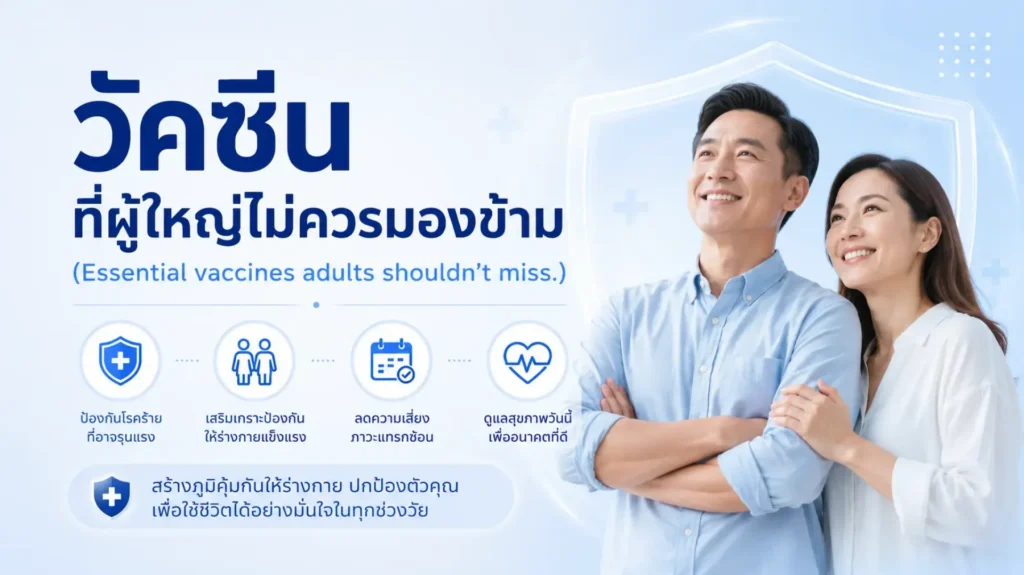
When people hear the word “vaccine,” many immediately think of young children, vaccination records, or injections received during school years. In reality, however, vaccines are not only for children. Adults need vaccines too.
One important reason is that the immune system gradually changes and may become less effective with age. Certain infections that may seem relatively mild can become serious enough to require hospitalization, particularly in older adults, people with diabetes, heart disease, lung disease, kidney disease, weakened immune systems, pregnant women, or people who regularly come into contact with many others. Another commonly overlooked point is that protection from some childhood vaccines may decrease over time. Some vaccines require booster doses, some are specifically recommended during adulthood, and others are recommended according to individual risks such as occupation, travel, underlying medical conditions, or pregnancy plans.
Adult preventive healthcare should therefore involve more than blood tests, blood pressure checks, and screening for chronic diseases. It should also include reviewing whether “our vaccinations are still up to date and appropriate for our age and health.” Receiving the right vaccines at the right time may help reduce the risk of serious disease in the future.
Why Do Adults Still Need Vaccines?
Many adults develop illnesses that may have been partly preventable simply because they were unaware that vaccines were available to reduce their risk. Adult vaccination serves several purposes, including:
- Reducing the risk of certain infections
- Reducing the severity of disease if infection occurs
- Reducing the risk of hospitalization
- Reducing complications such as pneumonia, long-lasting nerve pain after shingles, chronic hepatitis, or certain cancers
- Helping protect people around you, particularly young children, older adults, and people with weakened immune systems
- Preparing for international travel, work in higher-risk environments, or pregnancy
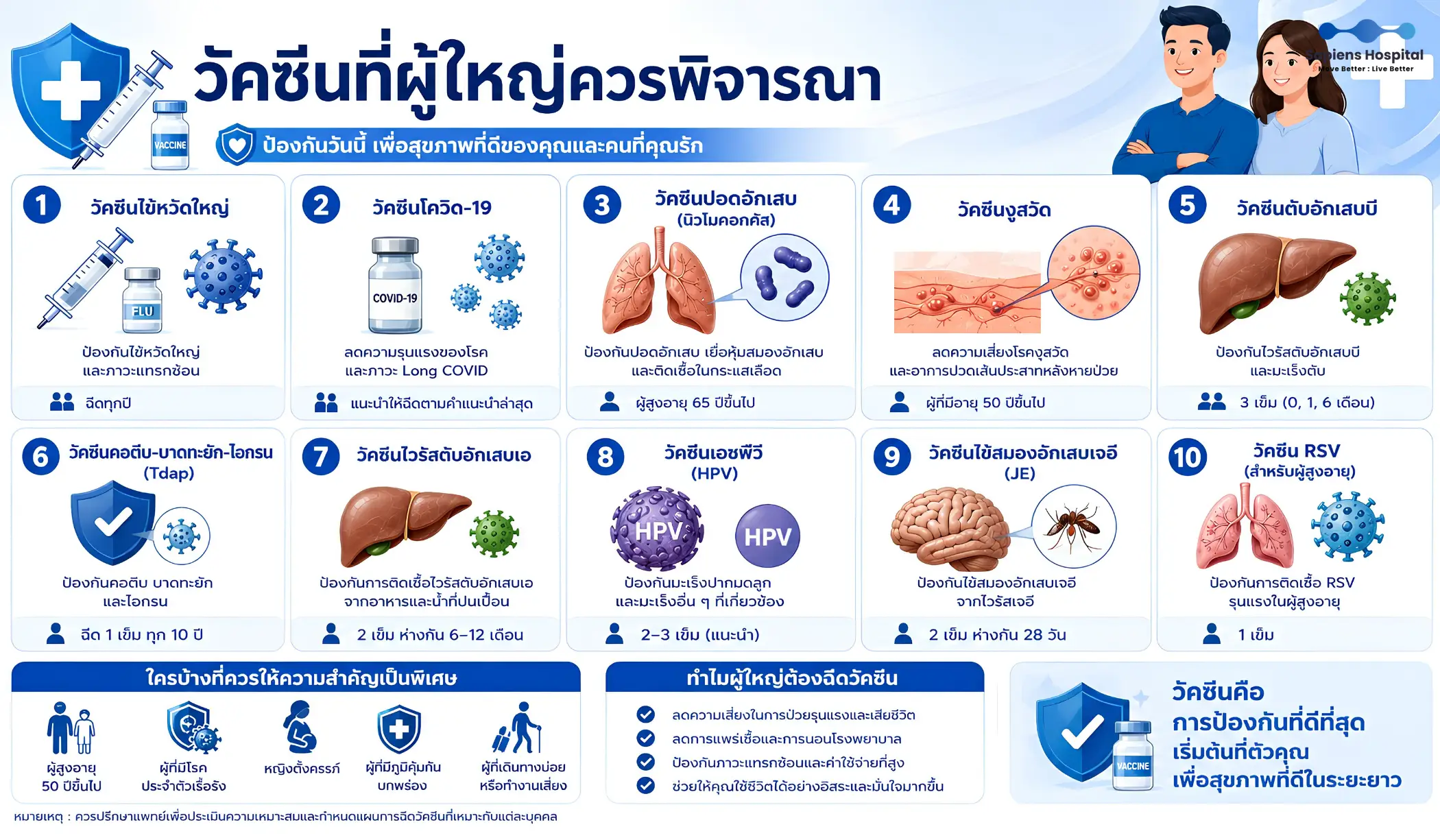
Importantly, There Is No Single Vaccination Schedule That Fits Every Adult
- A healthy 30-year-old
- A 45-year-old with diabetes
- A 55-year-old who has previously had shingles
- A 70-year-old with heart disease
- A pregnant woman
Each may have different vaccination needs. Vaccine selection should therefore consider age, underlying medical conditions, previous vaccination history, previous infections, allergies, pregnancy status, and individual risk factors.
1. Influenza Vaccine: An important vaccine to review every year. Influenza is more than an ordinary cold. It can cause high fever, muscle aches, fatigue, cough, sore throat, and several days away from work. In older adults, people with heart disease, lung disease, diabetes, kidney disease, weakened immune systems, or pregnancy, influenza can lead to pneumonia, breathing difficulties, worsening of underlying conditions, and hospitalization. Adults should therefore consider annual influenza vaccination because circulating influenza viruses change over time and vaccines are updated accordingly. Who should pay particular attention?
- Older adults
- People with underlying conditions such as diabetes, heart disease, lung disease, or kidney disease
- Pregnant women
- Healthcare personnel
- People in close contact with young children or older adults
- People whose work involves frequent contact with many others
Although influenza vaccination cannot prevent every infection, it can reduce the risk of severe illness, complications, and hospitalization, particularly among people at increased risk.
2. COVID-19 Vaccine: COVID-19 vaccination continues to have a role for adults, particularly those at increased risk. Although the situation has changed considerably since the early stages of the pandemic, COVID-19 has not disappeared. Older adults, people with chronic medical conditions, and people with weakened immune systems remain at greater risk of severe disease. Updated COVID-19 vaccines may help reduce the risk of severe illness, hospitalization, and complications, particularly as immunity from previous vaccination or infection decreases over time. Who should discuss COVID-19 vaccination with a healthcare professional in particular?
- Older adults
- People with heart disease, lung disease, diabetes, kidney disease, or liver disease
- People with weakened immune systems
- People taking immunosuppressive medications
- Pregnant women or those planning pregnancy
- People working in close contact with patients or large numbers of people
COVID-19 vaccination recommendations can change according to circulating variants, season, available vaccines, and national guidelines. People with underlying conditions or a history of significant vaccine reactions should discuss current recommendations with a healthcare professional.
3. Pneumococcal Vaccine: An important vaccine for older adults and people with certain underlying conditions. Pneumococcus can cause several illnesses, including pneumonia, middle-ear infection, sinusitis, meningitis, and bloodstream infection. These infections can be more serious in older adults and people with certain medical conditions. Pneumococcal vaccination is therefore one of the vaccines adults should not overlook. Who should consider it?
- Older adults, according to current age-based recommendations
- People with chronic lung disease, including COPD or certain forms of asthma
- People with heart disease, diabetes, chronic kidney disease, or chronic liver disease
- People with weakened immune systems
- People without a spleen or with impaired splenic function
- People who smoke cigarettes
- People with a history of serious pneumococcal infection, depending on their vaccination history and medical assessment
The appropriate vaccine type, schedule, and number of doses depend on age, previous vaccination history, medical conditions, and current recommendations. A healthcare professional can help determine the appropriate schedule.
4. Shingles Vaccine: Protection against a disease that can cause long-lasting nerve pain. Shingles is caused by varicella-zoster virus, the same virus that causes chickenpox. After chickenpox, the virus can remain dormant in nerve tissue and reactivate later in life. Shingles is not simply a rash with blisters. One of its important complications is postherpetic neuralgia, which can cause burning or nerve pain lasting for months and, in some people, longer, particularly among older adults. Who should consider vaccination?
- Adults aged 50 years and older
- People who have previously had shingles
- People with certain chronic medical conditions
- Certain immunocompromised adults aged 19 years and older, according to medical indications
Recombinant zoster vaccine is generally administered as a 2-dose series, with the interval determined by current recommendations and individual circumstances. It is not a treatment for an active episode of shingles; it is used to help prevent future shingles and related complications.
5. Tetanus, Diphtheria, and Pertussis Vaccines: Boosters that many adults forget. Many people received tetanus-containing vaccines during childhood or after an injury, but as adults they may be uncertain whether their vaccination remains up to date.
These vaccines are important because they protect against potentially serious diseases, including:
- Tetanus can occur when bacterial spores enter the body through wounds, particularly contaminated or deep wounds.
- Diphtheria is now less common in many places but can still cause serious illness.
- Pertussis can be particularly dangerous for infants who have not yet completed their vaccination series.
General recommendation: Adults should ensure they have received an appropriate Tdap dose and subsequent Td or Tdap boosters according to current recommendations and their vaccination history. Tdap is also recommended during each pregnancy at the recommended gestational period to help protect the newborn. For certain contaminated or high-risk wounds, a tetanus-containing vaccine may be recommended earlier depending on the type of wound and previous vaccination history.
6. Hepatitis B Vaccine: Helps prevent chronic liver disease and liver cancer caused by hepatitis B infection. Hepatitis B virus is an important cause of chronic hepatitis, cirrhosis, and liver cancer. Infection can occur through blood and certain body fluids, sexual contact, sharing needles, and transmission from mother to child. Many infected people initially have no obvious symptoms. Reviewing hepatitis B vaccination and infection status can therefore be important, and laboratory testing may be appropriate in some individuals. Who should consider vaccination?
- Adults who have not previously been vaccinated or whose vaccination history is unknown
- People with sexual risk factors, including multiple sexual partners
- Healthcare personnel with occupational exposure risk
- People with chronic kidney disease or those receiving dialysis
- People with chronic liver disease
- Household contacts of people with hepatitis B infection
- People traveling to or working in areas where hepatitis B exposure risk is higher
- People with diabetes or certain other risk factors, according to age, vaccination history, and medical assessment
Hepatitis B vaccination is administered as a series, with the number and timing of doses depending on the vaccine product. If your vaccination or infection status is uncertain, a healthcare professional can determine whether testing and/or vaccination is appropriate.
7. Hepatitis A Vaccine: Particularly important for certain travelers and people with chronic liver disease. Hepatitis A is transmitted mainly through the fecal-oral route, including contaminated food and water, and can cause acute hepatitis. Symptoms may include fever, fatigue, loss of appetite, nausea, abdominal discomfort, dark urine, and jaundice. Most people recover, but illness can be more serious in adults with chronic liver disease. Who should consider vaccination?
- People without evidence of immunity who want protection against hepatitis A
- Travelers to areas where hepatitis A vaccination is recommended
- People with chronic liver disease
- Men who have sex with men
- People who use certain recreational drugs
- People with occupational or other specific exposure risks
Hepatitis A vaccination is commonly given as a 2-dose series, with timing depending on the vaccine used. A combined hepatitis A and B vaccine may also be appropriate for some individuals.
8. HPV Vaccine: Not only for women. HPV, or human papillomavirus, is associated with several cancers, including cervical cancer, anal cancer, and certain cancers of the mouth and throat, as well as genital warts. Although HPV vaccination is sometimes thought of as a vaccine only for girls, males can also benefit by reducing their risk of HPV-related diseases. Who should consider vaccination?
- People who have not previously completed HPV vaccination
- Adolescents and young adults according to current vaccination recommendations
- Some adults aged 27–45 years may consider vaccination through shared clinical decision-making based on individual risks and potential benefits
- Adults with potential future exposure to new HPV infections may discuss possible benefits with a healthcare professional
HPV vaccination provides the greatest benefit when given before exposure to HPV. However, some adults may still benefit, so vaccination can be considered according to age, previous vaccination, and individual circumstances.
9. RSV Vaccine: A vaccine older adults and people at increased risk should know about. RSV, or respiratory syncytial virus, is commonly associated with illness in young children, but it can also cause bronchitis, pneumonia, breathing difficulties, and hospitalization in older adults and adults with certain medical conditions. Who should consider vaccination?
- Older adults according to current age-based recommendations
- Adults below the routine age threshold who are at increased risk of severe RSV disease, according to current recommendations and individual medical assessment
- People with multiple underlying medical conditions that increase their risk of severe RSV disease
RSV vaccination recommendations for adults continue to evolve as new evidence becomes available. It is not currently treated in the same way as an annual influenza vaccine for all adults. Eligibility and timing should therefore be reviewed using current recommendations and individual risk factors.
10. MMR and Varicella Vaccines: Some adults still need to review their vaccination status. Some adults may not know whether they previously had measles, mumps, rubella, or chickenpox, or whether they completed the recommended vaccination series. With international travel and occasional outbreaks, reviewing these vaccines can be important, particularly for people without evidence of immunity. Who should consider them?
- People with uncertain vaccination history
- People without evidence of immunity, according to the criteria for each vaccine
- International travelers
- Healthcare personnel
- People in close contact with individuals who are immunocompromised, after appropriate medical assessment
- Women of childbearing age planning pregnancy should review their immunity and vaccination history before becoming pregnant because some vaccines in this group are live vaccines
Live vaccines such as MMR and varicella vaccine are generally contraindicated during pregnancy and require special consideration in people with significant immunocompromise. Medical advice should therefore be obtained before vaccination. Who should pay particular attention to reviewing their vaccinations?
All adults should periodically review their vaccination history, but the following groups should pay particular attention
- Adults aged 50 years and older
- Older adults
- People with diabetes, heart disease, lung disease, kidney disease, or liver disease
- People with weakened immune systems or those taking immunosuppressive medications
- People with cancer or receiving chemotherapy
- People without a spleen or with impaired splenic function
- Pregnant women or those planning pregnancy
- Healthcare personnel
- Caregivers of young children, older adults, or people with chronic illnesses
- International travelers
- People whose work involves frequent contact with many others
- People who do not know their previous vaccination history
What should you tell your healthcare professional before vaccination for safety? Tell your doctor or nurse before receiving a vaccine if you have any of the following:
- A history of a severe allergic reaction to a vaccine or one of its components
- Pregnancy or plans to become pregnant
- A weakened immune system
- Use of immunosuppressive medications, high-dose corticosteroids, biologic therapies, or chemotherapy
- Recent vaccination with another vaccine
- Current fever or acute illness
- A bleeding disorder or use of anticoagulant medication
- A previous serious adverse reaction following vaccination
Most vaccines have a well-established safety profile. Common temporary side effects include pain, swelling, or redness at the injection site, mild fever, body aches, and fatigue. People with underlying medical conditions or immune disorders may require individualized assessment of vaccine type and timing. Vaccination review can also be incorporated into an annual health checkup. During this visit, a doctor can review age, underlying diseases, relevant test results, lifestyle, and previous vaccination history to determine which vaccines may be appropriate, whether any should be postponed, whether testing is needed, and how vaccinations should be prioritized.
For people with underlying medical conditions, vaccination planning may be particularly important for example:
- People with diabetes may need particular attention to influenza, pneumococcal, and hepatitis B vaccination according to current recommendations; people with lung disease may benefit from appropriate vaccination against respiratory infections
- People with heart disease should reduce the risk of infections that could contribute to worsening of their underlying condition
- Older adults should prioritize protection against infections that can cause severe disease and hospitalization
- People who will begin immunosuppressive treatment should, when possible, review and plan appropriate vaccinations before treatment starts
Vaccination is therefore more than simply an “injection to prevent disease.” It is an important component of long-term preventive healthcare.
Frequently Asked Questions
1. Do adults really need vaccines? In many situations, yes. Protection from some vaccines decreases over time, while the risk of serious illness can increase with age or certain underlying conditions. Appropriate vaccination can help reduce severe disease, complications, and hospitalization.
2. What should I do if I cannot remember which vaccines I have received?
Bring any available vaccination records to your healthcare professional. If records are unavailable, your healthcare professional can determine whether vaccination, documentation review, or selected laboratory testing is appropriate.
3. Does every adult need every vaccine?
No. Some vaccines are recommended according to age, others according to underlying conditions, occupation, travel, pregnancy, previous vaccination, or individual risk factors. A healthcare professional can help determine which vaccines are appropriate for you.
4. Do I need an influenza vaccine every year?
Annual influenza vaccination is generally recommended because circulating influenza viruses change and vaccine-derived protection decreases over time. It is particularly important for people at increased risk of complications.
5. If I have already had shingles, should I still receive the shingles vaccine?
People who have previously had shingles may still be recommended to receive recombinant zoster vaccine to reduce the risk of future episodes and complications. The appropriate timing should be discussed with a healthcare professional.
6. Can several vaccines be given at the same visit?
Many vaccines can be administered during the same visit at different injection sites. However, specific timing considerations may apply to certain vaccines or clinical situations. A doctor or nurse can arrange an appropriate schedule.
7. Can people with chronic medical conditions receive vaccines?
In most cases, yes, and many are particularly encouraged to receive appropriate vaccines because their risk of severe infection may be higher. Vaccine type and timing should be individually assessed, particularly for people who are immunocompromised or receiving immunosuppressive treatment.
Adult vaccination is an important part of preventive healthcare. As we age, immune function changes, chronic diseases become more common, and lifestyle or occupational factors may increase exposure to infectious diseases. Vaccination is therefore one of several important tools for disease prevention, alongside regular health screening, exercise, balanced nutrition, and adequate sleep.
Vaccines adults should review include influenza, COVID-19, pneumococcal, shingles, tetanus, diphtheria, pertussis, hepatitis B, hepatitis A, HPV, RSV, MMR, varicella, and other vaccines according to individual history and risk.
The goal is not to receive as many vaccines as possible. It is to receive the vaccines that are appropriate for you, at the appropriate time, as safely as possible. If you are uncertain which vaccines you need, reviewing your vaccination history and developing an individualized vaccination plan with a healthcare professional is a good starting point for preventive healthcare.
For information and appointments
Sapiens Hospital Move Better : Live Better
Tel. 02-111-3703
References
1. Centers for Disease Control and Prevention. Adult Immunization Schedule by Age: Recommendations for Ages 19 Years or Older, United States, 2025; updated 2026.
2. Centers for Disease Control and Prevention. Adult Immunization Schedule Notes:Recommendations for Ages 19 Years or Older, United States, 2025.
3. Centers for Disease Control and Prevention. Pneumococcal Vaccine Recommendations.2026.
4. Centers for Disease Control and Prevention. RSV Vaccine Guidance for Adults. 2026.
5. Centers for Disease Control and Prevention. Shingles Vaccine Recommendations.2024–2025.
6. Centers for Disease Control and Prevention. Hepatitis B Vaccine Administration.2025.
7. Centers for Disease Control and Prevention. Staying Up to Date with COVID-19 Vaccines.2025–2026.
8. Centers for Disease Control and Prevention. Tdap Vaccine Information Statement and Adult Booster Recommendations.
9. Centers for Disease Control and Prevention. HPV Vaccination Recommendations.
10. Centers for Disease Control and Prevention. **Hepatitis A Vaccine Administration and CDC Yellow Book 2026.
11. World Health Organization. **Immunization Agenda 2030: A Global Strategy to Leave No One Behind. 2020.
12. Lu PJ, Hung MC, Srivastav A, et al. Surveillance of Vaccination Coverage Among Adult Populations — United States. MMWR Surveillance Summaries.