Physical Therapy for Muscle Tightness, Frozen Shoulder, Radiating Numbness, and Office Syndrome
Muscle tightness, frozen shoulder, back pain, numbness or pain radiating into the arms or legs, and pain around different joints of the body can have many causes, including:
- Sports injuries – for example, tennis players may experience shoulder or elbow injuries, while golfers may develop elbow or back problems.
- Incorrect or sudden body movements – such as bending to lift a heavy object, reaching overhead, twisting backward, pulling a seat belt, or reaching outside a vehicle.
- Office Syndrome and prolonged poor posture – sitting or working in an unsuitable posture for long periods can place excessive strain on muscles, joints, and the spine.
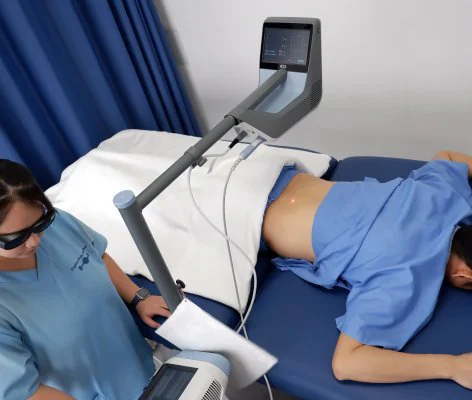
Physical Therapy with Therapeutic Modalities
These treatment modalities may be used as part of a physical therapy program for muscle pain and tightness, tendon irritation, sports-related injuries, movement-related injuries, and Office Syndrome. The appropriate modality is selected according to the patient’s condition and treatment goals.
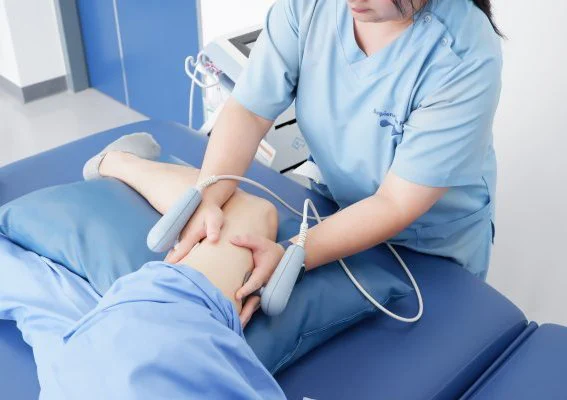
1. Ultrasound Therapy
Ultrasound Therapy uses high-frequency sound waves to deliver therapeutic energy into deeper tissues. Depending on the treatment parameters, it may be used to support soft-tissue treatment and rehabilitation.
- Helps relax tight or spasming muscles
- Supports local blood circulation
- May help reduce pain, swelling, inflammation, and muscle tightness
- Supports the tissue-healing process
2. RF/TECAR Therapy
RF/TECAR Therapy uses radiofrequency energy through Capacitive and Resistive Energy Transfer techniques to generate controlled therapeutic energy within tissues. It may be used as part of rehabilitation for muscle and joint problems.
- May help relieve muscle and joint discomfort
- Helps reduce excessive muscle tightness
- Supports flexibility and movement
- Supports blood and lymphatic circulation
- May assist recovery following physical activity or sports
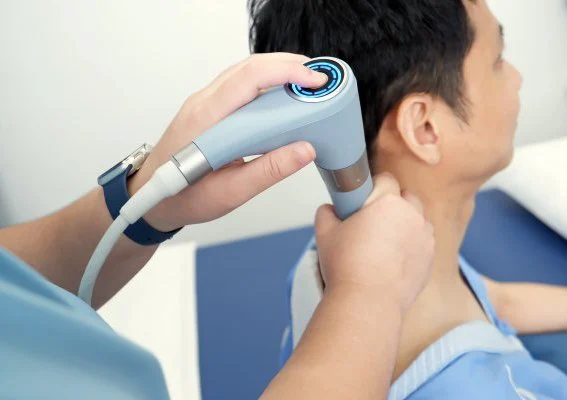
3. Shockwave Therapy
Shockwave Therapy delivers acoustic waves through the skin to the affected tissue. It is commonly used in selected musculoskeletal and tendon conditions to stimulate biological responses involved in tissue recovery.
- Supports local circulation and tissue recovery
- May help reduce tight or painful soft-tissue areas
- May be used for selected calcific tendon conditions
- May help reduce chronic pain involving tendons, muscles, and some joints
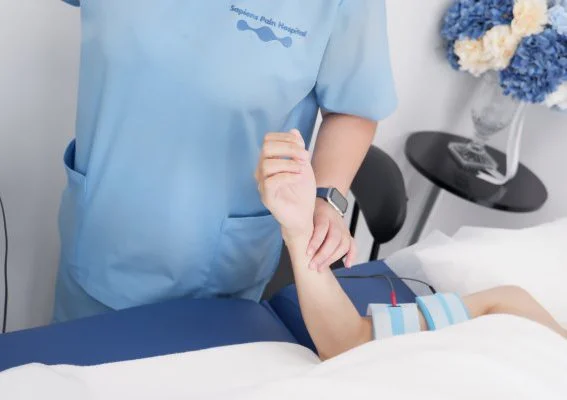
4. Electrical Stimulation
Electrical Stimulation uses controlled electrical currents delivered through electrodes placed on the skin to stimulate muscles or nerves. It may be used for pain management and neuromuscular rehabilitation.
- Helps stimulate muscle contraction in selected weak muscles
- May help reduce pain through modulation of pain signals
- Supports neuromuscular retraining and movement rehabilitation
- May assist in controlling swelling in selected conditions
- Helps maintain muscle activity when normal movement is limited
5. High-Power Laser Therapy
High-Power Laser Therapy delivers therapeutic light energy into tissues. It may be incorporated into rehabilitation programs to support tissue recovery and reduce pain and inflammation in selected musculoskeletal conditions.
- May help reduce pain, swelling, and inflammation
- Supports soft-tissue repair
- May support rehabilitation in selected bone and musculoskeletal injuries
- May be used as part of nerve and soft-tissue rehabilitation
- May help reduce pain associated with radiating or nerve-related symptoms in selected patients
6. Pilates Rehabilitation
Pilates Rehabilitation is a low-impact exercise approach that emphasizes core muscle control, posture, coordinated movement, and breathing. Exercises are individualized according to age, physical ability, and medical condition.
- Supports posture, movement control, and body balance
- Helps improve muscle strength
- Helps improve flexibility
- May help reduce muscle discomfort associated with poor posture or Office Syndrome
Additional Rehabilitation Services
Sapiens Hospital also provides rehabilitation for patients with muscle weakness, patients recovering after surgery, older adults who want to improve their ability to perform daily activities, and selected patients receiving supportive or palliative care.
Note: Exercise programs and the selection of therapeutic equipment or modalities are planned and supervised by licensed physical therapists and relevant physicians according to each patient’s condition.
Our Physical Therapy Team
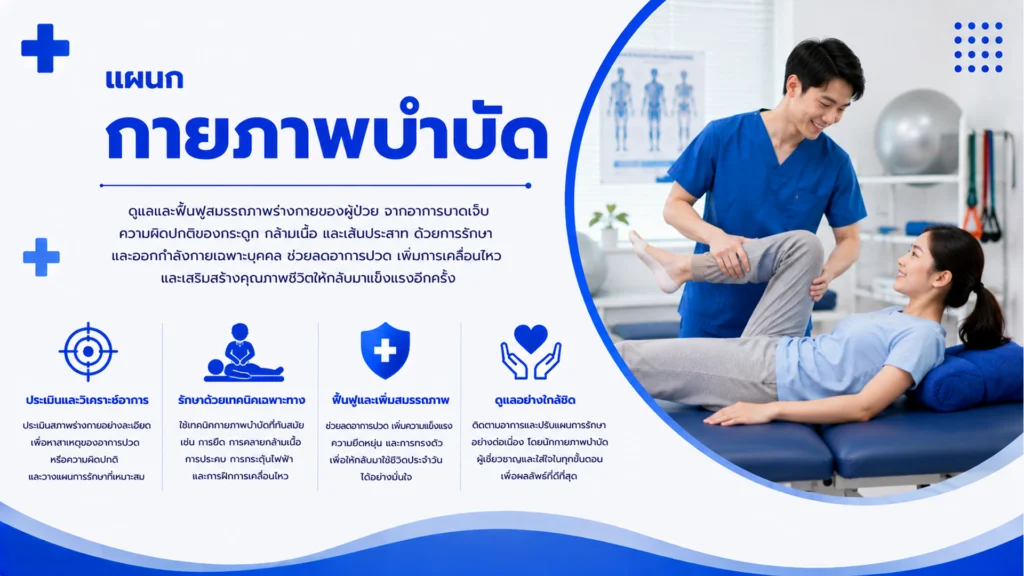
Our physical therapists provide individualized treatment and rehabilitation programs with an emphasis on appropriate technique, patient safety, functional recovery, and the patient’s treatment goals.
Rehabilitation Without Electrical Modalities
This form of physical therapy focuses on functional rehabilitation, particularly for patients recovering after surgery, patients recovering from stroke and its neurological effects, and patients who need to improve mobility, balance, coordination, and daily living skills.
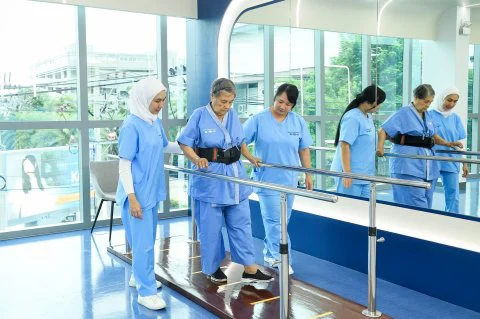
Rehabilitation programs, particularly after surgery, may include:
- Balance and postural training
- Stretching and muscle relaxation exercises
- Training for functional movement and daily living activities
- Home-care and home-exercise guidance
Physical therapy services may be provided to both inpatients during hospitalization and outpatients according to the patient’s rehabilitation plan.