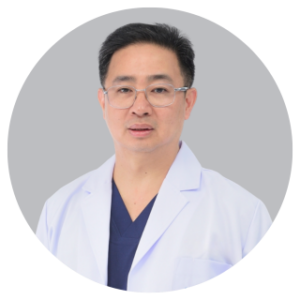
Treatment expertise by Prof. Dr. med. Bancha Chernchujit. Article compiled by Dr. Nattaya Udomsakdi
Expertise of Prof. Dr. med. Bancha Chernchujit
Prof. Dr. med. Bancha Chernchujit specializes in sports medicine and the treatment of injuries involving tendons, bones, joints, and muscles. He has extensive experience caring for athletes for more than 10 years, including providing medical care for professional sports teams such as Buriram United.
Introduction
Shoulder Arthroscopy is a minimally invasive surgical technique that uses a small camera called an arthroscope to visualize and repair structures inside the shoulder joint. Compared with conventional open surgery, arthroscopic surgery may allow more targeted treatment with smaller incisions and less disruption to surrounding tissues, and may support faster recovery in appropriately selected patients. During surgery, anesthesia and postoperative pain management are provided under the care of Dr. Nattaya Udomsakdi and the medical team to help maintain patient comfort and safety throughout the procedure.
Conditions That May Require Shoulder or Tendon Surgery
Shoulder problems requiring treatment may include conditions associated with “Frozen Shoulder,” which can involve stiffness of the joint capsule and surrounding soft tissues. Other conditions may include rotator cuff tears or degenerative shoulder-joint conditions.
Patients with these conditions may experience significant pain when lifting the arm overhead, moving the shoulder, reaching for objects, or using the arm during daily activities.
Causes of Shoulder Stiffness, Tendon Inflammation, and Shoulder-Joint Problems
- Improper or sudden movement, such as reaching for an object, lifting a heavy item, or lifting a child in an awkward position
- Sports and exercise involving repeated overhead movement or forceful shoulder rotation, such as tennis, badminton, swimming, and golf
- Accidents or injuries involving the arm or shoulder, such as falls, direct impact, or sudden pulling forces
Conditions That May Be Suitable for Shoulder Arthroscopy
1. Rotator Cuff Tear
- Patients may experience pain when raising the arm, weakness, or reduced shoulder function.
- Arthroscopic repair can be considered to repair a torn tendon through small incisions. Recovery and outcomes depend on the size of the tear, tissue quality, age, rehabilitation, and other individual factors.
2. Impingement Syndrome & Bursitis
- Pain may occur when tendons or the bursa become irritated or compressed beneath the acromion.
- In selected patients, arthroscopic procedures such as bursectomy or subacromial decompression may be considered to address inflamed tissue or mechanical impingement.
3. Labral Tears / SLAP & Bankart Lesions
- SLAP (Superior Labrum Anterior to Posterior) lesions involve the upper part of the labrum near the attachment of the biceps tendon.
- A Bankart lesion is commonly associated with anterior shoulder dislocation and recurrent shoulder instability, particularly in active individuals and athletes.
- Arthroscopy may be used to repair the labrum and restore shoulder stability in appropriately selected patients.
4. Frozen Shoulder (Adhesive Capsulitis)
- Frozen shoulder causes pain and significant restriction of shoulder movement. For patients whose symptoms do not improve sufficiently with non-surgical treatment, arthroscopic capsular release may be considered to improve range of motion.
5. AC Joint Arthritis, Biceps Tendonitis, Loose Bodies
- Depending on the diagnosis, arthroscopy may be used to remove loose or inflamed tissue or to perform procedures involving the biceps tendon and AC joint.

Sapiens Hospital Treatment Approach
Sapiens Hospital emphasizes comprehensive assessment using a biopsychosocial approach. Treatment may include:
1. Non-Surgical Treatment First
- Specialized physical therapy, including strengthening and stretching programs
- Targeted injections such as corticosteroid or other appropriate injection therapies, depending on the diagnosis and physician’s assessment
- Physical-therapy modalities such as therapeutic ultrasound or electrotherapy when clinically appropriate
2. Arthroscopic Surgery
- Performed by the surgical team led by Prof. Dr. med. Bancha Chernchujit, a specialist in orthopedics and sports medicine. Depending on the patient’s condition, arthroscopic techniques may be used to:
- Repair a torn rotator cuff (rotator cuff repair)
- Remove inflamed bursal tissue and address subacromial impingement when indicated
- Repair labral, SLAP, or Bankart lesions
- Perform capsular release in selected patients with frozen shoulder
- Use appropriate surgical equipment with close postoperative follow-up
3. Postoperative Care
- Individualized rehabilitation and physical-therapy programs to support recovery
- Regular follow-up with adjustment of medication, rehabilitation, and treatment according to each patient’s progress
Summary
Shoulder arthroscopy is an important treatment option for selected patients with shoulder pain caused by conditions such as rotator cuff tears, labral injuries, recurrent instability, impingement, or other shoulder disorders. Because it is performed through small incisions, arthroscopy may offer benefits such as less soft-tissue disruption and potentially faster recovery compared with some open procedures. However, not every shoulder condition requires surgery. Surgery is generally considered after a detailed evaluation and when appropriate non-surgical treatment has not provided sufficient improvement or when the nature of the injury indicates that surgical repair may be beneficial. Sapiens Hospital provides multidisciplinary care from preoperative assessment through postoperative rehabilitation, with treatment plans tailored to each patient’s condition and functional goals.