
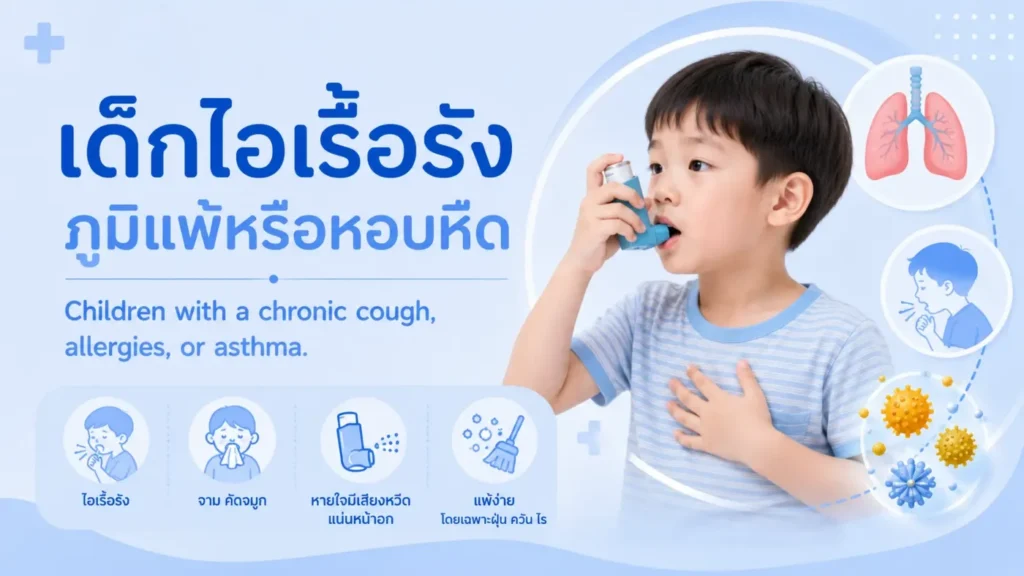
Chronic Cough in Children: Is It Allergies or Asthma?
When a child has been coughing for several weeks, especially at night, after running, in cold weather, or to the point that sleep is disrupted, parents often wonder, “Does my child have allergies, or could this be asthma?”
This is a very common question in pediatric clinics because chronic cough in children can have many different causes. Importantly, “coughing” does not automatically mean asthma. Conversely, some children with asthma do not always have obvious wheezing and may instead present with chronic cough, nighttime cough, or coughing after exercise.
The CHEST guideline defines “chronic cough” in children aged 14 years or younger as a daily cough lasting more than 4 weeks, rather than an occasional cough for a few days following a common cold. Therefore, if your child has been coughing continuously for more than a month, particularly if it interferes with sleep, school, play, or is accompanied by other abnormal symptoms, a systematic medical assessment is more appropriate than repeatedly changing cough medicines.
Why Can Children Develop a Chronic Cough?
Coughing is a natural protective mechanism that helps clear mucus, dust, germs, and irritants from the airways. After a cold, some children may continue coughing for a while because the airways remain sensitive. However, if coughing continues for more than 4 weeks, doctors begin to consider other causes such as allergic rhinitis, asthma, post-infectious airway hyperresponsiveness, sinusitis, gastroesophageal reflux, foreign-body aspiration, pertussis, tuberculosis, or certain lung diseases.
The ERS guideline emphasizes that chronic cough assessment should focus on identifying treatable causes and that children should be evaluated differently from adults because the causes and patterns of chronic cough in children are distinct.
How Can Allergies Cause Chronic Cough in Children?
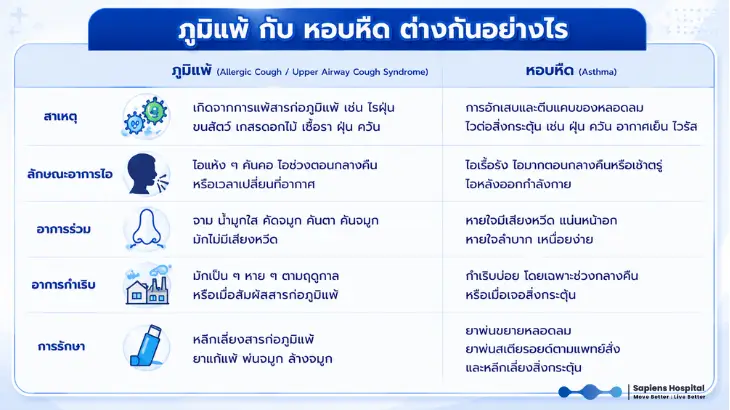
Allergies that contribute to chronic cough in children often involve the upper airway, particularly allergic rhinitis. These children commonly have clear nasal discharge, nasal congestion, sneezing, an itchy nose, itchy eyes, frequent nose rubbing, occasional snoring, or postnasal drip, which may lead to frequent throat clearing, a dry cough, or coughing that is worse at night and in the morning.
Some parents notice that their child coughs after exposure to dust, dust mites, animal dander, pollen, cigarette smoke, strong odors, or changes in weather. The child may have no fever, shortness of breath, or obvious wheezing, while nasal symptoms are more prominent than lower-airway symptoms. This pattern may suggest allergic rhinitis or an upper-airway-related cough.
The ARIA guideline emphasizes the relationship between allergic rhinitis and asthma because the upper and lower airways are interconnected. Children with allergic rhinitis should therefore also be assessed for asthma symptoms, particularly if they have coughing after running, nighttime cough, wheezing, or chest tightness.
Asthma in Children Does Not Always Begin With Obvious Wheezing
Asthma is a condition characterized by chronic airway inflammation and variable sensitivity of the airways to triggers. Children may experience coughing, wheezing, chest tightness, difficulty breathing, easy fatigue, or increased coughing after exercise, exposure to cold air, dust, smoke, or viral infections.
GINA 2025 states that the diagnosis of asthma should be based on a history of typical respiratory symptoms that vary over time and in intensity, together with evidence of variable expiratory airflow, such as findings from lung-function testing or a bronchodilator response when the child is old enough to perform the test reliably.
Patterns that may raise suspicion for asthma include coughing at night that wakes the child, coughing after running or vigorous play, coughing in cold air, coughing after exposure to dust or smoke, recurrent coughing after viral infections, or a family history of allergy, asthma, atopic dermatitis, or allergic rhinitis. However, asthma should not be diagnosed on the basis of cough alone, because other causes of chronic cough can produce similar symptoms.
What Is the Difference Between Allergic Rhinitis and Asthma?
With allergic rhinitis, symptoms are usually most prominent in the nose and throat. Children may have nasal congestion, clear nasal discharge, sneezing, nasal itching, frequent nose rubbing, itchy eyes, and postnasal drip,
with frequent throat clearing and coughing that is often worse when lying down or on waking in the morning. Breathing is usually not labored, obvious wheezing is generally absent, and the child can often run and play close to normally.
With asthma, symptoms are more closely related to the lower airways. Children may have episodes of coughing, nighttime cough, coughing after exercise, easy fatigue, chest tightness, wheezing, or exacerbations triggered by viral infections, cold air, dust, smoke, or allergens. Some children may simply appear to “cough more easily than other children,” but further assessment may show airway hyperresponsiveness or lower-airway inflammation.
Some children can have both allergic rhinitis and asthma. A child may begin with nasal congestion, runny nose, and a dry nighttime cough, and later develop coughing after running or wheezing. Treatment therefore needs to consider both the nose and the lower airways rather than relying only on cough medicine.
What Kind of Cough Means You Should Take Your Child to See a Doctor?
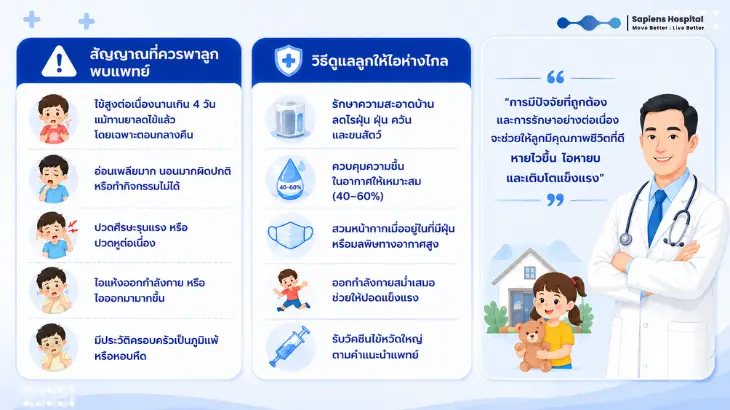
If your child coughs every day for more than 4 weeks, medical assessment is recommended to determine the cause, particularly if the cough interferes with sleep, prevents normal play or exercise, occurs regularly after running, or is accompanied by wheezing, shortness of breath, chest tightness, or a family history of asthma or allergic disease.
Children who have cough together with prolonged fever, weight loss, night sweats, coughing up blood, rapid breathing, unusual shortness of breath, chest pain, a clear choking episode before the cough began, persistent wet or productive cough, recurrent pneumonia, or poor growth should be assessed promptly because the cause may not simply be allergy or asthma. Pediatric chronic-cough guidelines recommend screening for red flags first, followed by a focused history, physical examination, and appropriate investigations.
What Tests May Be Needed for a Child With Chronic Cough?
Assessment begins with a detailed history rather than simply asking “How many days has the child been coughing?” The doctor may ask whether the cough is dry or wet, occurs mainly at night or during the day, happens after running, is associated with wheezing, or occurs together with runny nose, nasal congestion, sneezing, or itchy eyes. The doctor may also ask about fever, weight loss, choking, household smoking, pets, carpets, stuffed toys, dust, mold, and whether symptoms differ between home and school.
Physical examination may include the nose, throat, ears, lungs, breathing pattern, growth, and signs of allergic disease such as dark circles under the eyes, a nasal crease from frequent rubbing, or atopic dermatitis. In children with chronic cough, a chest X-ray may be considered, and children who are old enough to cooperate may undergo lung-function testing or spirometry to help assess for asthma. CHEST and ERS guidelines emphasize a structured, cause-directed approach rather than repeatedly trying different medicines without a clear objective.
Treating Allergy-Related Chronic Cough
If the doctor determines that the cough is likely related to allergic rhinitis, treatment focuses on reducing nasal inflammation and postnasal drainage. Depending on the child and the clinical situation, treatment may include appropriate saline nasal care, certain antihistamines, intranasal corticosteroids, and reducing exposure to relevant allergens or irritants.
ARIA 2024–2025 discusses the treatment of allergic rhinitis with emphasis on intranasal therapies and selecting treatment according to symptom severity and individual circumstances. Chronic-cough management literature also supports saline nasal care as a possible supportive measure when upper-airway symptoms related to allergic rhinitis, such as rhinorrhea or postnasal drainage, are prominent.
An important point is that allergy treatment often requires time and consistency. Parents should not stop prescribed treatment immediately after only a few days of improvement if the doctor has recommended using a nasal spray or antihistamine for a defined period. Better control of nasal inflammation may help reduce cough and improve sleep.
Treating Asthma in Children
If the symptoms are consistent with asthma, the doctor will assess symptom frequency and severity, nighttime waking, activity limitation, reliever use, and the history of exacerbations. Modern asthma management does not focus only on using a bronchodilator when the child becomes short of breath; it also emphasizes controlling airway inflammation to reduce exacerbations and long-term risk.
GINA emphasizes confirming the diagnosis when possible, assessing risk, selecting appropriate controller treatment, teaching correct inhaler technique, monitoring symptoms, and providing a plan for managing exacerbations. A child who uses an inhaler incorrectly may appear not to respond to treatment simply because insufficient medication is reaching the airways.
In selected cases, a doctor may prescribe a time-limited therapeutic trial of asthma controller treatment and monitor the response systematically. However, treatment should not become an indefinite process of “trying different medicines” without reassessment. If symptoms do not improve, the diagnosis, inhaler technique, environmental triggers, adherence, and other possible causes of chronic cough should be reviewed.
Household Triggers Parents Often Overlook
Children with chronic cough related to allergy or asthma may be particularly sensitive to environmental exposures. Dust in the bedroom, dust mites in mattresses, pillows, blankets, stuffed toys, mold in bathrooms or damp walls, cigarette smoke, incense smoke, perfume sprays, cleaning products with strong odors, animal dander, and PM2.5 air pollution may all aggravate symptoms.
Helpful measures include keeping the bedroom clean, reducing dust-collecting objects, washing bedding and pillowcases regularly, avoiding cigarette smoke in the home, reducing strong fragrances, checking for damp areas or mold, and observing whether symptoms are related to the bedroom, school, travel, or pets. Children are not necessarily allergic to everything; some may have specific triggers. Keeping a symptom diary can therefore help the doctor identify patterns and plan management more accurately.
Do Cough Medicines Help?
Cough medicines may make parents feel that the cough is being treated, but in children with chronic cough they do not necessarily address the underlying cause. If the cough is due to allergic rhinitis, the nasal condition needs treatment. If it is due to asthma, lower-airway inflammation needs appropriate management. If the child has a persistent wet cough, infection, or another lung condition, treatment needs to be directed at that specific cause.
Using multiple cough medicines repeatedly without knowing the cause may delay appropriate diagnosis, particularly in children with red flags or coughing that lasts more than 4 weeks. International guidelines therefore emphasize identifying and treating the cause rather than relying on cough suppression as the primary solution for every child.
Frequently Asked Questions From Parents
- My child coughs at night. Does that mean they have asthma?
Not necessarily. Nighttime cough can occur with allergic rhinitis, postnasal drainage, asthma, gastroesophageal reflux, or post-infectious airway hyperresponsiveness. However, if nighttime cough is accompanied by coughing after running, wheezing, chest tightness, or a family history of allergic disease, asthma should be assessed more carefully. - My child has allergic rhinitis. Will it turn into asthma?
Not every child with allergic rhinitis develops asthma, but the two conditions are associated. A child with allergic rhinitis who also develops coughing after exercise, nighttime cough, or wheezing should be evaluated for asthma rather than assuming the symptoms are only nasal allergies. - Does every child with chronic cough need a chest X-ray?
Not necessarily. In a child coughing for more than 4 weeks, the doctor will decide based on the history and examination. A chest X-ray becomes more relevant when there are red flags, a persistent wet or productive cough, prolonged fever, weight loss, breathing difficulty, or abnormal findings on lung examination. Additional investigations should be selected to help identify the cause rather than being performed routinely in every case. - My child coughs every time they run. Should they stop exercising?
Exercise should not usually be stopped permanently. Coughing after running may indicate exercise-induced bronchoconstriction or asthma that is not adequately controlled. The child should be evaluated and appropriately treated, with the goal of allowing them to exercise, participate in sports, and live as normally as possible rather than avoiding physical activity altogether.
Chronic cough in children deserves attention because the cause may range from poorly controlled allergic rhinitis to asthma or another respiratory condition. A practical clue is that cough accompanied by nasal congestion, clear nasal discharge, sneezing, nasal itching, and frequent throat clearing raises the possibility of allergic rhinitis, while nighttime cough, cough after running, easy fatigue, chest tightness, or wheezing raises greater concern for asthma. However, a child may have both allergic rhinitis and asthma. Good treatment therefore aims not simply to “stop the cough temporarily,” but to identify the cause, control inflammation, reduce triggers, teach correct medication technique, and monitor symptoms over time.
If your child has been coughing for more than 4 weeks, has a cough that interferes with sleep, coughs after running, wheezes, or has other abnormal symptoms, medical assessment is recommended to establish the correct diagnosis. Early, cause-directed care may help the child sleep better, remain physically active, participate in school more comfortably, and reduce future exacerbations.
If a child develops difficulty breathing, bluish lips, marked drowsiness, coughing up blood, weight loss, persistent fever, or rapidly worsening symptoms, seek urgent medical care.
Sapiens Hospital
Move Better:Live Better
Tel. 02-111-3703
References
Chang AB, Oppenheimer JJ, Irwin RS, et al. Managing Chronic Cough as a Symptom in Children and Management Algorithms: CHEST Guideline and Expert Panel Report. CHEST. 2020.
Morice AH, Millqvist E, Bieksiene K, et al. ERS guidelines on the diagnosis and treatment of chronic cough in adults and children. European Respiratory Journal. 2020.
Global Initiative for Asthma. Global Strategy for Asthma Management and Prevention, 2025 Update.
National Heart, Lung, and Blood Institute. 2020 Focused Updates to the Asthma Management Guidelines.
Bousquet J, et al. EAACI-endorsed ARIA 2024–2025 guidelines for allergic rhinitis.
Kanjanawasee D, et al. Chronic cough management: Practical guidelines and PICO-based evidence for treatment. 2024.