

Comprehensive Health Checkups for Disease Prevention and Maintaining Quality of Life
“The goal of a health checkup is not simply to determine whether we have a disease, but to identify health risks before disease develops.”
This is the concept behind preventive medicine, which is transforming healthcare around the world. Instead of waiting for disease to develop before beginning treatment, preventive medicine focuses on identifying risk factors at an early stage to help prevent disease or, at the very least, delay its progression for as long as possible.
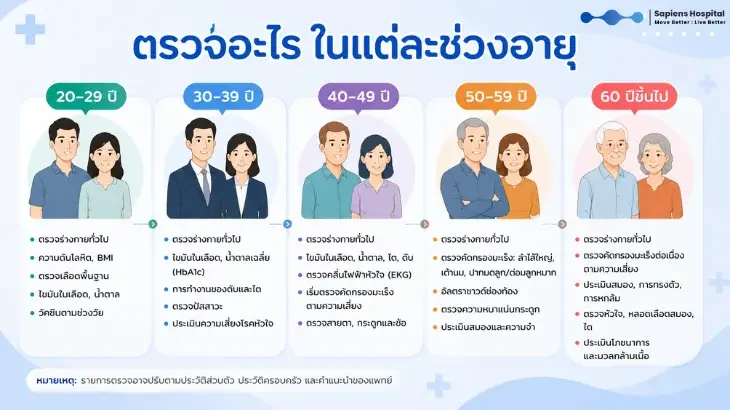
Many people think of an annual health checkup as having a blood test, chest X-ray, and urine test once a year. In reality, however, each person’s health profile differs according to age, sex, genetics, underlying medical conditions, lifestyle, and family history. A good health checkup therefore should not be identical for everyone. Instead, examinations and screening should be selected according to each person’s “individual risk profile.”
Guidance from organizations such as the United States Preventive Services Task Force (USPSTF) and the World Health Organization (WHO) emphasizes appropriate preventive care and evidence-based screening according to age and individual risk. When combined with appropriate lifestyle modification and risk-factor management, recommended preventive interventions can help reduce the burden and complications of cardiovascular disease, certain cancers, diabetes, and other chronic diseases.
Good health does not simply mean “having no disease.”
The World Health Organization defines health as a state of physical, mental, and social well-being, rather than merely the absence of disease or infirmity.
In everyday life, many people may have normal blood test results yet experience fatigue, insomnia, chronic back pain, weight gain, fatty liver, high levels of stress, or early loss of muscle mass. All of these can affect quality of life even when a specific disease has not yet been diagnosed.
A comprehensive health checkup therefore looks beyond laboratory results and evaluates multiple aspects of health, including cardiovascular risk, diabetes, kidney disease,liver disease, cancer risk and appropriate screening, bone health, muscle mass, abdominal obesity, sleep, mental health, physical mobility, and overall quality of life.
Why is prevention so important?
Many chronic diseases do not develop overnight.
- Coronary artery disease can develop gradually over decades.
- Type 2 diabetes may be preceded by insulin resistance for years.
- Chronic kidney disease may cause few or no noticeable symptoms until it has progressed to an advanced stage.
- Many cancers may develop for years before symptoms become apparent.
- Osteoarthritis can develop gradually as joint structures, including cartilage, undergo progressive changes.
By the time symptoms appear, many diseases may have progressed to a stage that is more difficult to treat, and some changes may not be completely reversible.
The CDC identifies chronic diseases such as heart disease, diabetes, kidney disease, and cancer as major causes of death and disability. The risk or impact of many chronic conditions can be reduced through appropriate preventive care, recommended screening, early risk-factor management, and healthy lifestyle changes.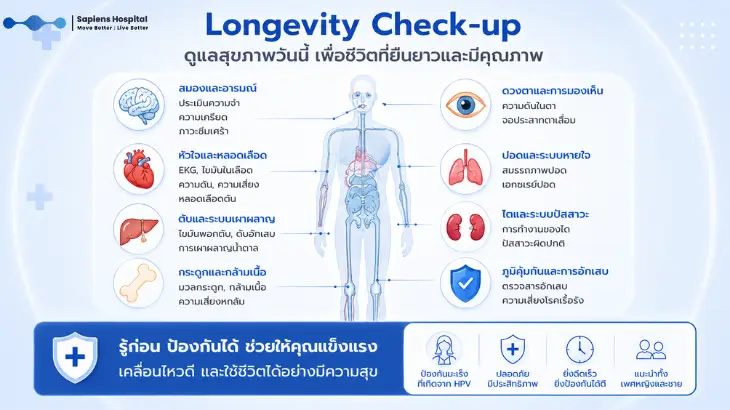
What should a comprehensive health checkup include?
- Medical history taking — This is one of the most important parts of a health assessment. It should include family history, smoking, alcohol consumption, sleep, exercise,
stress, diet, underlying diseases, and medications. - Body weight and body composition — assessment should go beyond BMI and may include: waist circumference, body fat percentage, muscle mass,
visceral fat, and abdominal obesity. Abdominal obesity is associated with conditions such as diabetes, fatty liver disease, cardiovascular disease, knee osteoarthritis, and back pain. Blood pressure should also be measured because hypertension is often a “silent killer” that may cause no obvious symptoms. - Many people with important health risks may have no symptoms. Uncontrolled risk factors can increase the likelihood of conditions such as: stroke, heart attack, kidney failure, and aortic aneurysm. Depending on age, medical history, symptoms, and individual risk, laboratory assessment may include CBC, blood glucose, HbA1c, lipid profile, kidney function, liver function, uric acid, electrolytes, thyroid testing when indicated, and urine albumin testing in appropriate patients, including people with diabetes.
- Abnormal blood lipids are not only relevant to the heart but are also associated with: the brain, kidneys, blood vessels, and overall cardiovascular and metabolic health.
- Cancer screening should be selected according to age and individual risk: breast cancer, cervical cancer, colorectal cancer, prostate cancer, and
lung cancer screening in eligible people with a significant smoking history. The USPSTF and American Cancer Society recommend selecting appropriate screening according to factors such as age, family history, and individual risk rather than performing every available cancer test at the same time. - Bone health and physical mobility are also important. Some people may have normal blood tests but experience difficulty walking, knee osteoarthritis, loss of muscle mass, poor balance, or an increased tendency to fall. Assessment of
muscle strength, balance, flexibility, fall risk, and bone health can therefore be particularly important, especially for older adults. - Vaccination is also part of preventive healthcare, and health assessment should not end with blood test results. Reviewing vaccination status for vaccines such as influenza, pneumococcal vaccines, Shingrix, COVID-19, and RSV, according to age, risk factors, and current recommendations, is an important component of preventive medicine for adults.
- Mental health also deserves attention: stress, depression, insomnia, and burnout can affect physical health, chronic disease management, pain, daily functioning, and quality of life. A comprehensive health assessment should therefore consider both physical and mental well-being.
After a health checkup, the most important thing is not simply the “test results” but the care plan that follows: improving diet, exercising, managing weight, quitting smoking, controlling blood pressure, managing diabetes, restoring muscle strength, receiving recommended vaccinations, and appropriate follow-up.
The best health checkup is not necessarily the most expensive one. It is the one that leads to meaningful lifestyle changes, appropriate medical management, and long-term disease prevention.
A comprehensive health checkup is not simply about detecting disease. It is about assessing risks across the whole body, including the heart, blood vessels, diabetes risk, kidneys, liver, cancer, bones, muscles, mental health, sleep, and overall quality of life. When risks are identified at an early stage, there may be greater opportunities to prevent disease or reduce its impact rather than waiting until illness develops before seeking treatment. Good health is not simply about living longer; it is about staying strong, moving well, working to your full potential, and enjoying a good quality of life at every age.
Sapiens Hospital
Move Better : Live Better
Tel. 02-111-3703
References
World Health Organization.Constitution of the World Health Organization (definition of health).
*[U.S. Preventive Services Task Force – A and B Recommendations](https://www.uspreventiveservicestaskforce.org/uspstf/recommendation-topics/uspstf-a-and-brecommendations?utm_source=chatgpt.com)
* [Centers for Disease Control and Prevention – About Chronic Diseases](https://www.cdc.gov/chronic-disease/about/index.html?utm_source=chatgpt.com)
* [American Heart Association – Cardiovascular Prevention Guidelines](https://www.heart.org? utm_source=chatgpt.com)
* [American Diabetes Association – Standards of Care in Diabetes 2025](https://diabetesjournals.org/care/issue/48/Supplement_1?utm_source=chatgpt.com)
* [KDIGO Clinical Practice Guideline for Chronic Kidney Disease Evaluation and Management] (https://kdigo.org/guidelines/ckd-evaluation-and-management/?utm_source=chatgpt.com)