

The knees play an important role in helping us move independently and maintain quality of life. They contribute to movement, balance, and weight-bearing, allowing us to perform everyday activities such as walking, running, sitting, and standing. When the knee becomes painful, weak, or injured, even basic daily activities can become more difficult. Understanding the possible causes of knee pain and knee osteoarthritis is therefore an important first step toward appropriate treatment.
Understanding the Knee Joint and Knee Osteoarthritis
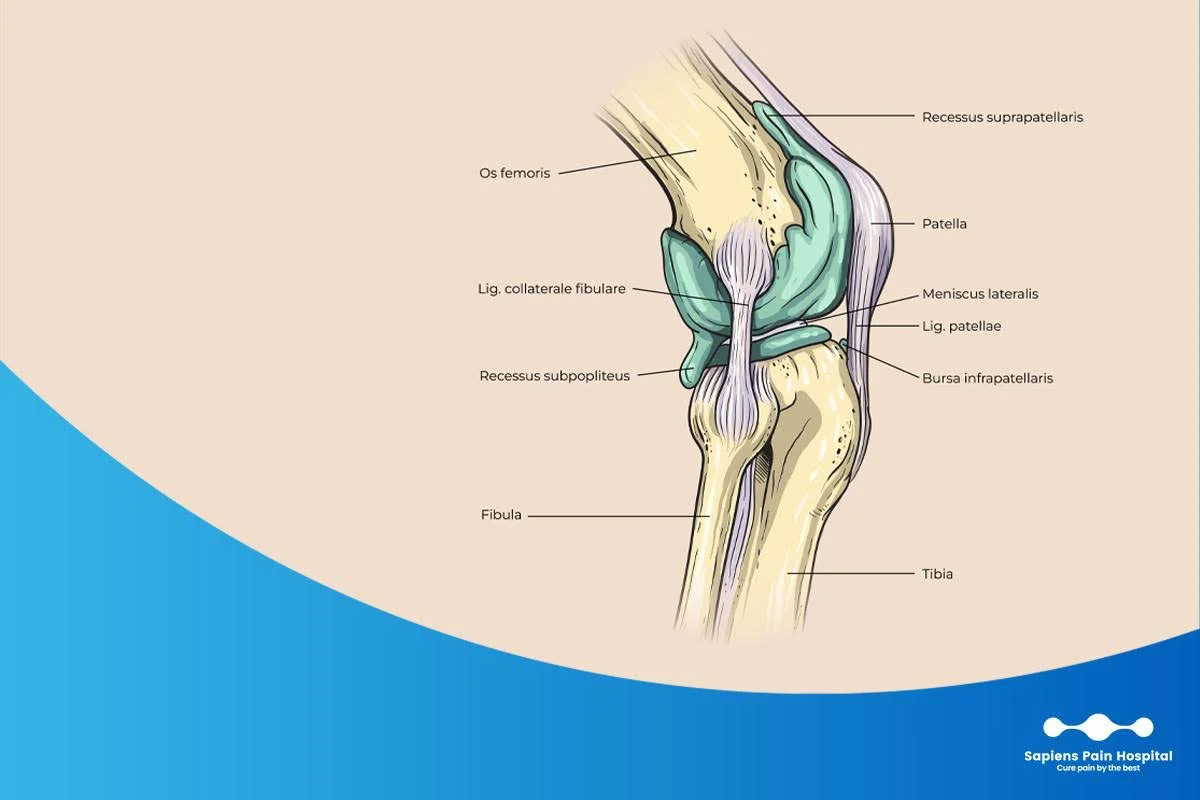
The knee is a complex joint that is essential for everyday movement. Its main structures include the lower end of the thigh bone (Femur), the upper end of the shin bone (Tibia), and the kneecap (Patella). The surfaces of these bones inside the joint are covered by smooth articular cartilage, which helps reduce friction and distribute loads during movement. The knee also contains the menisci, crescent-shaped fibrocartilage structures located between the femur and tibia that help distribute forces and contribute to joint stability.
What Are the Risk Factors for Knee Osteoarthritis?
Knee osteoarthritis is a condition involving progressive changes throughout the joint, including deterioration of articular cartilage and changes in the underlying bone, synovium, and other joint structures. Cartilage may become thinner and less smooth, and bony changes such as osteophytes may develop. Although structural changes associated with osteoarthritis cannot usually be restored completely to their original state, symptoms and joint function can often be managed effectively. Osteoarthritis is not caused by aging alone; several modifiable and non-modifiable factors can influence an individual’s risk and progression.
- Age: The likelihood of knee osteoarthritis generally increases with age, although it can also occur in younger people, particularly after injury or when other risk factors are present.
- Excess body weight: Higher body weight increases mechanical loading across the knee during activities such as walking and climbing stairs. Adipose tissue may also contribute to systemic inflammatory processes associated with osteoarthritis.
- Sex: Knee osteoarthritis is more common in women, particularly after midlife, although the reasons are multifactorial and may involve hormonal, anatomical, and other biological factors.
- Repetitive or high-load knee use: Occupations or activities involving frequent kneeling, squatting, heavy lifting, or other repeated high-load movements may contribute to greater mechanical stress on the knee in some individuals.
- Previous knee injury: A history of fractures involving the joint, ligament injury, meniscal injury, or other significant knee trauma can increase the risk of post-traumatic osteoarthritis later in life.
- Certain sports and injuries: Sports involving repeated pivoting, impact, jumping, or a higher risk of knee injury may indirectly increase the risk of osteoarthritis, particularly when significant ligament or meniscal injuries occur. Recreational running by itself is not considered a universal cause of knee osteoarthritis.
- Muscle weakness: Reduced strength of the quadriceps and other muscles supporting the knee can contribute to poorer joint function and may be associated with greater symptoms.
- Joint alignment and anatomy: Significant varus or valgus alignment and other structural factors can alter load distribution across the knee and may contribute to osteoarthritis progression in some people.
- Genetics: Genetic factors may influence susceptibility to osteoarthritis.
- Other joint or metabolic conditions: Conditions such as rheumatoid arthritis, gout, previous joint infection, and some metabolic disorders may damage joints or contribute to secondary osteoarthritis.
What Are the Symptoms of Knee Osteoarthritis?

Symptoms of knee osteoarthritis often develop gradually, although their severity and pattern vary considerably between individuals. Symptoms do not always correspond directly with the degree of change seen on X-rays or other imaging. Common symptoms include:
Knee Pain
Pain is one of the most common symptoms. It may become noticeable during walking, climbing stairs, squatting, or other weight-bearing activities. Early in the condition, pain may mainly occur during activity and improve with rest. In more advanced or symptomatic disease, pain may become more frequent and can sometimes occur at rest or at night. The pain may feel aching, sharp, or difficult to localize.
Knee Stiffness
The knee may feel stiff or difficult to move, especially after waking or after remaining in the same position for a prolonged period. Osteoarthritis-related morning stiffness is often relatively short-lived, although the pattern varies between individuals.
Reduced Range of Motion
Some patients may find it difficult to fully bend or straighten the knee. The joint may feel restricted or occasionally catch during movement. Persistent locking, particularly after injury, may require assessment for other structural problems in addition to osteoarthritis.
Crepitus or Noises in the Knee
Some people hear or feel clicking, cracking, or grinding sensations when bending or straightening the knee. These sounds can occur for several reasons and do not necessarily indicate severe joint damage on their own.
Swelling and Changes in Knee Shape
Osteoarthritis may be associated with intermittent swelling caused by inflammation or increased joint fluid. In more advanced disease, changes in the alignment or shape of the knee may become noticeable.
Weakness of the Muscles Around the Knee
The quadriceps and other muscles surrounding the knee may become weaker, particularly when pain leads to reduced activity. This can contribute to fatigue, reduced stability, and difficulty with activities such as standing from a chair or climbing stairs.
Treatment Options for Knee Pain Caused by Osteoarthritis
1. Injections for Symptom Relief
- Corticosteroid Injection: Corticosteroids are anti-inflammatory medications that may provide short-term relief of pain and inflammation when injected into the knee joint. They may be considered for selected patients, particularly during symptomatic flare-ups. The degree and duration of benefit vary, and repeated injections should be considered carefully because frequent use may have adverse effects on joint tissues and other health conditions.
- Hyaluronic Acid Injection: Hyaluronic acid is naturally present in joint fluid. Intra-articular hyaluronic acid injections are used in some patients with knee osteoarthritis, although research and clinical guidelines differ regarding their overall benefit. Some patients may experience symptom relief, while others may obtain little or no benefit. The treatment does not regenerate worn cartilage, and suitability should be discussed with a doctor.
2. Biologic Treatments
Biologic treatments such as Platelet-Rich Plasma (PRP) have been studied for knee osteoarthritis. These therapies aim to modify the local biological environment and potentially reduce symptoms. However, they should not be presented as proven methods for restoring severely damaged cartilage to its original condition, and evidence differs depending on the preparation, patient selection, and severity of osteoarthritis.
- Platelet-Rich Plasma (PRP): PRP is prepared from the patient’s own blood and contains a higher concentration of platelets. Some studies suggest that PRP may help reduce pain and improve function in selected patients with knee osteoarthritis, particularly in mild to moderate disease. Results vary, and PRP does not reliably regenerate normal articular cartilage.
- Stem Cell-Based Treatments: Cell-based treatments derived from bone marrow, adipose tissue, or other sources continue to be investigated for knee osteoarthritis. At present, claims that these injections reliably regenerate cartilage or reverse knee osteoarthritis are not established. Availability, regulatory status, evidence, costs, and potential risks should be carefully discussed with a qualified medical specialist.
3. Joint Replacement Surgery
For patients with advanced knee osteoarthritis, substantial pain or functional limitation, and inadequate relief from appropriate non-surgical treatment, knee replacement surgery may be considered. The aim is to reduce pain and improve mobility and daily function. As with any major surgery, expected benefits, recovery, implant longevity, and potential complications should be discussed individually.
4. Total Knee Replacement
During total knee replacement, the damaged surfaces of the knee joint are resurfaced and replaced with artificial components made from materials such as metal and medical-grade polyethylene. Many appropriately selected patients experience substantial improvements in pain and function after recovery. However, outcomes vary, rehabilitation is required, and possible complications include infection, blood clots, stiffness, implant-related problems, and the potential need for future revision surgery.
5. Pain Intervention for Knee Pain Without Major Surgery
Genicular Nerve Radiofrequency Ablation (RFA): Radiofrequency treatment is a minimally invasive procedure that may be considered for selected patients with chronic knee pain, including some patients with knee osteoarthritis who have not obtained sufficient relief from conservative treatment or who are not suitable candidates for surgery. The procedure targets small sensory nerve branches around the knee that transmit pain signals. Diagnostic nerve blocks may be performed beforehand to help determine whether a patient is likely to benefit. RFA may reduce pain for a period of time, but it does not repair cartilage or reverse osteoarthritis. Recovery is generally shorter than after major knee surgery, although the procedure still carries potential risks and the degree and duration of benefit vary between patients.
Summary
Although some age-related changes in the joints are common, knee osteoarthritis is influenced by several factors and is not simply an inevitable consequence of getting older. Maintaining an appropriate body weight, staying physically active, strengthening the muscles around the knee, and adjusting activities that repeatedly aggravate symptoms can help improve function and may reduce stress on the joint. Footwear and walking aids may also be useful for selected patients. Most importantly, knee pain should be assessed according to its cause and severity so that treatment can be tailored to the individual rather than relying on a single treatment for everyone.