

ခွဲစိတ်မှုမပြုလုပ်မီ ဘေးကင်းလုံခြုံစွာ ဘယ်လိုကြိုတင်ပြင်ဆင်သင့်သလဲ?
ခွဲစိတ်မှုဆိုသည်မှာ အလွန်ကြီးမားသောခွဲစိတ်မှု မဟုတ်ကြောင်း ဆရာဝန်က ပြောထားသော်လည်း လူအများအတွက် စိုးရိမ်စရာဖြစ်တတ်သည်။ အချို့သူများက နာကျင်မှုကိုကြောက်ကြသည်၊ အချို့က မေ့ဆေးကို စိုးရိမ်ကြသည်၊ အချို့က မိမိရှိပြီးသားရောဂါများကို စိုးရိမ်ကြသည်၊ အချို့က ခွဲစိတ်ဒဏ်ရာပိုးဝင်မည်ကို စိုးရိမ်ကြသည်။ လူအများကလည်း ခွဲစိတ်မတိုင်မီ ဘာတွေပြင်ဆင်ရမလဲဆိုတာ မသေချာကြပါ။ အမှန်တကယ်တွင် ခွဲစိတ်မှုဘေးကင်းရေးသည် ခွဲစိတ်ခန်းထဲဝင်မှ စတင်ခြင်းမဟုတ်ပါ။ ဆရာဝန်က ကုသမှုအစီအစဉ်ချမှတ်သည့်နေ့၊ ကျန်းမာရေးမှတ်တမ်းမေးမြန်းသည့်နေ့၊ သွေးစစ်သည့်နေ့၊ ဆေးများပြန်လည်သုံးသပ်သည့်နေ့နှင့် လူနာက ခန္ဓာကိုယ်ကို ခွဲစိတ်မှုအတွက် စတင်ပြင်ဆင်သည့်နေ့ကတည်းက စတင်ပါသည်။
ခွဲစိတ်မှုမတိုင်မီ ကောင်းမွန်စွာပြင်ဆင်ခြင်းသည် မေ့ဆေးဆိုင်ရာ နောက်ဆက်တွဲပြဿနာများ၊ ခွဲစိတ်ဒဏ်ရာပိုးဝင်ခြင်း၊ သွေးထွက်ခြင်း၊ သွေးတွင်းသကြားဓာတ်မမှန်ခြင်း၊ သွေးပေါင်မတည်ငြိမ်ခြင်း၊ ခွဲစိတ်ပြီးနောက် အဆုတ်ရောင်ခြင်းနှင့် ပြန်လည်သက်သာမှုနှေးကွေးခြင်းကဲ့သို့ အန္တရာယ်များကို လျှော့ချနိုင်သည်။ နိုင်ငံတကာ perioperative care လမ်းညွှန်များတွင် ခွဲစိတ်မတိုင်မီ အကဲဖြတ်မှုသည် ခွဲစိတ်မည့်ရောဂါတစ်ခုတည်းကိုသာ မကြည့်ဘဲ လူနာတစ်ဦးလုံး၏ ကျန်းမာရေးအခြေအနေကို စဉ်းစားသင့်ကြောင်း အလေးထားထားသည်။ ရှိပြီးသားရောဂါများ၊ သောက်နေသောဆေးများ၊ အာဟာရ၊ ဆေးလိပ်သောက်ခြင်း၊ အိပ်စက်မှုနှင့် အိမ်တွင် စောင့်ရှောက်ပေးနိုင်မှုတို့သည် ခွဲစိတ်ပြီးနောက် ရလဒ်အပေါ် သက်ရောက်မှုရှိနိုင်သည်။
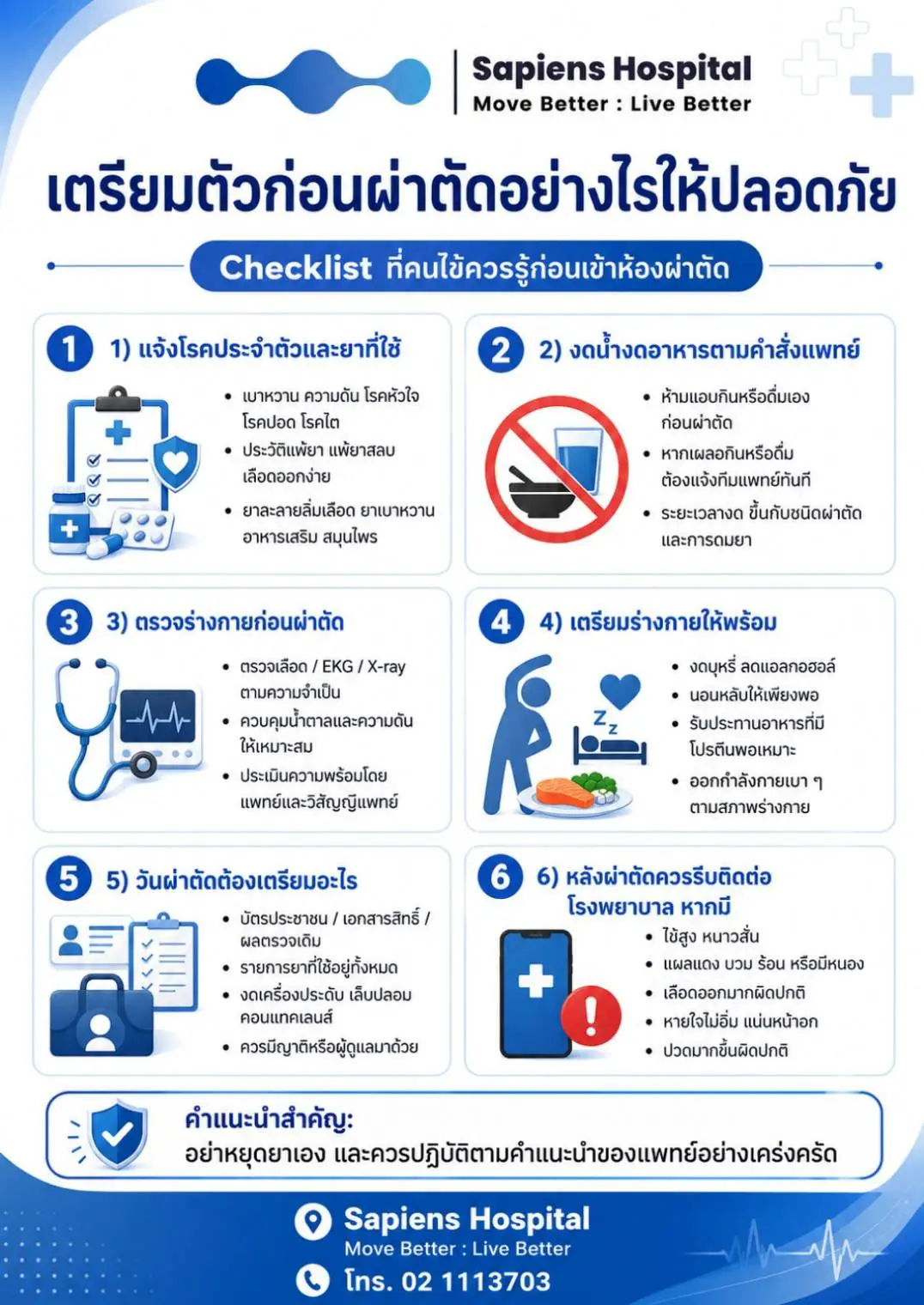
ဤဆောင်းပါးတွင် ခွဲစိတ်မတိုင်မီ ဘာတွေပြင်ဆင်ရမလဲ၊ ဘာတွေကို ဆရာဝန်အား အသိပေးရမလဲ၊ အစာနှင့်ရေ ဘယ်လိုရှောင်ရမလဲ၊ ဘယ်ဆေးတွေကို အထူးသတိထားရမလဲနှင့် ခွဲစိတ်ပြီးနောက် ဘယ်လိုလက္ခဏာတွေကို စောင့်ကြည့်ရမလဲဆိုတာကို အဆင့်လိုက်ရှင်းပြထားသည်။
1. “ဘာခွဲစိတ်မလဲ၊ ဘာကြောင့်ခွဲစိတ်မလဲ” ကို အရင်နားလည်ပါ
ခွဲစိတ်မတိုင်မီ လူနာသည် ဆရာဝန်က ဘာလုပ်မည်၊ ဘာရောဂါကို ကုသရန်ဖြစ်သည်၊ အခြားရွေးချယ်စရာရှိမရှိနှင့် ဘယ်လိုရလဒ်ကို မျှော်လင့်နိုင်မလဲကို ရှင်းလင်းစွာ နားလည်သင့်သည်။ ဆရာဝန်အား မေးသင့်သော မေးခွန်းများမှာ:
- ကျွန်ုပ်တွင် ဘာရောဂါ သို့မဟုတ် ပြဿနာရှိသလဲ?
- မခွဲစိတ်ပါက ဘာဖြစ်နိုင်သလဲ?
- ခွဲစိတ်ခြင်းမဟုတ်သော အခြားရွေးချယ်စရာရှိသလား?
- ဤခွဲစိတ်မှုကို ဘယ်လိုလုပ်မလဲ?
- Local anesthesia၊ nerve block၊ regional anesthesia သို့မဟုတ် general anesthesia အသုံးပြုမလား?
- ဆေးရုံဘယ်နှရက်တက်ရမလဲ?
- ခွဲစိတ်ပြီးနောက် ဘယ်လောက်နာကျင်နိုင်သလဲ?
- အလုပ် သို့မဟုတ် လှုပ်ရှားမှု ဘယ်နှရက်နားရမလဲ?
- အရေးကြီးသော အန္တရာယ်များ သို့မဟုတ် နောက်ဆက်တွဲပြဿနာများ ဘာတွေရှိသလဲ?
- ခွဲစိတ်ပြီးနောက် ဘယ်လိုလက္ခဏာတွေ ဖြစ်ရင် ဆေးရုံကို အမြန်ပြန်လာရမလဲ?
ကုသမှုအစီအစဉ်ကို နားလည်သောလူနာများသည် စိုးရိမ်ပူပန်မှု လျော့နည်းလာပြီး ပိုမိုမှန်ကန်စွာ ပြင်ဆင်နိုင်တတ်သည်။ ခွဲစိတ်မှုဘေးကင်းရေးသည် ခွဲစိတ်ဆရာဝန် သို့မဟုတ် မေ့ဆေးဆရာဝန်တစ်ဦးတည်း၏တာဝန်မဟုတ်ဘဲ ဆေးဘက်ဆိုင်ရာအဖွဲ့၊ လူနာနှင့် မိသားစုတို့ အတူတကွ ပူးပေါင်းလုပ်ဆောင်ရသည့်အရာဖြစ်သည်။
2. ရှိပြီးသားရောဂါအားလုံးကို ဆရာဝန်အား ပြောပြပါ—ခွဲစိတ်မှုနှင့် မဆိုင်သလိုထင်ရသည့်ရောဂါပါ ချန်မထားပါနှင့်
အချို့ရောဂါများသည် ခွဲစိတ်မှုနှင့် မဆိုင်သလိုထင်ရသော်လည်း ဘေးကင်းရေးအပေါ် အရေးကြီးစွာ သက်ရောက်နိုင်သည်။ ဥပမာ ဆီးချို၊ သွေးတိုး၊ နှလုံးရောဂါ၊ အဆုတ်ရောဂါ၊ ကျောက်ကပ်ရောဂါ၊ အသည်းရောဂါ၊ သွေးရောဂါ၊ အိပ်ပျော်ချိန်အသက်ရှူရပ်ခြင်းနှင့် ယခင်မေ့ဆေးအသုံးပြုမှုမှ ပြင်းထန်သော တုံ့ပြန်မှုများဖြစ်သည်။
ဥပမာ သွေးတွင်းသကြားဓာတ် အလွန်မြင့်သော ဆီးချိုလူနာတွင် အနာကျက်နှေးခြင်းနှင့် ပိုးဝင်ခြင်း ပိုဖြစ်နိုင်သည်။ နှလုံးရောဂါရှိသူတွင် ခွဲစိတ်မတိုင်မီ နှလုံးအန္တရာယ်အကဲဖြတ်ရန် လိုအပ်နိုင်သည်။ အိပ်ပျော်ချိန်အသက်ရှူရပ်သူတွင် မေ့ဆေးအစီအစဉ်နှင့် ခွဲစိတ်ပြီးနောက် စောင့်ကြည့်မှုကို သီးခြားစီစဉ်ရန် လိုအပ်နိုင်သည်။ AHA/ACC 2024 လမ်းညွှန်တွင် ခွဲစိတ်မတိုင်မီ နှလုံးအန္တရာယ်အကဲဖြတ်ရာတွင် လူနာ၏အခြေအနေ၊ ခွဲစိတ်မှုအမျိုးအစား၊ အရေးပေါ်အဆင့်နှင့် လှုပ်ရှားနိုင်စွမ်းတို့ကို အတူတကွ စဉ်းစားသင့်ကြောင်း ဖော်ပြထားသည်။ ဆရာဝန်အား ပြည့်စုံစွာ အသိပေးသင့်သောအချက်များမှာ:
- ရှိပြီးသားရောဂါအားလုံး
- ယခင်ခွဲစိတ်မှုနှင့် မေ့ဆေးအသုံးပြုမှုမှတ်တမ်း
- ဆေး၊ အစားအစာ၊ ထုံဆေး သို့မဟုတ် မေ့ဆေးနှင့် မတည့်ဖူးခြင်း ရှိမရှိ
- ယခင်ခွဲစိတ်ပြီးနောက် နောက်ဆက်တွဲပြဿနာ ဖြစ်ဖူးခြင်းရှိမရှိ
- သွေးထွက်လွယ်ခြင်း၊ သွေးမတိတ်ခြင်း သို့မဟုတ် သွေးခဲပိတ်ဆို့မှုဖြစ်ဖူးခြင်းရှိမရှိ
- ဟောက်ခြင်း၊ အိပ်ပျော်ချိန်အသက်ရှူရပ်ခြင်း သို့မဟုတ် CPAP အသုံးပြုနေခြင်းရှိမရှိ
- ကိုယ်ဝန်ရှိခြင်း သို့မဟုတ် ကိုယ်ဝန်ရှိနိုင်ခြေရှိမရှိ
- သွားလှုပ်ခြင်း၊ သွားတု သို့မဟုတ် ပါးစပ်တွင်းပြဿနာရှိမရှိ
- ခွဲစိတ်ပြီးနောက် စောင့်ရှောက်ပေးမည့်သူရှိမရှိ
ဆရာဝန်မေးမှ ပြောမည်ဟု မစောင့်ပါနှင့်။ အရေးကြီးသည့်အချက်ရှိပါက မိမိဘက်မှ အသိပေးပါ။ အချက်သေးသေးလေးတစ်ခုက မေ့ဆေးအစီအစဉ်၊ ခွဲစိတ်မှု သို့မဟုတ် ခွဲစိတ်ပြီးနောက် စောင့်ရှောက်မှုကို ပြောင်းလဲစေနိုင်သည်။
3. ဆေး၊ အာဟာရဖြည့်စွက်ဆေးနှင့် ဆေးဖက်ဝင်အပင်ထွက်ပစ္စည်း စာရင်းအားလုံးယူလာပါ
ခွဲစိတ်မတိုင်မီ ပြဿနာဖြစ်လေ့ရှိသည့်အချက်တစ်ခုမှာ “ဆေး” ဖြစ်သည်။ လူနာအချို့သည် ဆေးအမျိုးအစားများစွာ သောက်နေကြပြီး အချို့သည် ကိုယ်တိုင်ဝယ်သောက်သောဆေး၊ အာဟာရဖြည့်စွက်ဆေး၊ ဆေးဖက်ဝင်အပင်ထွက်ပစ္စည်း သို့မဟုတ် ရိုးရာဆေးများကို သောက်နေကြသည်။ ဆေးအချို့က သွေးထွက်နိုင်ခြေမြင့်စေသည်၊ ဆေးအချို့က သွေးပေါင်နှင့် သကြားဓာတ်အပေါ် သက်ရောက်သည်၊ ဆေးအချို့က မေ့ဆေးနှင့် တုံ့ပြန်မှုရှိနိုင်ပြီး ဆေးအချို့ကို မိမိဘာသာရပ်လိုက်ပါက ရောဂါပြန်ဆိုးနိုင်သည်။ အထူးအသိပေးသင့်သောဆေးများမှာ:
- warfarin, dabigatran, rivaroxaban, apixaban ကဲ့သို့ anticoagulants
- aspirin, clopidogrel ကဲ့သို့ antiplatelet ဆေးများ
- ဆီးချိုဆေးများနှင့် insulin
- သွေးတိုးဆေးများ
- steroid ဆေးများ
- ကိုယ်ခံအားဖိနှိပ်ဆေးများ
- NSAIDs အုပ်စု အကိုက်အခဲပျောက်ဆေးများ
- အိပ်ဆေး၊ စိုးရိမ်ပူပန်မှုလျော့ဆေး သို့မဟုတ် opioid
- fish oil၊ vitamin E နှင့် ဆေးဖက်ဝင်အပင်ထွက်ပစ္စည်းအချို့
- ပါဝင်ပစ္စည်းမသေချာသော ရိုးရာဆေးများ
အရေးကြီးဆုံးအချက်မှာ “ဆရာဝန်နှင့် မတိုင်ပင်ဘဲ ခွဲစိတ်မတိုင်မီ ဆေးကို မိမိဘာသာ မရပ်ပါနှင့်။” ဆေးအချို့ကို ကြိုတင်ရပ်ရန် လိုအပ်သော်လည်း အချို့ကို ခွဲစိတ်သည့်နေ့အထိ ဆက်သောက်ရန် လိုအပ်နိုင်သည်။
4. ခွဲစိတ်မတိုင်မီ စစ်ဆေးမှု—အများဆုံးစစ်ရန် မဟုတ်ဘဲ လိုအပ်သလောက် မှန်ကန်စွာစစ်ရန်
လူအများက ခွဲစိတ်မတိုင်မီ စစ်ဆေးမှုအားလုံး ပြုလုပ်ရမည်ဟု ထင်တတ်ကြသော်လည်း ယနေ့ခေတ် လမ်းညွှန်များက လူနာတစ်ဦးချင်းစီ၏ လိုအပ်ချက်အပေါ် အခြေခံ၍ စစ်ဆေးရန် အလေးထားသည်။
စဉ်းစားနိုင်သော စစ်ဆေးမှုများမှာ:
- CBC၊ electrolytes၊ kidney function၊ liver function နှင့် blood glucose ကဲ့သို့ သွေးစစ်ဆေးမှုများ
- လိုအပ်သည့်အခါ သွေးခဲခြင်းစစ်ဆေးမှု
- အချို့အခြေအနေများတွင် ဆီးစစ်ဆေးခြင်း
- ECG/EKG
- အချို့လူနာများတွင် ရင်ဘတ် X-ray
- အန္တရာယ်အလိုက် နှလုံး၊ အဆုတ် သို့မဟုတ် အထူးကုဆိုင်ရာ စစ်ဆေးမှုများ
- သွေးအားနည်းခြင်း၊ အာဟာရအခြေအနေနှင့် ခန္ဓာကိုယ်ကြံ့ခိုင်မှုကို အကဲဖြတ်ခြင်း
CPOC guideline တွင် ခွဲစိတ်မတိုင်မီ အကဲဖြတ်မှုအား ကောင်းမွန်စွာမထိန်းချုပ်ထားသော ရောဂါများ၊ သွေးအားနည်းခြင်း၊ အာဟာရပြဿနာ၊ ဆေးလိပ်သောက်ခြင်း၊ အရက်သောက်ခြင်း သို့မဟုတ် အသက်ကြီးသူများတွင် frailty ကဲ့သို့ ပြုပြင်နိုင်သော အန္တရာယ်များကို ရှာဖွေရန် အသုံးပြုသင့်ကြောင်း ဖော်ပြထားသည်။
ထို့ကြောင့် ဆရာဝန်က စစ်ဆေးမှုတစ်ခုကို မညွှန်ကြားခြင်းသည် စောင့်ရှောက်မှုမပြည့်စုံဟု မဆိုလိုပါ။ ထိုစစ်ဆေးမှုသည် သင့်အန္တရာယ်အဆင့်အတွက် မလိုအပ်ခြင်းသာ ဖြစ်နိုင်သည်။
5. ခွဲစိတ်မတိုင်မီ အစားအစာနှင့်ရေ ဘယ်လိုရှောင်ရမလဲ?
ခွဲစိတ်မတိုင်မီ အစာနှင့်ရေကို ရှောင်ရသည့် အဓိကရည်ရွယ်ချက်မှာ မေ့ဆေးပေးချိန်တွင် အစာအိမ်အတွင်းရှိအရာများ အဆုတ်ထဲသို့ ဝင်ရောက်နိုင်ခြေကို လျှော့ချရန်ဖြစ်သည်။ ASA 2023 လမ်းညွှန်တွင် preoperative fasting၊ clear liquids နှင့် လူနာအချို့တွင် carbohydrate-containing drinks ဆိုင်ရာ အကြံပြုချက်များကို အပ်ဒိတ်ပြုလုပ်ထားသည်။ သို့သော် fasting အချိန်သည် ခွဲစိတ်မှုအမျိုးအစား၊ မေ့ဆေးနည်းလမ်း၊ aspiration အန္တရာယ်၊ ရှိပြီးသားရောဂါနှင့် မေ့ဆေးအဖွဲ့၏ သီးခြားညွှန်ကြားချက်များအပေါ် မူတည်သည်။ ယေဘုယျအားဖြင့် elective surgery လုပ်မည့် ကျန်းမာသော လူကြီးများတွင်:
- အဆီများသော သို့မဟုတ် အစားအစာအများကြီးပါဝင်သော မုန့်ညက်များသည် ပေါ့ပါးသောအစားအစာထက် fasting အချိန်ပိုရှည်နိုင်သည်
- အစာပေါ့ကို ပုံမှန်အားဖြင့် ၆ နာရီခန့် ရှောင်ရန် လိုနိုင်သည်
- သင့်တော်သော လူနာများတွင် clear liquids ကို ခွဲစိတ်မတိုင်မီ ၂ နာရီခန့်အထိ သောက်ခွင့်ပြုနိုင်သည်
- ပြင်းထန် reflux၊ အစာအိမ်အလွတ်ချိန်နှေးခြင်း၊ ဆီးချိုအချို့၊ ကိုယ်ဝန်၊ အဝလွန်မှုမြင့်ခြင်း သို့မဟုတ် aspiration အန္တရာယ်ရှိသူများတွင် သီးခြားညွှန်ကြားချက် လိုအပ်နိုင်သည်
အရေးကြီးဆုံးမှာ “သင့်ဆေးရုံနှင့် မေ့ဆေးအဖွဲ့၏ fasting ညွှန်ကြားချက်ကို အဓိကလိုက်နာပါ။” အစာ သို့မဟုတ် ရေကို သတ်မှတ်ချိန်ကျော်ပြီး မတော်တဆ သောက်စားမိပါက အမှန်အတိုင်း ဆေးဘက်ဆိုင်ရာအဖွဲ့ကို ပြောပါ။
6. ခွဲစိတ်မတိုင်မီ ရှိပြီးသားရောဂါများကို တတ်နိုင်သမျှ ကောင်းစွာထိန်းချုပ်ပါ
အရေးပေါ်မဟုတ်သော ခွဲစိတ်မှုတွင် ခွဲစိတ်မတိုင်မီအချိန်သည် ခန္ဓာကိုယ်ကို ပြင်ဆင်ရန် အရေးကြီးသောအချိန်ဖြစ်သည်။
- ဆီးချို
သွေးတွင်းသကြားဓာတ်ကို သင့်တော်စွာ ထိန်းချုပ်သင့်သည်။ ခွဲစိတ်မတိုင်မီ ဆီးချိုဆေး သို့မဟုတ် insulin ပြောင်းလဲမှုကို ဆရာဝန်၏အစီအစဉ်အတိုင်းသာ ပြုလုပ်ပါ။ - သွေးတိုး
သွေးပေါင်ကို ပုံမှန်တိုင်းပြီး ဆရာဝန်ညွှန်ကြားသည့်ဆေးကို ဆက်သောက်ပါ။ ခွဲစိတ်သည့်နေ့တွင် သွေးပေါင်အလွန်မြင့်ပါက အချို့လူနာတွင် ခွဲစိတ်မှုရွှေ့ဆိုင်းရနိုင်သည်။ - နှလုံးရောဂါ
ရင်ဘတ်နာခြင်း၊ မောပန်းလွယ်ခြင်း၊ နှလုံးခုန်မြန်ခြင်း၊ မူးလဲခြင်း သို့မဟုတ် နှလုံးရောဂါရာဇဝင်ရှိပါက ဆရာဝန်အား ပြောပါ။ - အဆုတ်ရောဂါနှင့် ဆေးလိပ်
asthma၊ COPD၊ နာတာရှည်ချောင်းဆိုးခြင်း၊ အသက်ရှူမဝခြင်း သို့မဟုတ် inhaler အသုံးပြုနေပါက အသိပေးပါ။ ခွဲစိတ်မတိုင်မီ ဆေးလိပ်ရပ်ခြင်းသည် အဆုတ်နှင့် အနာဆိုင်ရာ နောက်ဆက်တွဲပြဿနာများကို လျှော့ချနိုင်သည်။ - ကျောက်ကပ်နှင့် အသည်းရောဂါ
သောက်နေသောဆေးများနှင့် ယခင် lab result များကို အသိပေးပါ။ အသည်းနှင့် ကျောက်ကပ်ရောဂါသည် ဆေးရွေးချယ်မှု၊ ဆေးဖယ်ရှားမှုနှင့် သွေးထွက်ခြင်း သို့မဟုတ် အရည်စုခြင်းအန္တရာယ်ကို သက်ရောက်စေနိုင်သည်။
7. ပြန်လည်သက်သာမှု ပိုကောင်းစေရန် ခန္ဓာကိုယ်ကို ပြင်ဆင်ပါ
ခွဲစိတ်မတိုင်မီ ပြင်ဆင်ခြင်းသည် သွေးစစ်ခြင်းနှင့် fasting လုပ်ခြင်းတစ်ခုတည်း မဟုတ်ပါ။
- Protein လုံလောက်စွာ စားပါ
Protein သည် အနာနှင့်တစ်ရှူးပြန်လည်ပြုပြင်မှုအတွက် အရေးကြီးသည်။ အာဟာရချို့တဲ့သူ သို့မဟုတ် အစားစားမကောင်းသူများသည် ဆရာဝန်အား အသိပေးသင့်သည်။ - သင့်တော်သလောက် လေ့ကျင့်ခန်းလုပ်ပါ
ဆရာဝန်မတားမြစ်ပါက ပေါ့ပါးသောလမ်းလျှောက်ခြင်း၊ အသက်ရှူလေ့ကျင့်ခန်း သို့မဟုတ် အခြေခံကြွက်သားလေ့ကျင့်ခန်းများသည် ပြန်လည်သက်သာမှုကို အထောက်အကူပြုနိုင်သည်။ - အိပ်ရေးလုံလောက်ပါ
အိပ်စက်မှုသည် ကိုယ်ခံအား၊ သွေးပေါင်၊ သွေးတွင်းသကြားဓာတ်နှင့် ပြန်လည်သက်သာမှုအပေါ် သက်ရောက်သည်။ - ဆေးလိပ်ရပ်ပြီး အရက်လျှော့ပါ
ဆေးလိပ်သည် အနာကျက်နှေးစေပြီး အဆုတ်နှင့် အနာဆိုင်ရာ နောက်ဆက်တွဲပြဿနာများကို မြင့်တက်စေနိုင်သည်။ အရက်သည် မေ့ဆေး၊ အသည်း၊ သွေးထွက်မှုနှင့် ပြန်လည်သက်သာမှုအပေါ် သက်ရောက်နိုင်သည်။
8. ခွဲစိတ်ဒဏ်ရာပိုးဝင်မှုကို ခွဲစိတ်မတိုင်မီကတည်းက ကာကွယ်နိုင်သည်
CDC နှင့် WHO လမ်းညွှန်များတွင် surgical site infection ကာကွယ်မှုကို ခွဲစိတ်မတိုင်မီ၊ ခွဲစိတ်နေစဉ်နှင့် ခွဲစိတ်ပြီးနောက် အဆင့်အားလုံးတွင် စနစ်တကျပြုလုပ်သင့်ကြောင်း ဖော်ပြထားသည်။
လူနာဘက်မှ ကူညီလုပ်ဆောင်နိုင်သည့်အချက်များ မှာ:
- ခွဲစိတ်မတိုင်မီ ညွှန်ကြားချက်အတိုင်း ရေချိုး သို့မဟုတ် ခန္ဓာကိုယ်သန့်ရှင်းပါ
- ခွဲစိတ်မည့်နေရာကို ကိုယ်တိုင် မရိတ်ပါနှင့်
- ခွဲစိတ်မည့်နေရာအနီး ပိုးဝင်အနာ၊ ဝက်ခြံ၊ ပြည်တည်နာ သို့မဟုတ် အဖုရှိပါက အသိပေးပါ
- ဆီးချိုရှိပါက သွေးတွင်းသကြားဓာတ်ကို ထိန်းချုပ်ပါ
- ဆေးလိပ်ရပ်ပါ
- ခွဲစိတ်ပြီးနောက် အနာပြုစုမှုညွှန်ကြားချက်ကို လိုက်နာပြီး ဆရာဝန်မခွင့်ပြုမီ အနာကို မဖွင့်၊ မထိပါနှင့်
- ဆရာဝန်အကြံပြုချက်မရှိဘဲ အနာပေါ်တွင် ဆေး သို့မဟုတ် ဆေးဖက်ဝင်ပစ္စည်း မလိမ်းပါနှင့်
ခွဲစိတ်ပြီးနောက် ဖျားခြင်း၊ အနာနီခြင်း၊ ဖောင်းခြင်း၊ ပူခြင်း၊ ပိုနာလာခြင်း၊ ပြည်ထွက်ခြင်း သို့မဟုတ် အနံ့မကောင်းခြင်းရှိပါက ဆေးရုံသို့ အမြန်ပြန်လည်ဆက်သွယ်ပါ။
9. ခွဲစိတ်ခွင့်ပြုချက် လက်မှတ်ထိုးမီ စိတ်ပိုင်းဆိုင်ရာနှင့် အချက်အလက်ပိုင်းဆိုင်ရာ ပြင်ဆင်ပါ
ခွဲစိတ်ခွင့်ပြုချက်သည် လုပ်ထုံးလုပ်နည်းအတွက်သာ လက်မှတ်ထိုးရသော စာရွက်မဟုတ်ပါ။ လူနာသည် ကုသမှု၏ အရေးကြီးသောအချက်များကို နားလည်သင့်သည်။
- ဘာကြောင့်ခွဲစိတ်ရမလဲ
- မျှော်လင့်ထားသောရလဒ်က ဘာလဲ
- အရေးကြီးသောအန္တရာယ်များ ဘာတွေလဲ
- ခွဲစိတ်နည်းလမ်း ပြောင်းလဲရန် လိုနိုင်သလား
- သွေးသွင်းရန် လိုနိုင်သလား
- အန္တရာယ်မြင့်သူတွင် ICU တက်ရန် လိုနိုင်သလား
- ခွဲစိတ်ပြီးနောက် ဘယ်လိုပြုစုရမလဲ
- ဘယ်အချိန်မှာ follow-up ပြန်လာရမလဲ
နားမလည်သေးပါက လက်မှတ်မထိုးမီ မေးပါ။ မေးခွန်းမေးခြင်းသည် ဆရာဝန်ကို မယုံကြည်ခြင်း မဟုတ်ပါ။
10. ခွဲစိတ်သည့်နေ့ ဆေးရုံသို့ ဘာယူလာရမလဲ? ယူလာသင့်သောအရာများမှာ:
- နိုင်ငံသားမှတ်ပုံတင် သို့မဟုတ် အထောက်အထားစာရွက်စာတမ်း
- အာမခံ သို့မဟုတ် ကုမ္ပဏီစာရွက်စာတမ်း
- သက်ဆိုင်ရာ ယခင်စစ်ဆေးမှုရလဒ်များ
- ပုံမှန်သောက်နေသောဆေးစာရင်း သို့မဟုတ် ဆေးအထုပ်များ
- CPAP အသုံးပြုပါက စက်
- မျက်မှန်၊ နားကြားကိရိယာ သို့မဟုတ် လိုအပ်သောကိရိယာများ
- ချောင်ချိပြီး သက်တောင့်သက်သာရှိသောအဝတ်အစား
- မလျှောဘဲ သွားလာရလွယ်သောဖိနပ်
- ခွဲစိတ်ပြီးနောက် ညွှန်ကြားချက်များကို နားထောင်နိုင်မည့် စောင့်ရှောက်သူ သို့မဟုတ် ဆွေမျိုး
- အရေးပေါ်ဆက်သွယ်ရန် ဖုန်းနံပါတ်
မလိုအပ်သော လက်ဝတ်ရတနာ၊ နာရီ၊ အတုလက်သည်းနှင့် တန်ဖိုးရှိပစ္စည်းများ မယူပါနှင့် နှင့် ခွဲစိတ်မတိုင်မီ ရေချိုးခြင်း၊ မိတ်ကပ်၊ လက်သည်းဆိုးဆေးနှင့် contact lens ဆိုင်ရာ ဆေးရုံညွှန်ကြားချက်ကို လိုက်နာပါ။
11. ခွဲစိတ်ပြီးနောက် ဘာတွေကို စောင့်ကြည့်ရမလဲ?
ခွဲစိတ်ပြီးနောက် လူနာသည် ကိုယ်ခန္ဓာအခြေအနေနှင့် ခွဲစိတ်အနာ နှစ်မျိုးလုံးကို စောင့်ကြည့်သင့်သည်။ အောက်ပါလက္ခဏာများရှိပါက ဆေးရုံကို အမြန်ဆက်သွယ်ပါ:
- ဖျားမြင့်ခြင်း၊ ချမ်းတုန်ခြင်း သို့မဟုတ် အနာနီ၊ ဖောင်း၊ ပူ၊ ပိုနာလာခြင်း
- ပြည်ထွက်ခြင်း၊ သွေးများစွာထွက်ခြင်း သို့မဟုတ် အနံ့မကောင်းခြင်း
- ဆေးသောက်ပြီးသော်လည်း ပုံမှန်မဟုတ်အောင် အလွန်နာခြင်း
- အသက်ရှူမဝခြင်း၊ ရင်ဘတ်တင်း/နာခြင်း၊ နှလုံးခုန်မြန်ခြင်း သို့မဟုတ် မူးဝေခြင်း
- ခြေထောက်ဖောင်းခြင်း၊ ခြေသလုံးနာခြင်း သို့မဟုတ် သွေးခဲသံသယရှိခြင်း
- အန်ခြင်းများပြီး အစာ/ရေ မစားနိုင်ခြင်း
- ဆီးမသွားနိုင်ခြင်း
- အလွန်ငိုက်ခြင်း၊ စိတ်ရှုပ်ထွေးခြင်း သို့မဟုတ် အလွန်အားနည်းခြင်း
- လူနာ သို့မဟုတ် မိသားစုက စိုးရိမ်သည့် မည်သည့်လက္ခဏာမဆို
လက္ခဏာများ အလွန်ပြင်းထန်လာသည်အထိ မစောင့်ပါနှင့်။ နောက်ဆက်တွဲပြဿနာများကို စောစီးစွာတွေ့ရှိပါက ကုသရန် ပိုလွယ်နိုင်သည်။
12. Surgical Safety Checklist: ဘေးကင်းရေးသည် လူတစ်ဦးတည်းအပေါ် မမူတည်ပါ
ဘေးကင်းသော ခွဲစိတ်မှုသည် ဆရာဝန်တစ်ဦး၏ ကျွမ်းကျင်မှုတစ်ခုတည်းမဟုတ်ဘဲ ကောင်းမွန်သောစနစ်အပေါ် မူတည်သည်။ WHO Surgical Safety Checklist သည် လူနာအတည်ပြုခြင်း၊ ခွဲစိတ်မည့်နေရာ၊ လုပ်ထုံးလုပ်နည်း၊ ဆေးမတည့်မှုအန္တရာယ်၊ ခွဲစိတ်မတိုင်မီ ပဋိဇီဝဆေး၊ ကိရိယာများနှင့် အဖွဲ့ဆက်သွယ်မှုတို့ကို စစ်ဆေးရန် ကူညီပေးသည့် နိုင်ငံတကာကိရိယာဖြစ်သည်။
ထို့ကြောင့် ဆေးဘက်ဆိုင်ရာအဖွဲ့က သင့်နာမည်၊ မွေးနေ့၊ ခွဲစိတ်မည့်နေရာကို အကြိမ်ကြိမ်မေးပါက မေ့လို့မဟုတ်ပါ။ ဆေးဘက်ဆိုင်ရာအမှားများကို ကာကွယ်ရန် ထပ်မံအတည်ပြုခြင်းဖြစ်သည်။
မေးလေ့ရှိသော မေးခွန်းများ
- ခွဲစိတ်မတိုင်မီ အစာနှင့်ရေ ဘယ်နှနာရီရှောင်ရမလဲ?
ခွဲစိတ်မှု၊ မေ့ဆေးနှင့် လူနာ၏ aspiration အန္တရာယ်ပေါ် မူတည်သည်။ ယေဘုယျအားဖြင့် ကျန်းမာသောလူကြီးများတွင် အစာပေါ့ကို ၆ နာရီခန့် ရှောင်နိုင်ပြီး clear liquids ကို အချို့အခြေအနေများတွင် ၂ နာရီခန့်အထိ သောက်ခွင့်ပြုနိုင်သည်။ သို့သော် ဆေးရုံနှင့် မေ့ဆေးဆရာဝန်၏ညွှန်ကြားချက်ကို အဓိကလိုက်နာပါ။ - aspirin သို့မဟုတ် သွေးပါးဆေးကို ခွဲစိတ်မတိုင်မီ ရပ်ရမလား?
မိမိဘာသာ မရပ်ပါနှင့်။ ဆရာဝန်က သီးခြားအကဲဖြတ်ရန် လိုအပ်သည်။ - ဆီးချိုရှိရင် ခွဲစိတ်လို့ရသလား?
အခြေအနေများစွာတွင် ရနိုင်သည်။ သွေးတွင်းသကြားဓာတ်နှင့် ဆေးအစီအစဉ်ကို သင့်တော်စွာ စီမံရန် လိုအပ်သည်။ - ခွဲစိတ်မတိုင်မီ လူတိုင်း နှလုံးစစ်ရမလား?
မလိုပါ။ အသက်၊ လက္ခဏာ၊ ရောဂါများ၊ အန္တရာယ်နှင့် ခွဲစိတ်မှုအမျိုးအစားအပေါ် မူတည်သည်။ - အအေးမိ သို့မဟုတ် ဖျားနေရင် ခွဲစိတ်ရွှေ့ရမလား?
လက္ခဏာ၏ပြင်းထန်မှု၊ ခွဲစိတ်မှုနှင့် မေ့ဆေးနည်းလမ်းအပေါ် မူတည်သည်။ ဖျားခြင်း၊ ချောင်းဆိုးများခြင်း၊ အသက်ရှူခက်ခြင်း သို့မဟုတ် ပိုးဝင်မှုသံသယရှိပါက ဆေးရုံအား ကြိုတင်အသိပေးပါ။ - ခွဲစိတ်မတိုင်မီ ဆေးလိပ်ဘယ်လောက်ကြိုရပ်သင့်သလဲ?
တတ်နိုင်သမျှ စောစောရပ်သင့်သည်။ စီစဉ်ထားသောခွဲစိတ်မှုတွင် အပတ်များစွာ ကြိုတင်ရပ်ခြင်းသည် အဆုတ်၊ အနာနှင့် ပြန်လည်သက်သာမှုအတွက် အကျိုးရှိသည်။ - ခွဲစိတ်ပြီးနောက် ဘယ်လောက်နာရင် ပုံမှန်မဟုတ်ဘူးလဲ?
ခွဲစိတ်ပြီးနောက် နာကျင်မှုရှိနိုင်သော်လည်း တဖြည်းဖြည်း သက်သာလာပြီး ဆေးဖြင့် ထိန်းနိုင်သင့်သည်။ ပိုနာလာခြင်း၊ အနာနီဖောင်းခြင်း၊ ဖျားခြင်း သို့မဟုတ် လှုပ်ရှားမရအောင် နာခြင်းရှိပါက ဆေးရုံကို ဆက်သွယ်ပါ။
ခွဲစိတ်မတိုင်မီ ကြိုတင်ပြင်ဆင်ခြင်းသည် ခွဲစိတ်မှုကိုယ်တိုင်ကဲ့သို့ ဘေးကင်းရေးအတွက် အရေးကြီးသည်။ လူနာသည် ကုသမှုအစီအစဉ်ကို နားလည်ပြီး ရှိပြီးသားရောဂါများ၊ ဆေးအားလုံးကို အသိပေးကာ fasting ညွှန်ကြားချက်ကို လိုက်နာသင့်သည်။ ရောဂါများကို ထိန်းချုပ်ခြင်း၊ ဆေးလိပ်ရပ်ခြင်း သို့မဟုတ် အရက်လျှော့ခြင်း၊ စောင့်ရှောက်သူပြင်ဆင်ခြင်းနှင့် ခွဲစိတ်ပြီးနောက် အန္တရာယ်လက္ခဏာများကို သိထားခြင်းတို့လည်း အရေးကြီးသည်။ ကောင်းမွန်သောခွဲစိတ်မှုသည် ခွဲစိတ်ခန်းထဲဝင်သည့်အချိန်မှ စတင်ခြင်းမဟုတ်ဘဲ လူနာနှင့် ဆေးဘက်ဆိုင်ရာအဖွဲ့ အတူတကွ စီစဉ်သည့်နေ့မှ စတင်ပါသည်။ ရည်ရွယ်ချက်မှာ “ခွဲစိတ်ပြီးအောင်လုပ်ရုံ” မဟုတ်ဘဲ “ဘေးကင်းစွာခွဲစိတ်ခြင်း၊ ကောင်းမွန်စွာပြန်လည်သက်သာခြင်း၊ နောက်ဆက်တွဲပြဿနာများ လျှော့ချခြင်းနှင့် ယုံကြည်မှုရှိစွာ နေ့စဉ်ဘဝသို့ ပြန်သွားနိုင်ခြင်း”
အချက်အလက်မေးမြန်းရန်နှင့် ရက်ချိန်းယူရန်
Sapiens Hospital Move Better : Live Better
ဖုန်း 02-111-3703
ကိုးကားစာတမ်းများ
1. Centre for Perioperative Care. Preoperative Assessment and Optimisation for Adult Surgery.2021.
2. Association of Anaesthetists. Pre-operative assessment and patient preparation: the role of the anaesthetist.Anaesthesia guideline.
3. Joshi GP, Abdelmalak BB, Weigel WA, et al. 2023 American Society of Anesthesiologists Practice Guidelines for Preoperative Fasting. Anesthesiology. 2023.
4. Thompson A, Fleischmann KE, Smilowitz NR, et al.2024 AHA/ACC/Multisociety Guideline for Perioperative Cardiovascular Management for Noncardiac Surgery.Circulation. 2024.5. World Health Organization. WHO Guidelines for Safe Surgery 2009: Safe Surgery Saves Lives.
6. World Health Organization. Implementation Manual: WHO Surgical Safety Checklist. 2009.
7. Berríos-Torres SI, Umscheid CA, Bratzler DW, et al.Centers for Disease Control and Prevention Guideline for the Prevention of Surgical Site Infection, 2017. JAMA Surgery. 2017.
8. World Health Organization.Global Guidelines for the Prevention of Surgical Site Infection.2nd edition. 2018.
9. American College of Surgeons. Strong for Surgery: Preoperative Checklists.
10. ERAS Society.Enhanced Recovery After Surgery Guidelines.
11. Stenberg E, et al.Guidelines for Perioperative Care in Bariatric Surgery: ERAS Society Recommendations: A 2021 Update.World Journal of Surgery.2022.
12. Royal College of Anaesthetists. Guidelines for the Provision of Anaesthesia Services: Preoperative assessment.2023.
How to Prepare for Surgery Safely
Surgery is something many people worry about, even when the doctor says it is not a major operation. Some people are afraid of pain, some worry about general anesthesia, some are concerned about underlying medical conditions, and some worry about surgical wound infection. Many people are also unsure about how they should prepare before surgery. In reality, surgical safety does not begin in the operating room. It begins when the treatment plan is made, when your medical history is reviewed, when blood tests are performed, when medications are checked, and when you begin preparing your body before surgery.
Good preoperative preparation can help reduce several risks, including complications from anesthesia, surgical site infection, bleeding, abnormal blood glucose, unstable blood pressure, postoperative pneumonia, and delayed recovery. International perioperative care guidelines emphasize that preoperative assessment should consider the whole patient, not only the condition requiring surgery. Existing health conditions, medications, nutrition, smoking, sleep, and the patient’s home support can all affect postoperative outcomes.
This article explains step by step what to prepare before surgery, what information to tell your doctor, how to follow fasting instructions, which medications require special attention, and which symptoms to monitor after surgery to help make surgery as safe as possible and support optimal recovery.
1. Start by understanding “What surgery am I having, and why?”
Before surgery, patients should clearly understand what procedure will be performed, what condition it is intended to treat, whether there are alternatives, and what outcomes can reasonably be expected. Questions to ask your doctor include:
- What condition or problem do I have?
- What may happen if I do not have surgery?
- Are there alternatives to surgery?
- How is this surgery performed?
- Will local anesthesia, a nerve block, regional anesthesia, or general anesthesia be used?
- How many days will I need to stay in the hospital?
- How much pain should I expect after surgery?
- How long will I need to take off work or limit activities?
- What are the important risks and possible complications?
- What symptoms after surgery mean I should return to the hospital promptly?
Patients who understand their treatment plan often feel less anxious and can prepare more effectively. Safe surgery is not only the responsibility of the surgeon or anesthesiologist. It requires cooperation between the healthcare team, the patient, and the family.
2. Tell your doctor about all underlying medical conditions—even those that seem unrelated to surgery
Some medical conditions may appear unrelated to surgery but can significantly affect safety, including diabetes, hypertension, heart disease, lung disease, kidney disease, liver disease, blood disorders, obstructive sleep apnea, or a previous serious reaction to anesthesia.
For example, poorly controlled diabetes may increase the risk of delayed wound healing and infection. Patients with heart disease may require cardiovascular risk assessment before surgery. People with obstructive sleep apnea may require individualized anesthesia planning and closer postoperative monitoring. The 2024 AHA/ACC guideline emphasizes that preoperative cardiovascular assessment should consider the patient’s overall condition, type and urgency of surgery, and functional capacity rather than performing the same cardiac tests for everyone. Important information to tell your doctor includes:
- All underlying medical conditions
- Previous operations and previous anesthesia
- Any history of drug, food, local anesthetic, or anesthesia allergy or reaction
- Any complications after previous surgery
- Any history of easy bleeding, difficulty stopping bleeding, or blood clots
- Snoring, sleep apnea, or use of CPAP
- Pregnancy or the possibility of pregnancy
- Loose teeth, dentures, or oral problems
- Whether you have someone who can care for you after surgery
Do not wait for the doctor to ask every question. If there is information you think may be important, tell the medical team. Even a small detail can affect the anesthesia plan, surgical plan, or postoperative care.
3. Bring a complete list of medications, supplements, and herbal products
One of the most common sources of preoperative problems is medication. Some patients take several prescription medications, while others use over-the-counter medicines, supplements, herbal products, or traditional remedies without realizing these may affect surgery. Some medicines increase bleeding risk, some affect blood pressure, some affect blood glucose, some interact with anesthesia, and some should not be stopped suddenly because the underlying disease may worsen. Medicines and products that should be specifically discussed with your doctor include:
- Anticoagulants such as warfarin, dabigatran, rivaroxaban, and apixaban
- Antiplatelet medications such as aspirin and clopidogrel
- Diabetes medications and insulin
- Blood pressure medications
- Steroids
- Immunosuppressive medications
- NSAID pain relievers
- Sleeping pills, anti-anxiety medications, or opioids
- Supplements such as fish oil, vitamin E, and some herbal products
- Herbal or traditional medicines with unknown ingredients
The key principle is: “Do not stop medication on your own before surgery without discussing it with your doctor.” Some medications need to be stopped in advance, while others should be continued until the day of surgery. The decision depends on the medication, the procedure, bleeding risk, and the patient’s medical conditions.
4. Preoperative testing: not as many tests as possible, but the right tests for the right patient
Many people think every possible test should be performed before surgery. Current guidance instead recommends testing according to individual clinical need rather than performing the same tests for everyone.
Tests that may be considered include:
- Blood tests such as CBC, electrolytes, kidney function, liver function, and blood glucose
- Blood-clotting tests when indicated
- Urine testing in selected cases
- Electrocardiogram (ECG/EKG)
- Chest X-ray in selected patients
- Additional heart, lung, or specialist tests based on individual risk
- Assessment for anemia, nutritional status, and general physical readiness
CPOC guidance states that preoperative assessment should help identify modifiable risks such as poorly controlled medical conditions, anemia, nutritional problems, smoking, alcohol use, and frailty in older adults so that these can be optimized before surgery when possible.
Therefore, if your doctor does not order a particular test, it does not necessarily mean your evaluation is incomplete. The test may simply not be necessary for your specific level of risk.
5. How should you fast before surgery?
The main purpose of preoperative fasting is to reduce the risk of stomach contents entering the lungs during anesthesia. The 2023 ASA guideline updated recommendations on preoperative fasting, including clear liquids and carbohydrate-containing drinks for selected patients. However, fasting times depend on the type of surgery, anesthesia, aspiration risk, underlying medical conditions, and specific instructions from the anesthesia team. In generally healthy adults undergoing elective surgery, many international recommendations use principles such as:
- Heavy or fatty meals generally require a longer fasting period than light meals
- A light meal is often stopped about 6 hours before anesthesia
- Clear liquids may be allowed until approximately 2 hours before anesthesia in appropriately selected patients
- People with severe reflux, delayed gastric emptying, some forms of diabetes, pregnancy, severe obesity, or other aspiration risks may require individualized instructions
The most important rule is: “Follow the fasting instructions provided by your hospital and anesthesiology team.” These instructions have been adjusted to your condition and procedure. If you accidentally eat or drink after the specified time, tell the medical team honestly. Do not hide it, because doing so may increase the risk during anesthesia and make surgery unsafe.
6. Control underlying medical conditions as well as possible before surgery
For non-emergency surgery, the period before surgery is an important opportunity to optimize your health.
- Diabetes
Blood glucose should be managed appropriately because high glucose is associated with slower wound healing and a higher risk of infection. Adjustment of diabetes medications or insulin before surgery should follow your doctor’s plan rather than being changed independently. - High blood pressure
Check your blood pressure regularly and take prescribed medications as directed. If blood pressure is very high on the day of surgery, surgery may need to be postponed in some cases for safety. - Heart disease
If you have chest pain, unusual shortness of breath, palpitations, fainting, or a history of heart disease, tell your doctor. Higher-risk patients may require further evaluation according to perioperative cardiovascular assessment guidance. - Lung disease and smoking
Tell your doctor if you have asthma, COPD, chronic cough, shortness of breath, or use inhalers. Stopping smoking before surgery can reduce pulmonary complications and problems with wound healing. Many ERAS guidelines encourage smoking cessation several weeks before planned surgery when possible. - Kidney and liver disease
Provide your current medication list and previous laboratory results when available. Kidney and liver disease can affect medication choice and clearance, as well as the risk of bleeding or fluid problems after surgery.
7. Prepare your body for easier recovery
Preparing for surgery involves more than blood tests and fasting. It also means helping your body become as ready as possible for recovery.
- Eat enough protein
Protein supports tissue and wound repair. Patients who are malnourished or have poor appetite should tell their doctor because poor nutrition may delay wound healing and increase infection risk. The American College of Surgeons’ Strong for Surgery program emphasizes nutrition screening, glucose management, smoking cessation, and medication review as important parts of preoperative preparation. - Exercise as appropriate
If your doctor does not restrict activity, light walking, breathing exercises, or basic strengthening before surgery may help recovery, particularly in older adults or people undergoing major surgery. - Get adequate sleep
Sleep affects immune function, blood pressure, blood glucose, and recovery. Tell your doctor if you have severe insomnia or significant snoring. - Stop smoking and reduce alcohol
Smoking can delay wound healing and increase pulmonary and wound complications. Alcohol can affect anesthesia, liver function, bleeding, and recovery. Stopping or reducing these substances in advance according to medical advice can be beneficial.
8. Preventing surgical site infection starts before surgery
Surgical site infection is an important complication that healthcare teams work to prevent. CDC and WHO guidance emphasizes that prevention should be systematic before, during, and after surgery rather than relying on antibiotics alone.
What patients can do includes:
- Shower or clean your body according to preoperative instructions
- Do not shave the surgical area yourself because shaving can cause small skin injuries
- Tell the healthcare team if you have an infected wound, acne, an abscess, or a rash near the surgical site
- Control blood glucose if you have diabetes
- Stop smoking
- Follow postoperative wound-care instructions and do not uncover or manipulate the wound earlier than advised
- Do not apply medications, herbal products, or other substances to the wound unless advised by your healthcare team
If you develop fever, increasing redness, swelling, warmth, pain, pus, or an unusual odor from the wound after surgery, contact your doctor promptly.
9. Prepare yourself mentally and understand the information before signing surgical consent
The consent form is not merely paperwork. It is an important opportunity for patients to understand key information about treatment. You should know:
- Why the surgery is being performed
- What outcomes are expected
- What the important risks are
- Whether the surgical approach might need to change
- Whether a blood transfusion may be required
- Whether ICU care might be needed in higher-risk cases
- How to care for yourself after surgery
- When follow-up is required
If you do not understand something, ask before signing. Asking questions does not mean you do not trust your doctor. It is part of safe care and informed shared decision-making.
10. What should you bring to the hospital on the day of surgery? Items to prepare include:
- National identification card or other identification documents
- Insurance or company documents if applicable
- Relevant previous test results
- A current medication list or the actual medication packages
- Your CPAP machine if you normally use one
- Glasses, hearing aids, or other necessary devices
- Loose, comfortable clothing
- Comfortable, non-slip footwear
- A caregiver or relative who can listen to postoperative instructions
- An emergency contact number
Avoid unnecessary jewelry, watches, artificial nails, and valuables and follow hospital instructions regarding bathing, makeup, nail polish, and contact lenses before surgery.
11. What should you monitor after surgery?
After surgery, monitor both your general condition and the surgical wound. Contact the hospital promptly if you develop:
- High fever or chills, or increasing redness, swelling, warmth, or pain around the wound
- Pus, heavy bleeding, or an unusual odor from the wound
- Unusually severe pain despite taking prescribed medication
- Shortness of breath, chest tightness or pain, palpitations, or faintness
- Leg swelling, calf pain, or symptoms concerning for a blood clot
- Severe vomiting or inability to eat or drink
- Inability to urinate
- Unusual drowsiness, confusion, or marked weakness
- Any symptom that makes you or your family concerned
Do not wait until symptoms become severe before contacting the medical team. Many complications are easier to manage when identified early.
12. Surgical Safety Checklist: safety does not depend on one person
Safe surgery depends on a reliable system, not on one individual clinician. The WHO Surgical Safety Checklist is an internationally used tool that helps surgical teams verify important information before, during, and after surgery, including patient identity, surgical site, procedure, allergy risk, preoperative antibiotics, equipment, and team communication.
For patients, this means that if healthcare staff repeatedly ask your name, date of birth, surgical site, or other information, it is not because they have forgotten. Repeated verification is part of preventing medical errors. Patients can also participate by confirming their information, reporting allergies, providing an accurate medication list, and asking questions when uncertain.
Frequently Asked Questions
- How many hours before surgery should I stop eating and drinking?
It depends on the type of surgery, anesthesia, and the patient’s aspiration risk. In generally healthy adults, a light meal may need to be stopped about 6 hours before anesthesia, while clear liquids may be allowed until approximately 2 hours before surgery in selected cases. Always follow the specific instructions from your hospital and anesthesiologist because some patients require longer fasting periods. - Should I stop aspirin or blood thinners before surgery?
Do not stop them on your own. Some people need to temporarily stop these medications to reduce bleeding risk, while in others stopping them could increase the risk of heart attack or stroke. The decision depends on the specific drug, why you take it, and the type of surgery. - Can I have surgery if I have diabetes?
Yes, in many cases. Blood glucose and diabetes medications need to be managed appropriately. Very high glucose can increase the risk of infection and delayed wound healing. Tell your medical team about all diabetes medications and insulin you use. - Does everyone need heart testing before surgery?
No. Cardiac testing should be based on age, symptoms, medical conditions, individual risk, and the type of surgery. AHA/ACC guidance emphasizes a stepwise risk assessment rather than advanced cardiac testing for everyone without a clinical indication. - If I have a cold or fever before surgery, does the surgery need to be postponed?
It depends on the severity of symptoms, the procedure, and the type of anesthesia. If you have fever, significant cough, wheezing, shortness of breath, or suspected infection, contact the hospital before the surgery date. Your medical team will determine whether it is safer to proceed or postpone the procedure. - How long before surgery should I stop smoking?
Stop as early as possible. For planned surgery, stopping smoking several weeks beforehand can benefit lung function, wound healing, and recovery. Many ERAS guidelines support preoperative smoking cessation whenever feasible. - How much postoperative pain is considered abnormal?
Some pain after surgery is expected, but it should generally improve over time and be manageable with prescribed medication. If pain progressively worsens, is unusually severe, is associated with redness or swelling, fever, or prevents movement, contact the hospital.
Preoperative preparation is an important part of surgical safety. Patients should understand the treatment plan, report all medical conditions, bring a complete medication list, follow fasting instructions, optimize underlying diseases, stop smoking or reduce alcohol as advised, arrange postoperative support, and learn the warning signs after surgery. Safe surgery does not begin when the patient enters the operating room—it begins when the patient and healthcare team plan together. The goal is not simply to “complete the operation,” but to “perform surgery safely, support good recovery, reduce complications, and help the patient return to daily life with confidence.”
For information and appointments
Sapiens Hospital Move Better : Live Better
Tel. 02-111-3703
References
1. Centre for Perioperative Care. Preoperative Assessment and Optimisation for Adult Surgery.2021.
2. Association of Anaesthetists. Pre-operative assessment and patient preparation: the role of the anaesthetist.Anaesthesia guideline.
3. Joshi GP, Abdelmalak BB, Weigel WA, et al. 2023 American Society of Anesthesiologists Practice Guidelines for Preoperative Fasting. Anesthesiology. 2023.
4. Thompson A, Fleischmann KE, Smilowitz NR, et al.2024 AHA/ACC/Multisociety Guideline for Perioperative Cardiovascular Management for Noncardiac Surgery.Circulation. 2024.5. World Health Organization. WHO Guidelines for Safe Surgery 2009: Safe Surgery Saves Lives.
6. World Health Organization. Implementation Manual: WHO Surgical Safety Checklist. 2009.
7. Berríos-Torres SI, Umscheid CA, Bratzler DW, et al.Centers for Disease Control and Prevention Guideline for the Prevention of Surgical Site Infection, 2017. JAMA Surgery. 2017.
8. World Health Organization.Global Guidelines for the Prevention of Surgical Site Infection.2nd edition. 2018.
9. American College of Surgeons. Strong for Surgery: Preoperative Checklists.
10. ERAS Society.Enhanced Recovery After Surgery Guidelines.
11. Stenberg E, et al.Guidelines for Perioperative Care in Bariatric Surgery: ERAS Society Recommendations: A 2021 Update.World Journal of Surgery.2022.
12. Royal College of Anaesthetists. Guidelines for the Provision of Anaesthesia Services: Preoperative assessment.2023.