
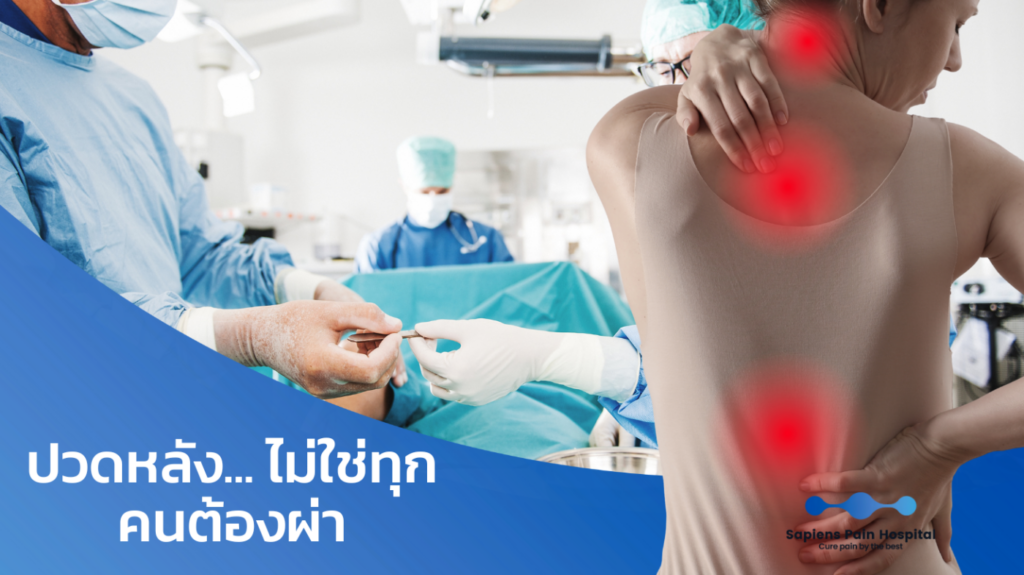
When Should Surgery Be Considered for Chronic Low Back Pain?
Chronic low back pain (Chronic Low Back Pain: CLBP) generally refers to pain in the lower back that persists for 12 weeks or longer. It is common worldwide and can affect working-age adults as well as older people. Causes and contributing factors vary and may include degenerative changes in the spine, disc problems, nerve compression, facet joint disorders, muscle and soft-tissue problems, or a combination of factors. Importantly, imaging abnormalities do not always explain the severity of pain. Many patients can improve with appropriate non-surgical treatment, while surgery is generally reserved for selected patients when a specific structural problem matches the symptoms, neurological function is threatened, or adequate conservative treatment has not provided sufficient relief.
Initial Treatment: Non-Surgical Options First
Current clinical practice guidelines generally recommend that most patients with chronic low back pain begin with non-surgical and individualized treatment. Depending on the diagnosis and the patient’s overall health, options may include:
- Medication: such as nonsteroidal anti-inflammatory drugs (NSAIDs) in suitable patients. Other medications may be considered according to the specific diagnosis, symptoms, medical conditions, and potential risks. Gabapentinoids are not routinely recommended for non-specific low back pain and may be considered only for selected neuropathic pain conditions when clinically appropriate.
- Physical therapy and exercise: focusing on maintaining or restoring movement, gradually strengthening the trunk and surrounding muscles, improving physical capacity, and helping the patient return to daily activities.
- Other non-surgical approaches: such as acupuncture, selected manual therapy or massage, education, activity modification, and psychological or behavioral approaches such as Cognitive Behavioral Therapy (CBT). Traction is not routinely recommended for most non-specific chronic low back pain because evidence of benefit is limited.
For persistent low back pain, a multimodal approach that combines appropriate physical activity, rehabilitation, education, and management of physical, psychological, and lifestyle factors may be more useful than relying on a single treatment alone. The appropriate combination should be individualized according to the cause of pain and the patient’s needs.
When Should Surgery Be Considered?
Surgery is not the first treatment for most people with back pain. However, it may become appropriate when there is a clear diagnosis and the expected benefits outweigh the risks. Situations that may require surgical evaluation include:
- Significant nerve compression or neurological deficit such as progressive muscle weakness or symptoms caused by a confirmed compressed nerve. Cauda equina syndrome, which may involve new bladder or bowel dysfunction, saddle-area numbness, or severe/progressive neurological symptoms, is a medical emergency requiring urgent assessment.
- Persistent disabling symptoms despite adequate non-surgical treatment. There is no single fixed period, such as exactly 6 months, that applies to every patient. Timing depends on the diagnosis, severity, neurological findings, functional impairment, and response to appropriate conservative care.
- A structural spinal abnormality that correlates with the patient’s symptoms, such as symptomatic spinal stenosis, certain cases of spondylolisthesis, disc herniation with nerve compression, spinal instability, or other conditions in which surgery is expected to address the identified source of symptoms. Degenerative changes on imaging alone are not necessarily an indication for surgery.
- Serious underlying disease such as spinal infection, tumor, unstable fracture, or another condition requiring urgent specialist assessment. These conditions do not always require the same type of surgery, and treatment depends on the underlying diagnosis.
Studies of selected patients with lumbar disc herniation or spinal stenosis have shown that procedures such as discectomy or decompression can improve pain and function when symptoms, neurological findings, and imaging findings correspond to a surgically treatable problem. These results should not be generalized to all patients with chronic low back pain.
Common Types of Spine Surgery
- Microdiscectomy: removal of part of a herniated disc that is compressing a nerve in appropriately selected patients
- Laminectomy: removal of part of the vertebral bone or related structures to create more space for nerves, commonly used in selected cases of spinal stenosis
- Spinal Fusion: joining two or more vertebrae in selected cases of spinal instability, deformity, or other specific indications
- Disc Replacement: replacing a damaged disc with an artificial disc in carefully selected patients when specific criteria are met, with the aim of preserving motion at the treated level
Back Pain Treatment at Sapiens Hospital

Sapiens Hospital provides evaluation and treatment for back pain with an emphasis on identifying the cause and considering appropriate non-surgical options whenever clinically suitable. Available approaches may include:
- Image-guided injections and interventional procedures using Ultrasound or Fluoroscopy when indicated. The type of injection depends on the diagnosis and may include medications or selected biologic treatments such as PRP in appropriately evaluated patients. Botox is used only for specific indications and is not a routine treatment for non-specific back pain.
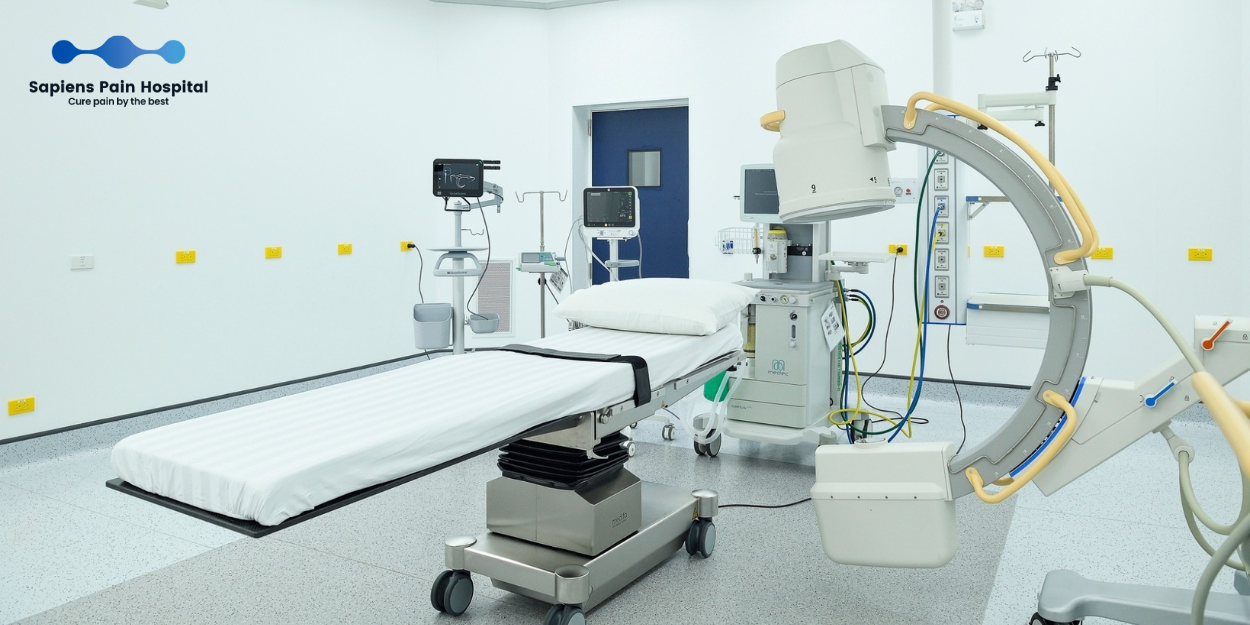
- Radiofrequency Ablation (RFA) and Spinal Cord Stimulation (SCS) for carefully selected patients. RFA may be considered when a specific pain generator, such as appropriately diagnosed facet-mediated pain, has been identified. SCS is generally considered for selected chronic neuropathic pain conditions, including some patients with persistent pain after spine surgery, rather than for all types of back pain.
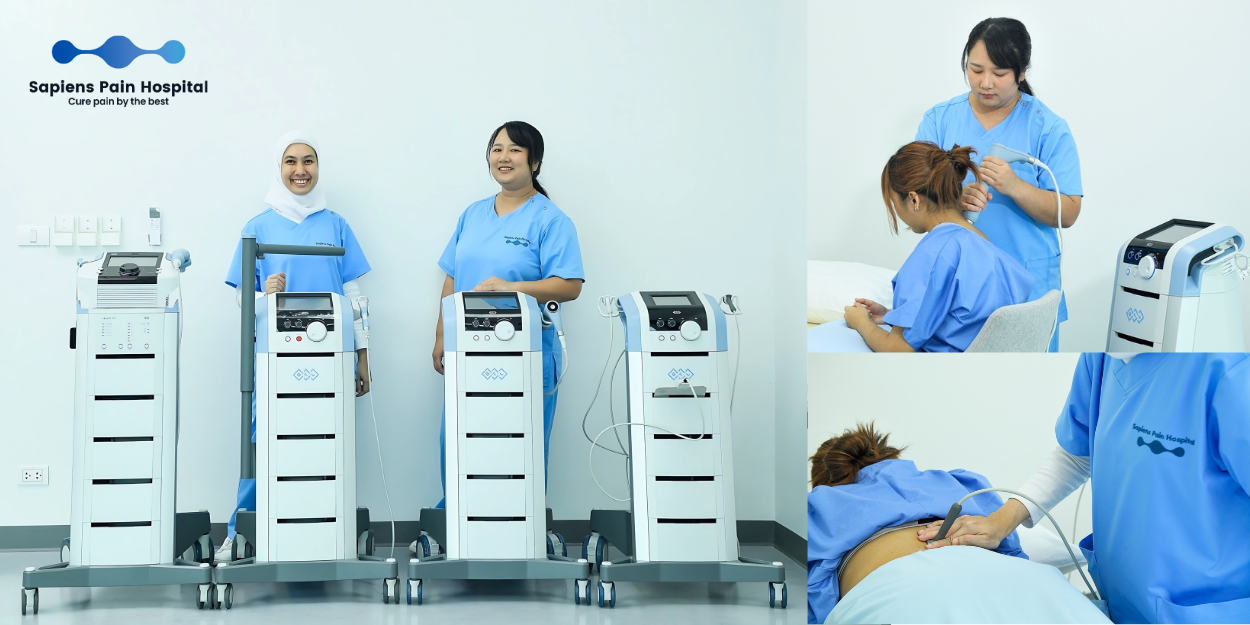
- Individualized physical therapy programs developed according to the patient’s diagnosis, function, physical capacity, and treatment goals by the medical and physical therapy teams.
- For patients with a clear surgical indication, the hospital provides specialist evaluation for spine surgery and may use minimally invasive surgical techniques when appropriate, depending on the diagnosis and individual clinical condition.
The decision to perform surgery for chronic low back pain should be based on the diagnosis, severity of symptoms, neurological findings, functional limitations, imaging findings when relevant, and the response to previous non-surgical treatment. Sapiens Hospital emphasizes comprehensive assessment and aims to use appropriate non-surgical treatment whenever it is clinically suitable, while recognizing that surgery can be the appropriate and sometimes urgent treatment for selected spinal conditions.
References
- Chou R, Qaseem A, et al. Diagnosis and Treatment of Low Back Pain: A Joint Clinical Practice Guideline. Ann Intern Med. 2007.
- Deyo RA et al. Surgical versus Nonoperative Treatment for Lumbar Disk Herniation: Spine Patient Outcomes Research Trial (SPORT). JAMA. 2006.
- Maher C et al. Non-specific low back pain. Lancet. 2017.
- Weinstein JN et al. Surgical vs Non-Surgical Therapy for Lumbar Spinal Stenosis. NEJM. 2008.
- Sapiens Pain Hospital. www.sapienspainhospital.com