
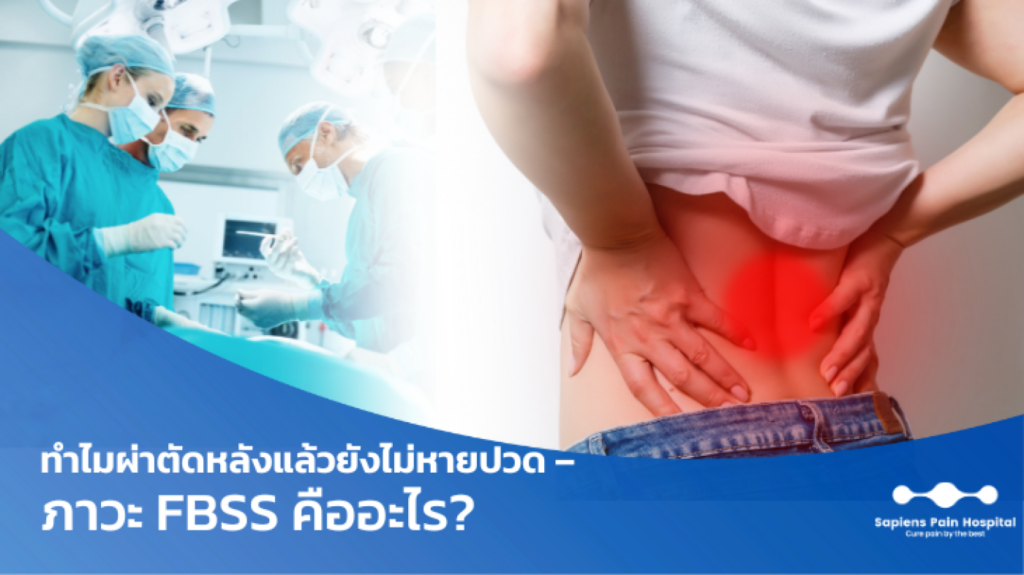
Failed Back Surgery Syndrome (FBSS) is sometimes referred to simply as Failed Back.
Failed Back Surgery Syndrome (FBSS) is a condition in which a patient continues to experience back pain or radiating leg pain after one or more spinal surgeries. Symptoms may persist despite surgery, may not improve as expected, or may recur later.

FBSS does not necessarily mean that the surgery itself technically failed. Rather, it describes persistent or recurrent pain that may result from several factors, including:
- Persistent or previously unrecognized spinal pathology
- Scar tissue around the spinal nerves (epidural fibrosis)
- Incomplete or abnormal spinal fusion (pseudarthrosis or related fusion problems)
- Implant displacement, loosening, or other hardware-related problems
- New problems developing at another spinal level (adjacent segment disease)
- Psychological, neurological, or pain-processing factors such as central sensitization
How Common Is FBSS?
Published studies report varying rates of persistent or recurrent pain after spinal surgery. The likelihood depends on the original diagnosis, type of surgery, patient factors, and how FBSS is defined.
- Some studies report persistent or recurrent pain after spinal surgery in approximately 10–40% of patients, although estimates vary considerably between studies.
- FBSS can involve chronic neuropathic pain and is often a complex condition requiring individualized, multidisciplinary management.
Treatment Approaches for FBSS
Managing FBSS requires careful identification of the source of pain. Treatment is individualized and is not limited to repeat surgery.
1. Interventional Pain Management:
- Epidural Steroid Injection (ESI)
- Transforaminal Epidural Steroid Injection (TFESI)
- Caudal Adhesiolysis / Epidural Lysis of Adhesions, such as the Racz Procedure, in selected patients
- Spinal Cord Stimulation (SCS) for appropriately selected patients with persistent neuropathic pain
2. Multidisciplinary Pain Program:
- Specialized physical therapy and rehabilitation
- Psychological or behavioral approaches such as Cognitive Behavioral Therapy (CBT)
- Appropriate pain medications, which may include medicines for neuropathic pain such as gabapentinoids or SNRIs. Other analgesics may be considered according to the patient’s condition and physician assessment.
3. Revision Surgery: Repeat surgery is generally considered only when a clear surgically correctable cause is identified, such as:
- Implant failure, displacement, or instability
- Pseudarthrosis or failed spinal fusion
- Clinically significant foraminal or spinal stenosis demonstrated on MRI/CT and consistent with the patient’s symptoms
Sapiens Hospital and the Management of Persistent Pain After Spine Surgery

At Sapiens Hospital, the Interventional Pain Management and Spine Surgery teams may work together through a multidisciplinary approach to evaluate persistent pain after spinal surgery.
- Assessment of potential pain generators using appropriate investigations such as MRI, EMG, or nerve conduction studies when clinically indicated
- Advanced interventional treatments may be considered for appropriately selected patients, including:
- Spinal Cord Stimulation (SCS)
- Dorsal Root Ganglion (DRG) Stimulation
- Basivertebral Nerve Ablation, such as the Intracept Procedure, for selected patients with appropriate vertebrogenic low-back pain
- Close follow-up with adjustments to the treatment plan according to symptoms, function, and response to treatment
Imaging and procedure-guidance technologies such as Fluoroscopy and Ultrasound, together with Neuromodulation Equipment and other pain-assessment tools, may support accurate diagnosis and appropriately targeted treatment. The choice of investigation or procedure depends on each patient’s clinical condition.
Contact Us:
Tel: 02-111-3703
LINE: @sapienshospital
Website: www.sapienspainhospital.com
Facebook: Sapiens Hospital โรงพยาบาลเซเปี้ยนซ์