
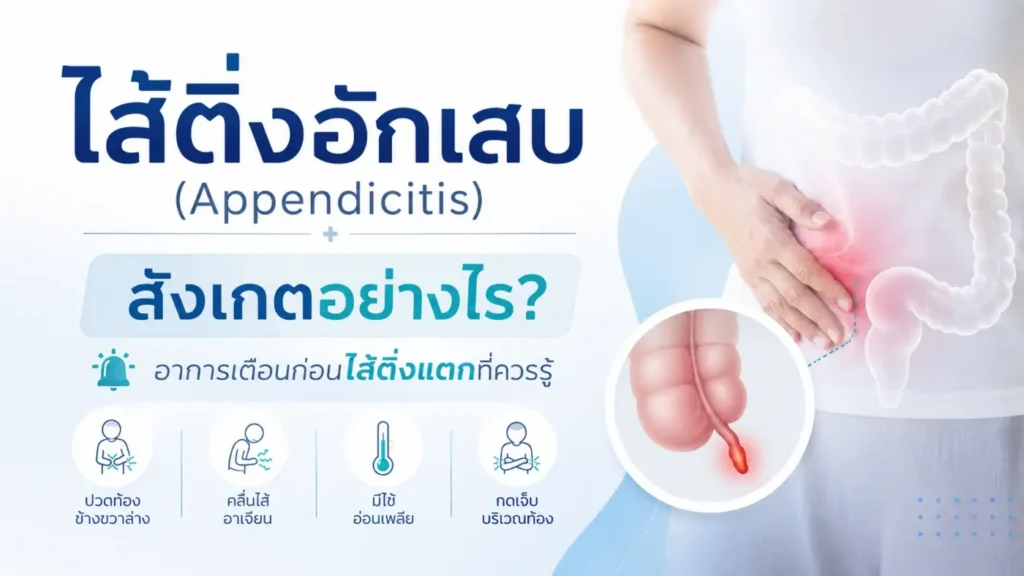
Appendicitis: Warning Signs You Shouldn’t Ignore and Safe Treatment Options
If you or someone close to you suddenly develops abdominal pain, one common concern is whether it could be “appendicitis.” Understanding where the appendix is located and recognizing the early symptoms is important because untreated appendicitis can progress to a ruptured appendix, which may cause serious and potentially life-threatening complications.
Where Is the Appendix Located?
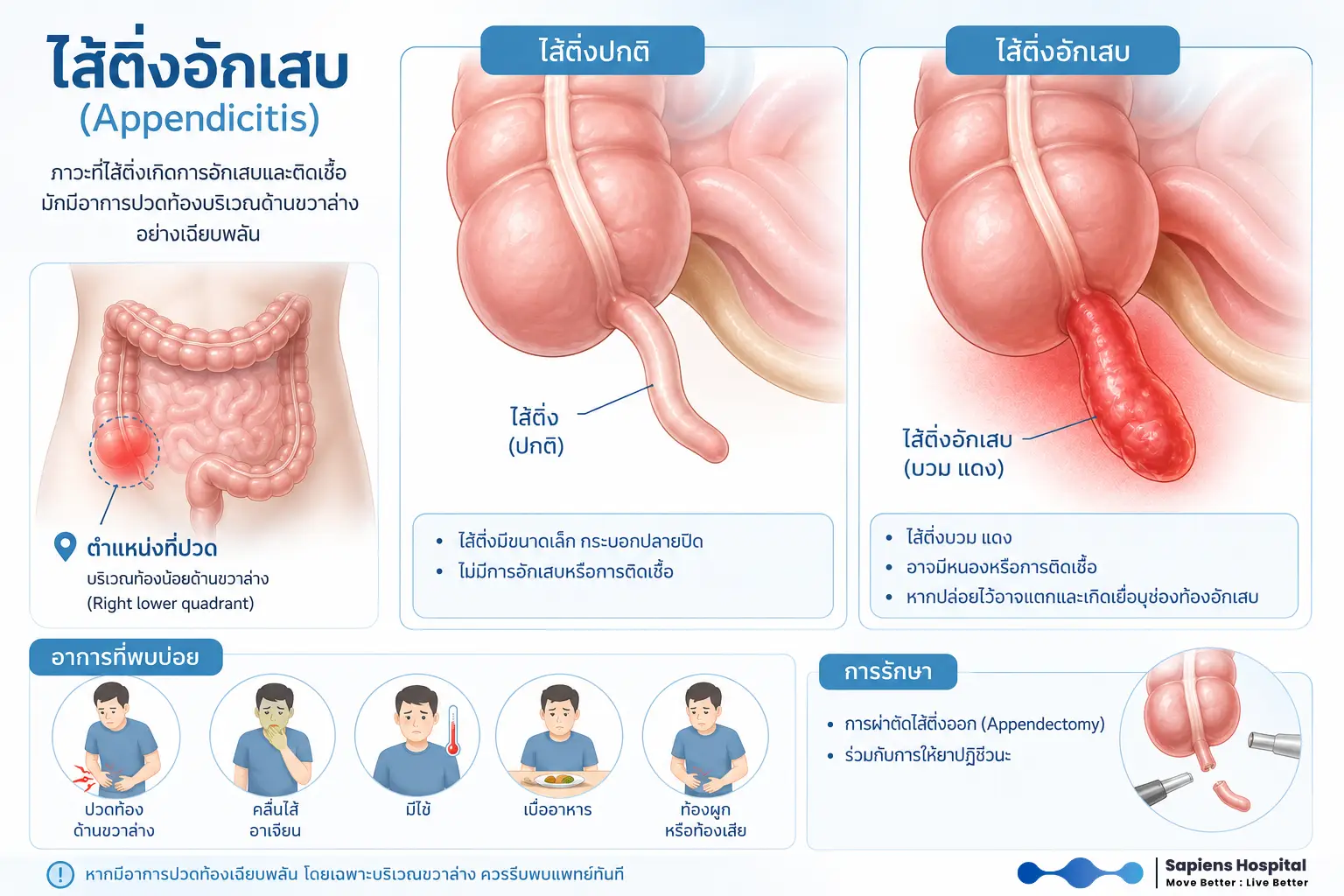
A common question is, which side is the appendix on? The appendix is a small pouch connected to the beginning of the large intestine and is typically located in the right lower quadrant of the abdomen (Right Lower Quadrant). This is also where pain from appendicitis commonly becomes most noticeable.
What Are the Symptoms of Appendicitis? How Can You Recognize It?
Appendicitis does not always begin with pain on the lower right side of the abdomen. The symptoms may develop in the following pattern:
- Early symptoms: Pain or discomfort may begin around the belly button and may initially feel similar to general abdominal discomfort or food poisoning.
- Progressing symptoms: Within several hours, the pain may move from around the belly button to the lower right side of the abdomen and become more localized.
- Characteristics of the pain: The pain may become persistent and worsen with movement, coughing, sneezing, or pressure over the painful area.
- Associated symptoms: Nausea, vomiting, loss of appetite, low-grade fever, and abdominal bloating may also occur.
Important: In women, symptoms of appendicitis can sometimes resemble gynecological conditions such as pelvic inflammatory disease or a ruptured ovarian cyst. Therefore, severe lower abdominal pain should be evaluated promptly by a doctor to determine the exact cause.
What Causes a Ruptured Appendix?
A ruptured appendix occurs when inflammation progresses until part of the appendix wall becomes damaged and perforates. This can allow infected material to leak into the abdominal cavity and may cause a serious infection of the lining of the abdomen (Peritonitis) or an abscess. Appendicitis often develops when the opening of the appendix becomes blocked, such as by hardened stool (Fecalith) or swollen lymphoid tissue, allowing bacteria to multiply and inflammation to develop.
Appendectomy: Standard Treatment for Appendicitis
When appendicitis is diagnosed, surgical removal of the appendix (Appendectomy) is a standard treatment, particularly when there is concern about progression or rupture. The most appropriate treatment depends on the patient’s condition and should be determined by the treating physician.
Modern Surgical Techniques
1. Laparoscopic Appendectomy: A commonly used minimally invasive surgical approach with potential advantages including:
- Small surgical incisions, typically around 0.5–1 cm
- Potentially less postoperative pain
- Generally faster recovery and earlier return to daily activities
- May reduce the risk of certain wound-related complications compared with open surgery
2. Open Appendectomy: This approach may be considered when the appendix has ruptured with extensive infection or when there are specific medical circumstances in which open surgery is more appropriate.
Why Is Prompt Treatment Important?
If you develop symptoms that may suggest appendicitis, avoid delaying medical evaluation or relying on medication simply to suppress the pain. If the appendix ruptures, treatment can become more complex and recovery may take longer. Prompt medical assessment allows doctors to diagnose the cause and provide appropriate treatment before serious complications develop.
Consult a specialist or request more information about appendicitis at Sapiens Hospital.
Tel: 02-111-3703
LINE: @SpiensHospital
Online Appointment: Sapiens Hospital Doctor Appointment