
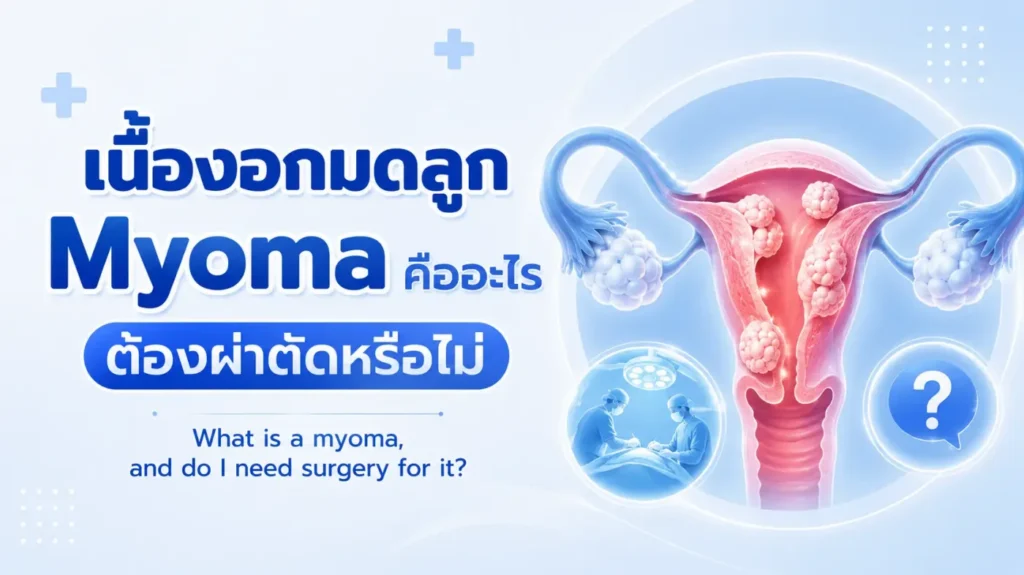
Uterine Fibroids (Myoma): What Are They, and Do They Require Surgery?
What are uterine fibroids (Myoma)?
Uterine fibroids, commonly called “Myoma”, “Uterine fibroid” or “Leiomyoma”, are benign tumors arising from the smooth muscle of the uterus. They are among the most common gynecological conditions in women of reproductive age.
The word “tumor” can be alarming because many people immediately worry about cancer. However, most uterine fibroids are benign, are not cancer, and do not require surgery in every case. Nevertheless, fibroids in certain locations or of certain sizes can cause symptoms that interfere with daily life, such as heavy menstrual bleeding, pelvic pain, frequent urination, abdominal enlargement or pressure, and problems related to pregnancy or infertility. Therefore, the important question is not simply “Is there a fibroid?” but also:
- Where is the fibroid located?
- How large is it?
- Does it cause symptoms?
- Does it cause heavy bleeding or anemia?
- Does it affect pregnancy, and does the patient wish to have children in the future?
The answers to these questions directly affect treatment planning. ACOG states that the management of symptomatic uterine fibroids may include medication, procedures, and surgery, with treatment individualized according to symptoms, patient preferences, and reproductive goals rather than using the same approach for everyone.
How common are uterine fibroids?
Uterine fibroids are very common benign tumors in women. They are most often found during the reproductive years and may grow while female reproductive hormones remain active. Many women have uterine fibroids without knowing it because they have no symptoms, and the fibroids are discovered incidentally during a pelvic examination or uterine ultrasound.
Epidemiological literature on uterine fibroids describes fibroids, or leiomyomas, as the most common benign tumors of the female reproductive system, affecting many women worldwide, particularly during the reproductive years.
Although fibroids are common, the severity of symptoms varies considerably. Some women have several small fibroids without any symptoms, while others may have only one fibroid located close to the uterine cavity that causes heavy menstrual bleeding and anemia.
What causes uterine fibroids?
The exact cause of uterine fibroids is not completely understood. They are believed to be associated with a combination of factors, including genetics, the hormones estrogen and progesterone, the response of uterine muscle cells to hormones, and certain environmental factors.
Factors that may be associated with uterine fibroids include:
- Being of reproductive age
- A family history of uterine fibroids
- Being overweight or obese
- High blood pressure
- Early onset of menstruation
- Never having been pregnant
- Genetic and ethnic factors in certain populations
- Female reproductive hormones that stimulate fibroid growth
After menopause, some fibroids may gradually shrink as hormone levels decrease. However, if a fibroid enlarges after menopause or bleeding occurs after menopause, medical evaluation is important. The location of a uterine fibroid is particularly important because it influences both symptoms and treatment. Uterine fibroids are generally divided into several major groups according to their location:
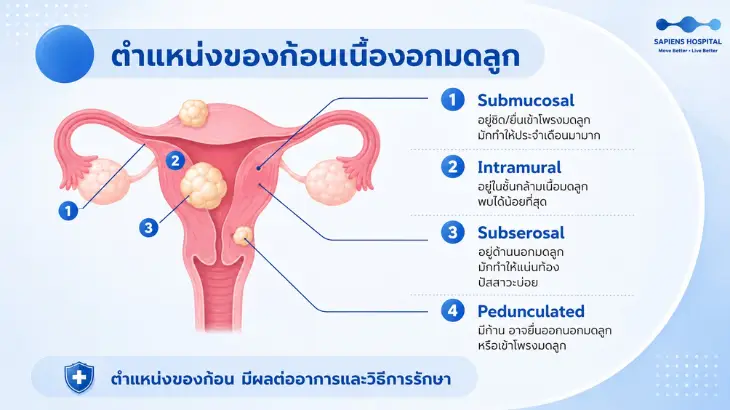
- Submucosal myoma
A fibroid located next to or protruding into the uterine cavity. It commonly causes heavy menstrual bleeding, spotting, and in some cases may interfere with embryo implantation. Even a relatively small fibroid can cause significant symptoms because it directly affects the endometrial cavity. - Intramural myoma
A fibroid located within the muscular wall of the uterus. This is a common type and may cause uterine enlargement, heavy menstrual bleeding, pelvic pain, or abdominal pressure depending on its size and location. - Subserosal myoma
A fibroid that grows toward the outside of the uterus. It tends to cause pressure symptoms rather than bleeding, such as abdominal fullness, abdominal enlargement, frequent urination, or constipation if it presses against the bladder or bowel. - Pedunculated myoma
A fibroid attached by a stalk that may extend outside the uterus or into the uterine cavity. In some cases, sudden pain may occur if the stalk twists, requiring medical assessment.
FIGO has developed a classification system for uterine fibroids that describes the relationship between a fibroid, the uterine cavity, and the muscular wall. This is particularly useful for treatment planning, especially in patients with abnormal bleeding or those preparing for surgery.
What are the symptoms of uterine fibroids?
Many women with uterine fibroids have no symptoms. When symptoms occur, they may include:
- Heavy menstrual bleeding
This is a common symptom, particularly with fibroids located within the uterine cavity or close to the endometrium. Patients may need to change sanitary products frequently, pass blood clots, have prolonged periods, or develop anemia with fatigue, palpitations, or dizziness. - Pelvic pain or worsening menstrual cramps
Some women experience a dull pelvic ache, worsening menstrual cramps, or chronic pain, particularly when the uterus is significantly enlarged, there are multiple fibroids, or another condition such as adenomyosis or endometriosis is present. - Abdominal pressure, enlargement, or a palpable mass
Large fibroids may cause the abdomen to appear enlarged, create a feeling of pressure or discomfort, make clothing feel tighter, or be felt as a mass in the lower abdomen. - Frequent urination
If a fibroid presses on the bladder, patients may urinate more frequently, feel that the bladder does not empty completely, or experience urinary urgency. - Constipation or difficulty passing stool
A fibroid growing toward the back of the uterus may press on the rectum and cause constipation or difficulty with bowel movements. - Infertility or recurrent miscarriage
Certain fibroids, particularly those that protrude into the uterine cavity, may affect embryo implantation or pregnancy. However, not every fibroid causes infertility. Evaluation should consider the fibroid’s location and size as well as other possible conditions. - Are uterine fibroids dangerous?
Most uterine fibroids are benign and are not cancer. However, “benign” does not mean they should be “ignored.” Fibroids can cause significant problems including heavy bleeding, chronic anemia, pelvic pain, pressure on nearby organs, and reduced quality of life.
Warning signs to be aware of include:
- Heavy menstrual bleeding causing anemia
- Unusually rapid enlargement of a mass
- Increasing pain
- Bleeding after menopause
- Growth of a uterine mass after menopause
- Severe pressure symptoms such as very frequent urination, severe constipation, or significant back pain
- Problems with pregnancy or infertility
- A uterine mass with uncertain characteristics on medical evaluation
Although malignant tumors involving uterine smooth muscle are uncommon, unusual symptoms or a rapidly enlarging uterine mass, particularly after menopause, should be evaluated further rather than monitored without medical assessment.
How are uterine fibroids diagnosed?
Diagnosis begins with a medical history and physical examination. The doctor may ask about menstrual cycles, the amount of bleeding, pain, urinary frequency, bowel movements, pregnancy history, future fertility plans, and family history.
- Pelvic examination
A pelvic examination can help assess the size and shape of the uterus, whether it is enlarged or irregular, and whether there is tenderness or a mass within the pelvis. - Ultrasound of the uterus and ovaries
Ultrasound is the most commonly used first-line imaging examination. It can identify fibroids and assess their size, number, location, and relationship with the uterine cavity. It may also help distinguish other pelvic conditions such as ovarian cysts or adenomyosis. Medical literature on fibroid diagnosis and classification identifies ultrasound as the first-line imaging test for uterine fibroids, while MRI may be considered in complex cases or for detailed procedural or surgical planning. - MRI
MRI may be used when fibroids are complex or numerous, when adenomyosis needs to be differentiated, for detailed surgical planning, or before certain procedures such as uterine artery embolization. - Hysteroscopy
If a fibroid protruding into the uterine cavity or an endometrial polyp is suspected, hysteroscopy may be considered. This allows direct visualization of the uterine cavity, and in some cases treatment can be performed during the same procedure. - Blood tests
For patients with heavy menstrual bleeding, a doctor may order a CBC to assess for anemia and, in selected cases, ferritin or iron studies. Other tests, such as thyroid or pregnancy testing, may be considered depending on the pattern of abnormal bleeding and clinical circumstances.
Does everyone with uterine fibroids need surgery?
The answer is “No.” Treatment depends primarily on symptoms and individual circumstances, not simply on the presence of a fibroid. A person with a small fibroid, no symptoms, normal menstruation, no pain or anemia, and no concerning change in the mass may only need observation and periodic follow-up as advised by a doctor.
Situations in which surgery may not yet be necessary include:
- Small fibroids
- No symptoms
- No anemia
- No significant pressure on nearby organs
- No concerning rapid growth
- Approaching menopause with only mild symptoms
- No current fertility plan that is clearly affected by the fibroid
NICE recommends that the management of heavy menstrual bleeding should focus on improving quality of life, with treatment selected according to symptoms, the underlying cause, and the patient’s preferences rather than the amount of bleeding alone.
When should treatment or surgery be considered?
A consultation with a gynecologist for more active treatment should be considered when symptoms include:
- Heavy menstrual bleeding causing anemia
- Needing to change sanitary products very frequently or passing large blood clots
- Periods lasting many days and significantly interfering with daily life
- Significant pelvic pain or menstrual pain
- A fibroid large enough to cause abdominal pressure, abdominal enlargement, or a palpable mass
- Frequent urination or constipation caused by pressure on nearby organs
- Infertility or recurrent miscarriage when the fibroid is in a location that may contribute to the problem
- Concerning rapid growth
- Bleeding after menopause
- Symptoms that do not improve adequately with medication
- The patient wishes to pursue treatment to improve quality of life or address personal concerns
Surgery is not always the only option, but it is an important treatment option when symptoms are significant, fibroids affect health, or nonsurgical treatment is insufficient.
What treatments are available for uterine fibroids?
- Observation and follow-up
This may be appropriate for people with no symptoms or only mild symptoms. The doctor may recommend periodic symptom review, pelvic examination, or ultrasound and advise monitoring for heavier periods, worsening pain, or changes in the fibroids. - Medication to reduce menstrual bleeding
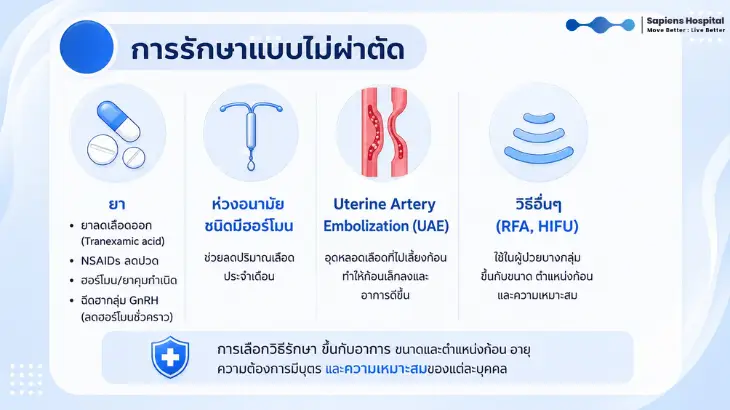
For patients with heavy menstrual bleeding, medications such as tranexamic acid or NSAIDs may be considered in selected cases to reduce bleeding and pain. These medicines do not eliminate the fibroid and should be used according to appropriate medical indications. - Hormonal treatment
Certain hormonal treatments, such as combined hormonal contraceptives, progestins, or a levonorgestrel-releasing intrauterine system, may help reduce bleeding and some symptoms in appropriately selected patients. Treatment choice should take contraindications, fibroid location, symptoms, and reproductive plans into account. - GnRH agonists or antagonists
These medicines reduce hormonal stimulation of fibroids and may temporarily shrink fibroids and reduce bleeding. They may be used in selected situations, such as before surgery to reduce fibroid size or improve anemia. Their duration and use require medical planning because they may cause menopausal-type side effects and affect bone health. - Myomectomy
Myomectomy removes fibroids while preserving the uterus. It may be appropriate for people who wish to become pregnant or retain their uterus. New fibroids may develop or remaining fibroids may enlarge in the future. Depending on fibroid size and location, myomectomy may be performed laparoscopically, through open abdominal surgery, or hysteroscopically. - Hysterectomy
Hysterectomy is removal of the uterus. It provides definitive treatment for uterine fibroids because fibroids cannot recur in a uterus that has been removed. It may be considered for patients with significant symptoms who do not wish to become pregnant in the future after detailed counseling. NICE and guidance from the Academy of Medical Royal Colleges indicate that hysterectomy should not automatically be the first treatment simply because heavy menstrual bleeding is present; it should be considered according to symptoms, patient preferences, and after discussion of other appropriate options. - Uterine Artery Embolization is a procedure that blocks blood flow to the fibroids, allowing them to gradually shrink and potentially improving bleeding or pressure symptoms. It may be appropriate for selected patients, but fibroid characteristics, future fertility wishes, and individual risks should be assessed with the relevant specialists. Reviews of uterine artery embolization describe UAE as a treatment option for appropriately selected patients with symptomatic fibroids, including significant bleeding or pressure symptoms.
- Other treatments such as RFA or HIFU
Some medical centers offer alternatives such as radiofrequency ablation or focused ultrasound. These treatments are suitable only for selected patients and fibroid types. Potential implications for future pregnancy should be discussed individually.
If you still want to have children, how should treatment be chosen?
For people who wish to have children in the future, treatment requires more detailed planning. The goal is not only to manage symptoms but also to consider the uterine cavity, uterine muscle, the condition of the uterus after treatment, and future pregnancy.
In general, fibroids that protrude into or distort the uterine cavity may have a greater effect on embryo implantation, miscarriage, or fertility than fibroids located on the outside of the uterus.
People experiencing infertility or planning pregnancy should consult a gynecologist to determine whether a fibroid is likely to be contributing to the fertility problem and which treatment is most appropriate. Options may include hysteroscopic myomectomy for fibroids protruding into the uterine cavity or another form of myomectomy for appropriately selected fibroids.
Can uterine fibroids recur after myomectomy?
After myomectomy, new fibroids can develop and remaining fibroids can enlarge because the uterus remains in place and continues to respond to hormonal influences. This may be more likely in younger patients, those with multiple fibroids, or those with a family history of fibroids. After hysterectomy, uterine fibroids cannot recur because the uterus has been removed; however, hysterectomy permanently eliminates the ability to carry a pregnancy and therefore requires careful consideration.
Frequently Asked Questions
- Is uterine Myoma cancer?
Most uterine fibroids are not cancer. Myoma, or uterine fibroid, is a common benign tumor. However, unusual findings such as postmenopausal bleeding or an atypical uterine mass should be assessed further by a doctor. - Does everyone with uterine fibroids need surgery?
No. Small fibroids that cause no symptoms, anemia, pressure symptoms, or other concerns may be monitored. However, treatment should be considered when fibroids cause heavy bleeding, pelvic pain, significant pressure symptoms, or fertility-related problems. - How can uterine fibroids cause heavy menstrual bleeding?
Fibroids located near or protruding into the uterine cavity may affect the endometrium and contribute to heavier or prolonged bleeding and blood clots. Some patients may develop anemia as a result. - If an ultrasound detects uterine fibroids, is an MRI necessary?
Not for everyone. Ultrasound is usually the first-line imaging examination and is sufficient in many cases. MRI may be used when fibroids are complex, another condition needs to be distinguished, or detailed surgical or procedural planning is required. - How large does a fibroid have to be before surgery is needed?
There is no single size threshold that applies to everyone. Treatment decisions consider symptoms, fibroid location, growth pattern, anemia, pressure effects, and fertility plans. A small fibroid protruding into the uterine cavity can cause significant bleeding, while some larger fibroids may cause relatively few symptoms. - What should I do if I have uterine fibroids and still want children?
Consult a gynecologist to assess the fibroid location and uterine cavity. Some fibroids may not affect pregnancy, while others, particularly those protruding into the uterine cavity, may need treatment before attempting pregnancy. - What is the difference between myomectomy and hysterectomy?
Myomectomy removes fibroids while preserving the uterus and may be appropriate for people who wish to have children or retain their uterus. Hysterectomy removes the uterus and provides definitive treatment for uterine fibroids, but pregnancy is no longer possible afterward.
Uterine fibroids, or Myoma, are common benign tumors in women of reproductive age. Many people have no symptoms and do not require surgery. Others may experience heavy menstrual bleeding leading to anemia, pelvic pain, abdominal pressure, frequent urination, constipation, or fertility and pregnancy problems.
Treatment depends on symptoms, fibroid size and location, age, underlying medical conditions, fertility goals, and patient preferences. Not everyone needs surgery, but not every fibroid should simply be observed without appropriate assessment. The key is to determine where the fibroid is located, whether it affects the uterine cavity, and how significantly it affects the patient’s health and quality of life in order to select the most appropriate treatment.
If you experience heavy menstrual bleeding, chronic pelvic pain, unusual abdominal enlargement, frequent urination, or an ultrasound has detected uterine fibroids, consult a doctor for appropriate evaluation and treatment planning rather than waiting until severe anemia or significant pressure symptoms develop.
For information and appointments
Sapiens Hospital Move Better : Live Better
Tel. 02-111-3703
References
1. American College of Obstetricians and Gynecologists. Management of Symptomatic Uterine Leiomyomas. ACOG Practice Bulletin No. 228. Obstetrics & Gynecology.2021.
2. National Institute for Health and Care Excellence.Heavy menstrual bleeding: assessment and management. NICE Guideline NG88.2018, updated/reviewed.
3. Munro MG, Critchley HOD, Fraser IS.FIGO classification system for causes of abnormal uterine bleeding in nongravid women of reproductive age. International Journal of Gynecology & Obstetrics. 2011.
4. Lakabi R, et al. Diagnosis and classification of uterine fibroids.2025.
5. Yang Q, et al. Comprehensive Review of Uterine Fibroids. 2021.
6. Ahmad A, Kumar M, Bhoi NR, Badruddeen, Akhtar J, Khan MI. Diagnosis and management of uterine fibroids. 2023.
7. Gorny KR, et al. Uterine Artery Embolization for Heavy Menstrual Bleeding.Seminars in Interventional Radiology.2018.
8. Academy of Medical Royal Colleges.Evidence-Based Interventions: Hysterectomy for Heavy Menstrual Bleeding.