

Abnormal Vaginal Discharge, Itching, and Odor: What Causes It and When Should You See a Doctor?
Vaginal discharge is natural, but not all discharge is normal
Vaginal discharge is something almost every woman experiences, and in many cases, it is a normal part of the body’s function. The vagina produces secretions that help maintain moisture, support the balance of microorganisms, and protect against infection. These secretions may change throughout the menstrual cycle and with hormonal changes, pregnancy, contraceptive use, stress, or different stages of life.
Normal vaginal discharge is usually clear, slightly cloudy white, or mucus-like. It should not have a strong unpleasant odor or cause itching, burning, or pain.
The amount of discharge may increase around ovulation or before menstruation. However, if the discharge changes noticeably—for example, developing a strong or fishy odor, severe itching, vaginal burning, painful urination, pain during intercourse, yellow, green, or gray coloration, or blood—these symptoms should not be ignored. They may indicate an infection or inflammation that requires treatment based on the underlying cause. CDC guidance notes that vaginal symptoms cannot usually be diagnosed accurately from medical history alone; physical examination and appropriate laboratory testing may be necessary.
What can cause abnormal vaginal discharge?
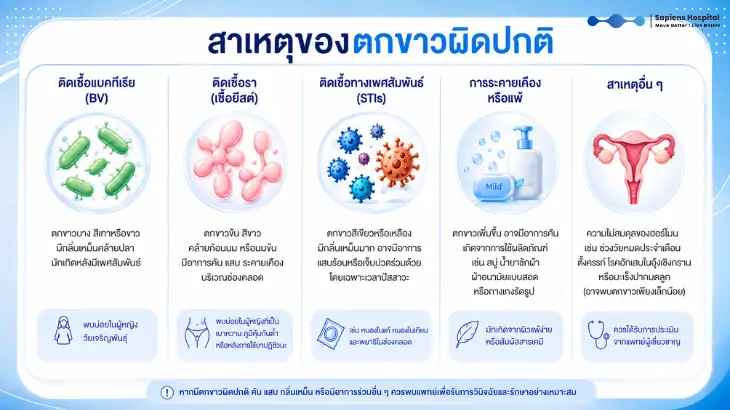
There are many possible causes of abnormal vaginal discharge, ranging from common infections to irritation and cervical conditions. According to CDC guidance, common causes of vaginal discharge, itching, burning, or odor include bacterial vaginosis, trichomoniasis, and vulvovaginal candidiasis, or vaginal yeast infection. Cervicitis, or inflammation of the cervix, can also cause abnormal vaginal discharge.
- Vaginal yeast infection or vulvovaginal candidiasis
A vaginal yeast infection is one of the first conditions many people think of when itching occurs, but itching is not always caused by yeast. Common symptoms include intense itching, burning, irritation around the vulva, and thick white or clumpy discharge that may resemble curd or yogurt. Some women may also experience external burning during urination or pain during sexual intercourse.
CDC states that common symptoms of vulvovaginal candidiasis include itching, vaginal soreness, pain during intercourse, external burning during urination, and abnormal vaginal discharge. However, none of these symptoms is specific enough to diagnose the condition based on symptoms alone. Approximately 75% of women will experience vulvovaginal candidiasis at least once in their lifetime, while 40–45% may experience two or more episodes.
Factors that may increase the likelihood of yeast infection include certain antibiotics, poorly controlled diabetes, pregnancy, weakened immunity, moisture, or irritation around the genital area. However, some women develop yeast infections without an obvious risk factor. Repeatedly purchasing antifungal vaginal medications whenever itching occurs should be avoided because, if the actual cause is not yeast, the medication will not treat the problem and may delay an accurate diagnosis, particularly when symptoms recur frequently or the discharge has unusual characteristics. - Bacterial vaginosis
Bacterial vaginosis, or BV, is not a yeast infection and is not considered a straightforward sexually transmitted infection. It occurs when the normal balance of microorganisms in the vagina changes and certain bacteria become more abundant than usual, resulting in abnormal discharge and odor.
Common characteristics include white, gray, or cloudy discharge with a fishy odor, particularly after sexual intercourse or around menstruation. Some women may have little or no itching, although irritation can occur.
CDC notes that vaginal pH above 4.5 is commonly found with BV or trichomoniasis. Vaginal pH testing, together with a KOH test and microscopic examination, can help distinguish different causes of abnormal discharge in clinical settings. One common mistake is vaginal douching in an attempt to eliminate odor. CDC guidance indicates that douching may increase the risk of recurrence, and there is no evidence supporting its use for treating or relieving BV symptoms. - Trichomoniasis
Trichomoniasis is a sexually transmitted infection caused by the parasite Trichomonas vaginalis. It may cause abnormal vaginal discharge, strong odor, itching, burning, painful urination, or pain during intercourse. Some women may develop yellow-green or frothy discharge, although these classic characteristics are not present in every case, and some infected individuals may have few or no noticeable symptoms.
WHO includes vaginal discharge syndrome and persistent vaginal discharge in its guidance for managing symptoms associated with sexually transmitted infections, emphasizing diagnosis, treatment, and prevention of transmission.
When trichomoniasis is diagnosed, sexual partners generally also need evaluation and treatment to reduce the risk of reinfection. Treating only one partner and then resuming unprotected sexual activity may result in recurrent infection. - Cervicitis and other sexually transmitted infections
Sometimes abnormal vaginal discharge does not originate directly from the vagina but is caused by cervicitis, or inflammation of the cervix. This may be associated with infections such as chlamydia or gonorrhea. Symptoms may include abnormal discharge, spotting between menstrual periods, or bleeding after sexual intercourse.
CDC notes that cervicitis can be asymptomatic, although some women may experience abnormal vaginal discharge and bleeding between periods, particularly after sexual intercourse.
If abnormal discharge occurs together with lower abdominal pain, fever, pain during intercourse, or pelvic tenderness, pelvic inflammatory disease (PID) should be considered. If not appropriately treated, PID may increase the risk of infertility or ectopic pregnancy in the future. - Irritation and noninfectious causes
Vaginal discharge, itching, or burning is not always caused by infection. Symptoms can result from irritation caused by products used around the genital area, including soap, fragrances, sanitary products, feminine washes, deodorizing sprays, laundry detergents, fabric softeners, certain condoms, lubricants, or vaginal douching.
CDC guidance indicates that when vulvovaginal inflammation is present but testing does not identify an infectious cause, noninfectious causes such as mechanical or chemical irritation, allergy, or other conditions should be considered. Persistent symptoms without a clear cause may require specialist evaluation.
In postmenopausal women, reduced estrogen can cause vaginal dryness, burning, itching, or pain during intercourse, and may also change vaginal discharge or odor. This condition requires different management from an infection, so repeated self-treatment with antimicrobial medications is not recommended.
What types of vaginal discharge should you be concerned about?
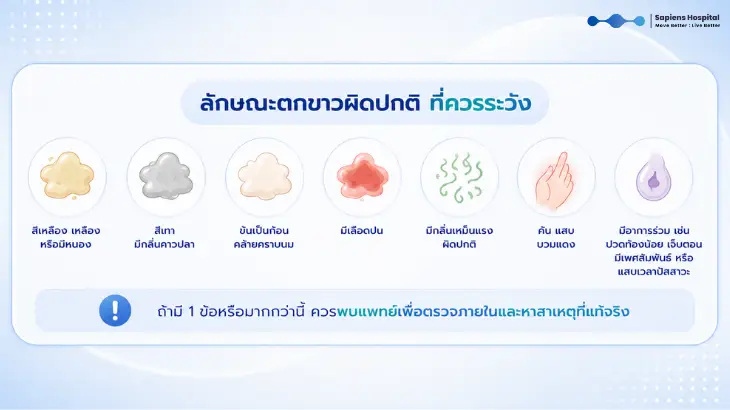
If vaginal discharge becomes yellow, green, or gray, contains blood, has a strong or unpleasant odor, or is accompanied by severe itching, burning, redness, swelling, genital pain, painful urination, pain during intercourse, lower abdominal pain, fever, or bleeding after intercourse, you should see a doctor to determine the cause.
Medical evaluation is also recommended when symptoms recur frequently, such as repeated itching and discharge after self-treatment, discharge that does not improve within a few days after treatment, or new symptoms after having a new sexual partner, as testing for sexually transmitted infections may also be necessary.
For pregnant women, if vaginal discharge is accompanied by odor, itching, burning, lower abdominal pain, bleeding, or possible leakage of amniotic fluid, do not self-treat with vaginal medications. Medical evaluation is recommended because some infections during pregnancy require additional care and appropriate treatment.
Why shouldn’t you self-treat every episode?
Many women feel embarrassed about seeing a doctor for abnormal vaginal discharge and instead purchase vaginal suppositories, antifungal medication, antibiotics, or feminine cleansing products. The problem is that many conditions causing abnormal discharge have very similar symptoms. Yeast infection, BV, trichomoniasis, cervicitis, and irritation can overlap considerably.
Treating the wrong cause may result in persistent or recurrent symptoms and may allow some infections to progress. Unnecessary antibiotic use can also contribute to antimicrobial resistance and disrupt the vaginal microbiome. Vaginal douching and harsh cleansing products may further irritate the vaginal area and disturb its natural balance.
CDC guidance emphasizes that medical history alone is generally insufficient for accurately diagnosing vaginal symptoms. Physical examination and appropriate laboratory testing should be used to identify the underlying cause.
What tests might the doctor perform?
Evaluation usually begins with a detailed medical history, including how long the discharge has been present, changes in color, odor, or amount, and whether there is associated itching, burning, lower abdominal pain, painful urination, or abnormal bleeding. The doctor may also ask about previous use of vaginal cleansing products or medications, new sexual partners, and possible risk of sexually transmitted infections.
The doctor may ask whether you are pregnant or could be pregnant. A pelvic examination may then be performed to assess the discharge, vaginal walls, cervix, sores, lesions, inflammation, or abnormal bleeding. Samples of vaginal discharge may be collected for pH testing, wet mount, KOH testing, microscopy, or additional tests such as NAAT for Trichomonas, chlamydia, or gonorrhea when clinically indicated.
CDC guidance indicates that in clinical settings, causes of vaginal symptoms can often be evaluated using vaginal pH, KOH testing, and microscopic examination of fresh vaginal discharge. A higher-than-normal pH is commonly associated with BV or trichomoniasis. KOH testing may help identify an amine odor and visualize hyphae or blastospores associated with candidiasis.
Treatment depends on the cause—there is no single medication for everyone
If the cause is a yeast infection, treatment may involve vaginal or oral antifungal medication as appropriate. Recurrent or severe infections, pregnancy, diabetes, or suspected non-albicans Candida may require a different treatment and follow-up plan from uncomplicated cases.
If the diagnosis is BV, treatment commonly involves metronidazole or clindamycin according to medical guidance, and vaginal douching should be avoided. CDC guidance recommends counseling regarding sexual activity and correct condom use during treatment and notes that douching may increase the risk of recurrence.
If the diagnosis is trichomoniasis, it should be managed as a sexually transmitted infection, and sexual partners generally need treatment as well. Treating only one partner can result in reinfection. If cervicitis or chlamydia, gonorrhea, or another STI is suspected, appropriate testing and treatment should be provided, together with screening for other STIs when indicated. If symptoms are caused by irritation, management primarily involves stopping the triggering product, gently caring for the genital area, and avoiding irritants rather than repeatedly using antimicrobial medications.
How can you care for yourself to reduce infection and irritation?
Genital care should focus on being gentle rather than excessive cleaning. The vagina has its own natural cleaning mechanisms. Frequent douching or use of antiseptic products may disrupt beneficial microorganisms and worsen symptoms. Clean only the external genital area with clean water or a gentle product intended for external use. Avoid fragrances, deodorizing sprays, powders, and other irritating products around the genital area. Choose breathable underwear, avoid prolonged moisture, change sanitary products regularly, and wipe from front to back after using the toilet to reduce transfer of bacteria from the anal area toward the vagina.
If sexually active, use condoms when there is a risk of STI exposure or when you have a new sexual partner. If an STI is suspected, sexual partners should be evaluated and treated according to medical advice. Avoid unprotected sexual intercourse while symptoms are present or during treatment.

Is abnormal vaginal discharge related to cervical cancer?
Most abnormal vaginal discharge is caused by infection or inflammation rather than cancer. However, if discharge contains blood, has a persistent unpleasant odor, is accompanied by bleeding after sexual intercourse or bleeding after menopause, or if you have not undergone cervical cancer screening for a long time, you should see a doctor for a thorough evaluation.
Pap smear or HPV testing according to age and recommended screening intervals remains important even when there is no abnormal vaginal discharge because precancerous cervical changes may not cause noticeable symptoms in the early stages. Abnormal vaginal discharge can therefore be an opportunity to review whether cervical cancer screening is due.
Frequently Asked Questions
- What does normal vaginal discharge look like?
Normal discharge is usually clear, slightly cloudy white, or mucus-like. It should not have a strong unpleasant odor or cause itching or burning. Its appearance and amount may change throughout the menstrual cycle, particularly around ovulation or before menstruation. - What causes vaginal discharge with a fishy odor?
Bacterial vaginosis, or BV, is a common possibility, especially when the odor becomes more noticeable after sexual intercourse or around menstruation. However, examination is recommended because abnormal odor can have other causes. - Does vaginal itching always mean a yeast infection?
No. Yeast infection is a common cause, but itching may also result from BV, trichomoniasis, irritation, allergic reactions, skin conditions, or vaginal dryness associated with menopause. - Is yellow or green vaginal discharge dangerous?
You should see a doctor because it may be associated with an infection such as trichomoniasis or another sexually transmitted infection, particularly when accompanied by odor, itching, burning, painful urination, or lower abdominal pain. - Can I use vaginal medication on my own?
In some situations, if you have previously received a confirmed diagnosis of a yeast infection and the symptoms are identical, treatment according to previous medical advice may be appropriate. However, if this is your first episode, symptoms recur frequently, there is a strong odor or unusual color, lower abdominal pain, pregnancy, or symptoms do not improve after treatment, you should see a doctor rather than repeatedly self-treating. - Does my sexual partner also need treatment?
It depends on the cause. Trichomoniasis and other sexually transmitted infections generally require partner management or treatment. BV and yeast infections do not routinely require treatment of sexual partners in every case unless there is a specific clinical indication. - What should pregnant women do if they develop abnormal vaginal discharge?
See a doctor rather than using vaginal or oral medication without medical advice. Some infections during pregnancy require medications selected specifically for pregnancy and evaluation of associated symptoms such as abdominal pain, bleeding, or possible leakage of amniotic fluid.
Vaginal discharge is a normal part of the female reproductive system. However, if the discharge changes color, develops an odor, causes itching, burning or pain, contains blood, or is accompanied by lower abdominal pain, the underlying cause should be investigated rather than automatically assuming it is a yeast infection.
Common causes include vulvovaginal candidiasis, bacterial vaginosis, trichomoniasis, cervicitis, sexually transmitted infections, irritation from products, and vaginal dryness associated with menopause. Appropriate treatment begins with an accurate diagnosis because different medications are used for different causes.
If symptoms recur frequently, there is a strong odor, yellow-green discharge, bleeding after sexual intercourse, lower abdominal pain, fever, pregnancy, or symptoms do not improve after self-treatment, you should see a doctor for appropriate pelvic examination and laboratory testing. Abnormal vaginal discharge is treatable in many cases. The important thing is not to feel embarrassed about seeking medical care and not to leave persistent symptoms untreated until they affect your health and quality of life.
For information and appointments
Sapiens Hospital | Move Better : Live Better
Tel. 02-111-3703
References
Centers for Disease Control and Prevention. Sexually Transmitted Infections Treatment Guidelines,2021. Diseases characterized by vulvovaginal itching, burning, irritation, odor or discharge.
Centers for Disease Control and Prevention. Sexually Transmitted Infections Treatment Guidelines,2021. Bacterial Vaginosis.
Centers for Disease Control and Prevention. Sexually Transmitted Infections Treatment Guidelines,2021. Vulvovaginal Candidiasis.
Centers for Disease Control and Prevention. Sexually Transmitted Infections Treatment Guidelines,2021. Urethritis and Cervicitis.
American College of Obstetricians and Gynecologists. Vaginitis. Patient FAQ. American College of Obstetricians and Gynecologists. Vaginitis in Nonpregnant Patients. Practice
Bulletin No. 215. Obstetrics & Gynecology. 2020. World Health Organization. Guidelines for the management of symptomatic sexually transmitted
infections. 2021.