
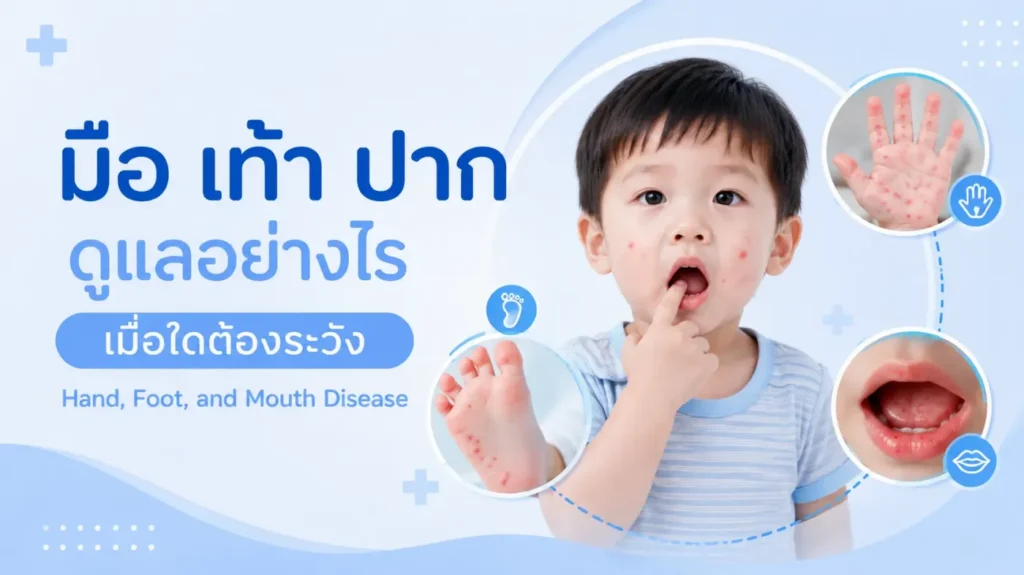
Hand, Foot and Mouth Disease: How to Care for Your Child and When to Be Concerned
Hand, Foot and Mouth Disease (HFMD) is one of the infectious diseases parents commonly hear about, especially during outbreaks in kindergartens, nurseries, or households where several young children live together. It often begins with fever, mouth pain, poor appetite, or drooling, followed by spots or blisters on the palms, soles, around the mouth, or buttocks. Many families become worried because they are concerned that the illness may become severe or cause complications.
In fact, Hand, Foot and Mouth Disease usually resolves on its own within 7–10 days, and most children can be cared for at home. However, “usually mild” does not mean “there is nothing to watch for.” Some children, particularly very young children, those who cannot drink enough fluids, or those infected with certain enteroviruses such as Enterovirus 71, may rarely develop neurological, cardiac, or respiratory complications. The CDC notes that HFMD is common in children younger than 5 years, spreads easily, and commonly causes fever, mouth sores, and a rash on the hands and feet, with most patients recovering within 7–10 days.
What Is Hand, Foot and Mouth Disease?
Hand, Foot and Mouth Disease is a viral infection caused by enteroviruses and is particularly common in young children. Common causes include Coxsackievirus A16, while Coxsackievirus A6 may sometimes cause more extensive or prominent skin lesions. Enterovirus 71, or EV-A71, is also important in East and Southeast Asia because it has been associated with more severe complications, including encephalitis, although these complications remain uncommon.
The name Hand, Foot and Mouth Disease can sometimes be confused with foot-and-mouth disease in animals, but they are completely different illnesses. HFMD in humans is caused by viruses transmitted between people. It is not the livestock disease affecting cattle, pigs, goats, or sheep, and ordinary household pets are not considered a source of human HFMD in this sense.
How Does HFMD Spread?
Hand, Foot and Mouth Disease spreads easily, particularly among young children who share toys, frequently put their hands in their mouths, or have not yet developed good hygiene habits. The virus can spread through respiratory droplets, saliva, nasal secretions, fluid from blisters, stool, and contaminated toys or surfaces. Infection may occur when contaminated hands touch the mouth, nose, or eyes.
The incubation period is commonly around 3–7 days. Children are usually most contagious during the first week of illness, but the virus may continue to be shed in stool for several weeks after symptoms improve. This is why careful handwashing after diaper changes, after using the toilet, and before preparing or eating food remains important even after the child appears well.
What Are the Early Symptoms?
Children often begin with fever, sore throat, reduced appetite, tiredness, or increased irritability. Mouth sores may then develop as small red spots on the tongue, inside the cheeks, palate, or throat before becoming painful blisters or ulcers. These may make a child reluctant to eat or breastfeed, cause drooling, or make swallowing painful.
The skin rash commonly appears on the palms, soles, fingers, and toes. Some children also develop lesions on the buttocks, thighs, arms, or around the mouth. The rash may appear as red spots, raised bumps, or small fluid-filled blisters. It is often less itchy and less painful than the mouth ulcers. One of the earliest concerns parents notice is often that “the child cannot eat because the mouth hurts” rather than the rash itself.
Some children develop the typical combination of fever, mouth ulcers, and hand-and-foot rash, while others may have only mouth ulcers or a mild rash. Early illness may therefore resemble pharyngitis, mouth ulcers, a common viral infection, or another viral rash. Diagnosis is usually made from the history, age, examination, appearance of the rash, and location of the lesions. Mild typical cases do not always require blood tests or viral testing.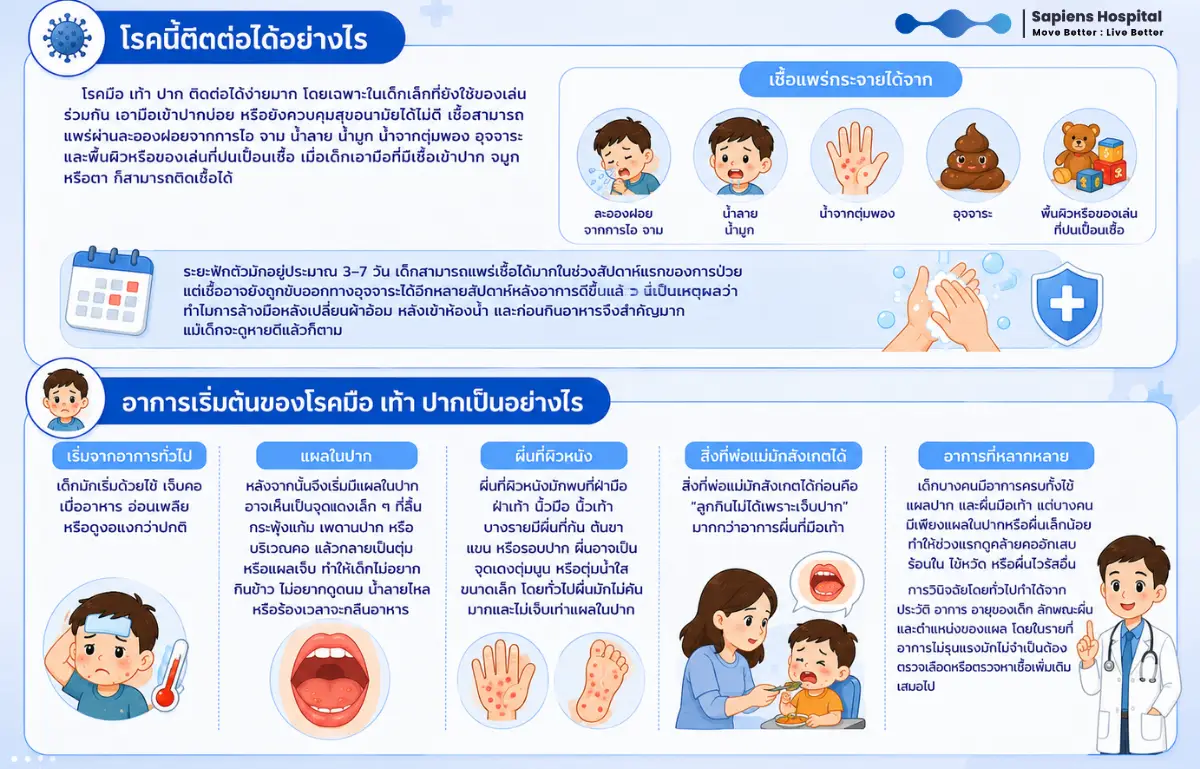
How to Care for a Child Safely at Home
The main goals of HFMD care are to relieve fever and pain and prevent dehydration. There is no routinely used specific antiviral treatment for uncomplicated HFMD, and antibiotics do not make the illness resolve faster because HFMD is caused by viruses rather than bacteria.
If the child has fever or mouth pain, an age- and weight-appropriate pain reliever or fever reducer such as paracetamol or ibuprofen may be used according to medical advice or the medicine label. Aspirin should not be given to children because of the risk of serious complications.
For food, focus on “small amounts that the child can tolerate” rather than forcing large meals. Children with painful mouth ulcers often tolerate cool, soft, non-irritating foods better, such as cold milk, yogurt, porridge, soup, steamed egg, tofu, or soft non-acidic fruit. Very hot, spicy, sour, fizzy, acidic, or hard crunchy foods should be avoided because they can irritate the ulcers and make the child even less willing to drink.
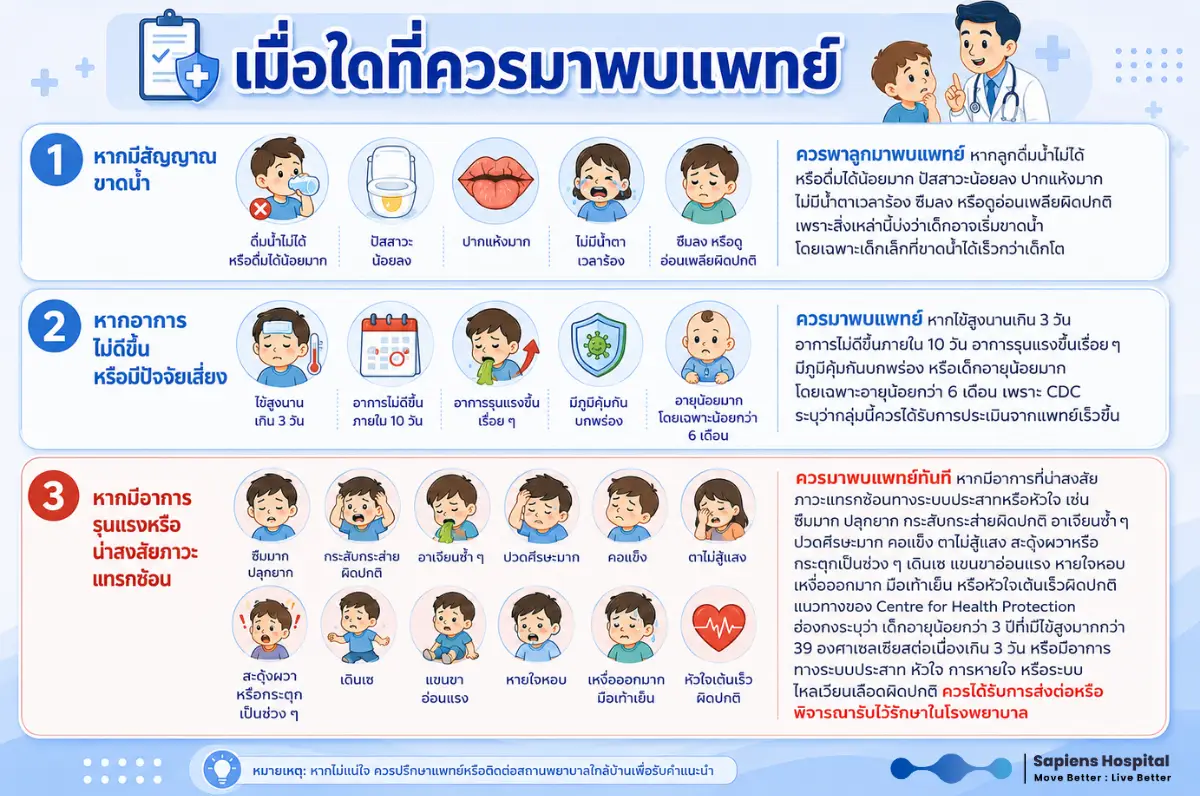
The most important complication to watch for is dehydration. Children with painful mouth ulcers may refuse fluids even without significant diarrhea or vomiting. Signs include reduced urination, dry mouth, absence of tears when crying, increasing drowsiness, or a clear reduction in fluid intake.
When Should You Take Your Child to See a Doctor?
Seek medical assessment if your child cannot drink or is drinking very little, urinates less than usual, has a very dry mouth, produces no tears when crying, becomes unusually sleepy, or appears significantly weak, because these may indicate dehydration, particularly in younger children.
Medical assessment is also recommended if fever remains high or continues for more than about 3 days, symptoms do not improve within around 10 days, symptoms are progressively worsening, the child has an immune deficiency, or the child is very young, especially younger than 6 months.
Seek urgent medical attention if there are symptoms suggesting neurological, cardiac, respiratory, or circulatory complications, such as marked drowsiness or difficulty waking, unusual agitation, repeated vomiting, severe headache, neck stiffness, light sensitivity, repeated startling or jerking movements, unsteady walking, weakness of the arms or legs, difficulty breathing, excessive sweating, cold hands and feet, or an unusually fast heartbeat. Severe HFMD complications are uncommon, but children who develop these symptoms need prompt medical assessment.
Why Can HFMD Become Severe in Some Children?
Hand, Foot and Mouth Disease is usually mild, but some enteroviruses, particularly EV-A71, have been associated with a higher risk of serious complications such as encephalitis, meningitis, myocarditis, acute flaccid paralysis-like illness, or neurogenic pulmonary edema. These complications are uncommon, but EV-A71 has been associated with severe outbreaks in parts of East and Southeast Asia.
One reason severe disease can be difficult to recognize early is that a child may initially appear to have ordinary HFMD and then worsen rapidly, with persistent high fever, repeated vomiting, drowsiness, jerking movements, abnormal breathing, or cold hands and feet. Parents should therefore look beyond the number of spots and assess the child’s “overall condition”: Is the child alert? Can they drink? Are they breathing comfortably? Are they interacting and playing? Are symptoms improving or worsening over time?
Should the Blisters Be Popped or Treated With Cream?
In general, fluid-filled blisters should not be intentionally popped because the fluid can contain virus and broken skin may increase the risk of secondary bacterial infection. Keep the skin clean and dry and discourage scratching. If a blister breaks, gently wash the area with clean water and mild soap, pat it dry, and monitor for increasing redness, warmth, pain, swelling, or pus.
If the child has extensive painful mouth ulcers and cannot drink, a doctor may consider age-appropriate methods or medication to relieve oral pain. Avoid using oral anesthetic products or herbal preparations without medical advice, especially in young children, because some products may affect swallowing, increase the risk of choking, or cause other adverse effects.
Is Viral Testing Necessary?
In children with typical mild HFMD, diagnosis is usually clinical and viral testing is often unnecessary. If symptoms are severe, neurological or respiratory abnormalities occur, an outbreak requires investigation, or another diagnosis needs to be excluded, clinicians may consider samples from the throat, stool, blister fluid, or, in selected severe cases, cerebrospinal fluid for PCR or other virological testing.
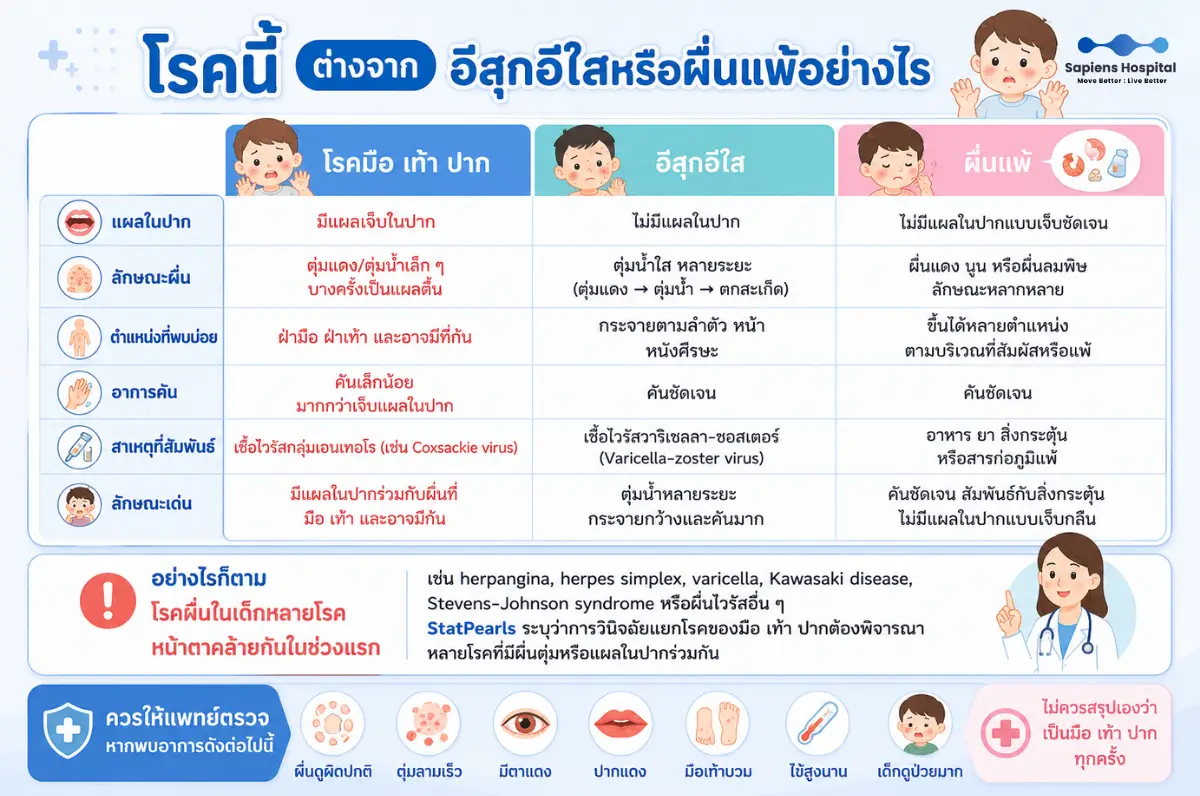
How Is HFMD Different From Chickenpox or an Allergic Rash?
HFMD typically causes painful mouth ulcers together with a rash on the palms and soles, and sometimes on the buttocks. Chickenpox more commonly causes itchy fluid-filled lesions in different stages that are widely distributed over the trunk, face, and scalp. Allergic rashes are often itchy and may be associated with food, medication, or another trigger, but typically do not cause the same pattern of painful mouth ulcers.
However, several childhood illnesses can look similar at first, including herpangina, herpes simplex, varicella, Kawasaki disease, Stevens-Johnson syndrome, and other viral rashes. If the rash looks unusual, spreads rapidly, or is accompanied by red eyes, markedly red lips, swelling of the hands or feet, prolonged high fever, or a very unwell child, medical assessment is recommended. Do not assume every rash with mouth sores is HFMD.
How Long Should a Child Stay Home From School?
In general, children should stay home while they have fever, significant mouth pain, uncontrolled drooling, or are too unwell to participate normally. CDC guidance indicates that children may usually return to school or childcare when they are fever-free, feel well enough to participate, and do not have uncontrolled drooling from mouth sores. Local school or public-health rules may differ, particularly during outbreaks.
During outbreaks or in settings where many young children are together, local public-health authorities or schools may apply stricter exclusion rules. Parents should follow local outbreak guidance when it differs from routine recommendations.
How Can HFMD Transmission Be Reduced at Home and School?
The most important preventive measure is frequent handwashing with soap and water, especially after diaper changes, after using the toilet, after wiping nasal or oral secretions, after touching blisters, and before preparing or eating food. Children should be encouraged not to put their hands in their mouths and not to share cups, spoons, towels, or personal items. Frequently touched surfaces and toys should be cleaned regularly, and close contact such as kissing or sharing utensils should be reduced during illness.
Toys, tables, chairs, doorknobs, bathrooms, and frequently touched surfaces should be cleaned regularly, particularly in households with several young children or immunocompromised individuals. Because enteroviruses can continue to be shed in stool for weeks after symptoms improve, careful hygiene after diaper changes and toilet use remains important even after fever has resolved.
Can Parents or Other Adults Catch HFMD?
Adults can also become infected with Hand, Foot and Mouth Disease. Some adults have mild symptoms or no symptoms but may still contribute to transmission. Adults caring for a sick child should wash their hands frequently, avoid sharing personal items, avoid kissing or sharing cups and utensils during the illness, and clean frequently touched surfaces. Pregnant women who have been exposed generally do not develop serious complications, but anyone who is pregnant and develops symptoms or is concerned about significant exposure should contact a healthcare professional for individualized advice.
Frequently Asked Questions From Parents
- Does my child need antibiotics for HFMD?
Usually not. HFMD is caused by viruses. Treatment focuses on relieving fever and pain, maintaining hydration, and watching for warning signs. Antibiotics are only useful if a doctor identifies a secondary bacterial infection. - Does having many blisters mean the illness is severe?
Not necessarily. The number of skin lesions alone does not determine severity. Some children have many spots but remain active and drink normally, while another child may have only a few lesions but become drowsy, unable to drink, have persistent high fever, repeated vomiting, or abnormal jerking movements. The child’s overall condition is more important. - My child refuses food but can still drink. Should I worry?
Children often eat less while mouth ulcers are painful. The more important questions are whether the child can drink enough and is urinating normally. If fluid intake and urination remain adequate and the child is alert, close home observation may be reasonable. If the child cannot drink, urinates less, has a dry mouth, or becomes drowsy, seek medical assessment. - My child’s nails are peeling or falling off after HFMD. Is this dangerous?
Rarely, temporary nail shedding can occur several weeks after HFMD. In most cases the nail grows back. However, if there is pain, redness, swelling, pus, or significant nail deformity, medical assessment is recommended.
Hand, Foot and Mouth Disease is common in young children and usually resolves on its own with supportive care. Good care involves more than waiting for the rash to disappear: parents should make sure the child drinks enough, relieve mouth pain and fever, reduce transmission, and monitor for signs that the illness may be becoming more severe.
If your child has fever, mouth ulcers, and a rash on the hands or feet but is drinking well, urinating normally, alert, and gradually improving, close home care is often appropriate. However, if the child cannot drink, urinates less, has fever lasting more than about 3 days, becomes drowsy, repeatedly vomits, develops jerking movements, walks unsteadily, has weakness, abnormal breathing, cold hands and feet, or is younger than 6 months, medical assessment is recommended promptly.
Sapiens Hospital
Move Better:Live Better
Tel. 02-111-3703
References
Centers for Disease Control and Prevention. About Hand, Foot, and Mouth Disease. Updated May 7, 2024.
Centers for Disease Control and Prevention. HFMD Symptoms and Complications. Updated May 7, 2024.
Centers for Disease Control and Prevention. HFMD: Causes and How It Spreads. Updated May 7,2024.
Guerra AM, Orille E, Waseem M. Hand, Foot, and Mouth Disease. StatPearls. NCBI Bookshelf. Updated 2023.
Centre for Health Protection, Department of Health, Hong Kong SAR. Management of Hand Foot
Mouth Disease (HFMD) in Health Care Settings.