
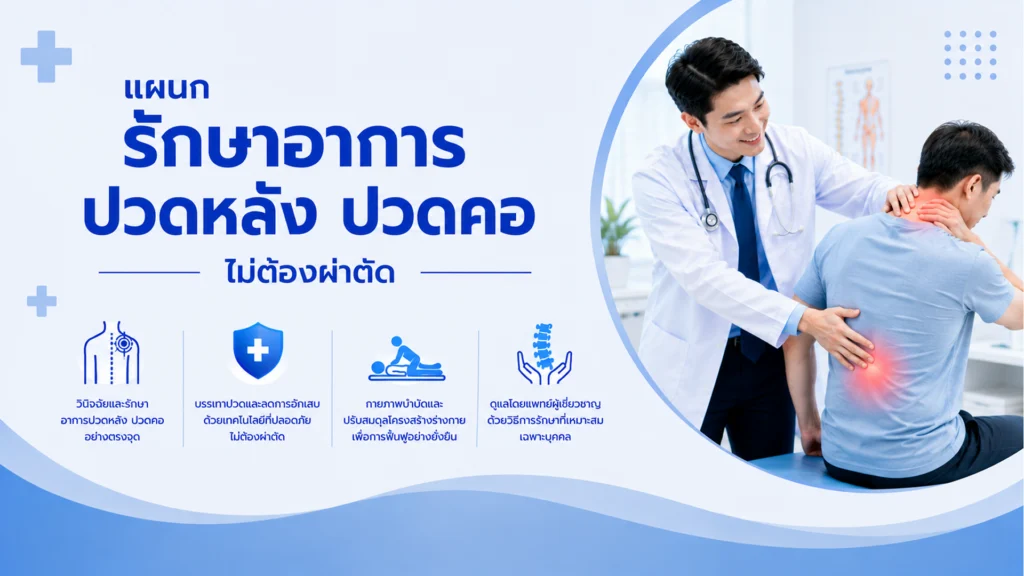
Non-Surgical Treatment for Back and Neck Pain
Back pain, neck pain, and pain that may extend to the shoulders are common problems involving the muscles, joints, discs, and nerves around the spine. In many cases, symptoms are caused by muscle strain or minor injuries from twisting incorrectly, sports activities, prolonged sitting, or poor posture. These conditions may improve with pain medication, muscle relaxants, activity modification, and physical therapy.
However, some patients develop chronic pain caused by degenerative changes in the cervical or lumbar spine, such as degenerative disc disease, facet joint degeneration, spinal stenosis, or nerve compression. When a spinal nerve is irritated or compressed, symptoms may include pain radiating into the shoulder, arm, buttock, or leg, together with numbness, tingling, or weakness in some cases.
Medication and physical therapy can still play an important role in managing these conditions, but when symptoms remain persistent or significantly affect daily life, further evaluation may be needed to identify the actual pain source and consider additional treatment options.
Back and neck pain are more commonly associated with factors such as:
- Increasing age and age-related degeneration of the discs, joints, and supporting structures of the spine
- Prolonged sitting or poor working posture
- Frequent smartphone use with prolonged neck flexion
- Overweight or obesity which may increase mechanical stress on the spine
- Lack of regular exercise leading to reduced muscle strength and flexibility
Sapiens Hospital provides non-surgical treatment options for selected patients with chronic back and neck pain. Depending on the diagnosis, treatment may include Epidural Steroid Injection to reduce inflammation around irritated nerve roots, Nerve Blocks to help identify and control pain from specific nerves or joints, and Radiofrequency Treatment to reduce pain signals from selected sensory nerves.
These interventional treatments are often combined with physical therapy, posture correction, strengthening exercises, and rehabilitation to improve spinal support, movement, and long-term function. Treatment is individualized according to the cause of pain, severity of symptoms, imaging findings, medical conditions, and the patient’s daily activities and goals.
Not every patient with back or neck pain needs surgery. However, patients with progressive weakness, severe numbness, difficulty walking, loss of bladder or bowel control, or other significant neurological symptoms should seek medical assessment promptly because these may indicate serious nerve or spinal cord compression.