Breast Surgery: Proportional Breast Augmentation Tailored to Your Anatomy for Natural-Looking Results | Sapiens Hospital
Deciding to reshape your body is a significant milestone that requires accurate clinical information, a clear understanding of bodily anatomy, and complete confidence in safety standards. Many individuals researching breast procedures often ask themselves which hospital to choose, what implant size is optimal, and what type of medical facility best delivers both aesthetic balance and long-term surgical safety.
At Sapiens Hospital, we believe that Breast Surgery is not merely about increasing volume to create fuller breasts; it is a clinical art that harmonizes body proportion, tissue safety, and individualized aesthetic goals. This guide explores every essential dimension of aesthetic and reconstructive breast surgery to empower you to make an informed, confident decision.
What is Breast Surgery?
Breast Surgery is a comprehensive branch of Plastic and Reconstructive Surgery encompassing surgical interventions designed to enhance proportion, contour, and anatomical positioning, as well as restore breast architecture tailored to each patient’s unique anatomy. Breast procedures are categorized by clinical objective into the following:
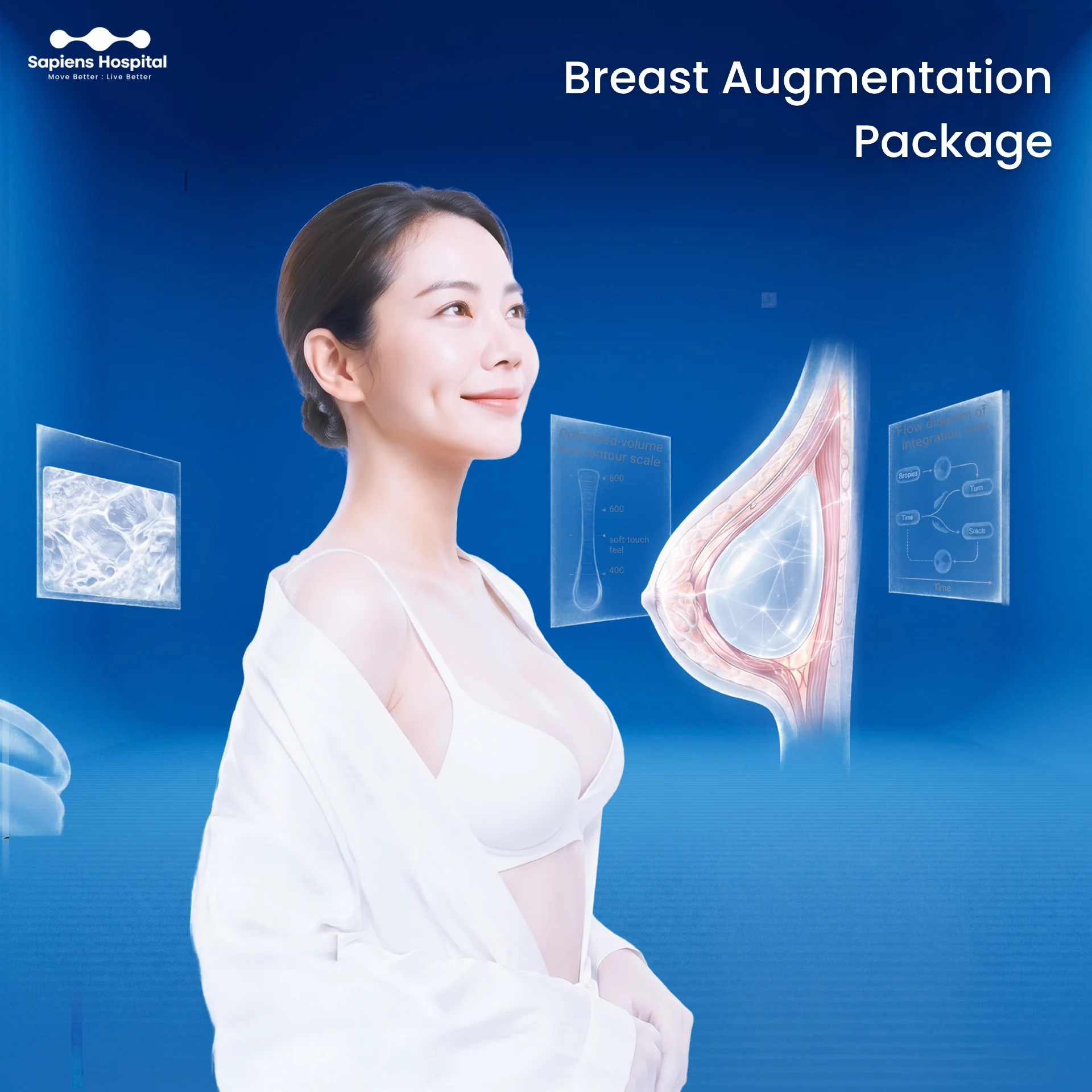
Breast Augmentation: A procedure aimed at enhancing breast volume, projection, and fullness. It is most commonly performed using silicone breast implants or autologous fat transfer when clinically indicated.
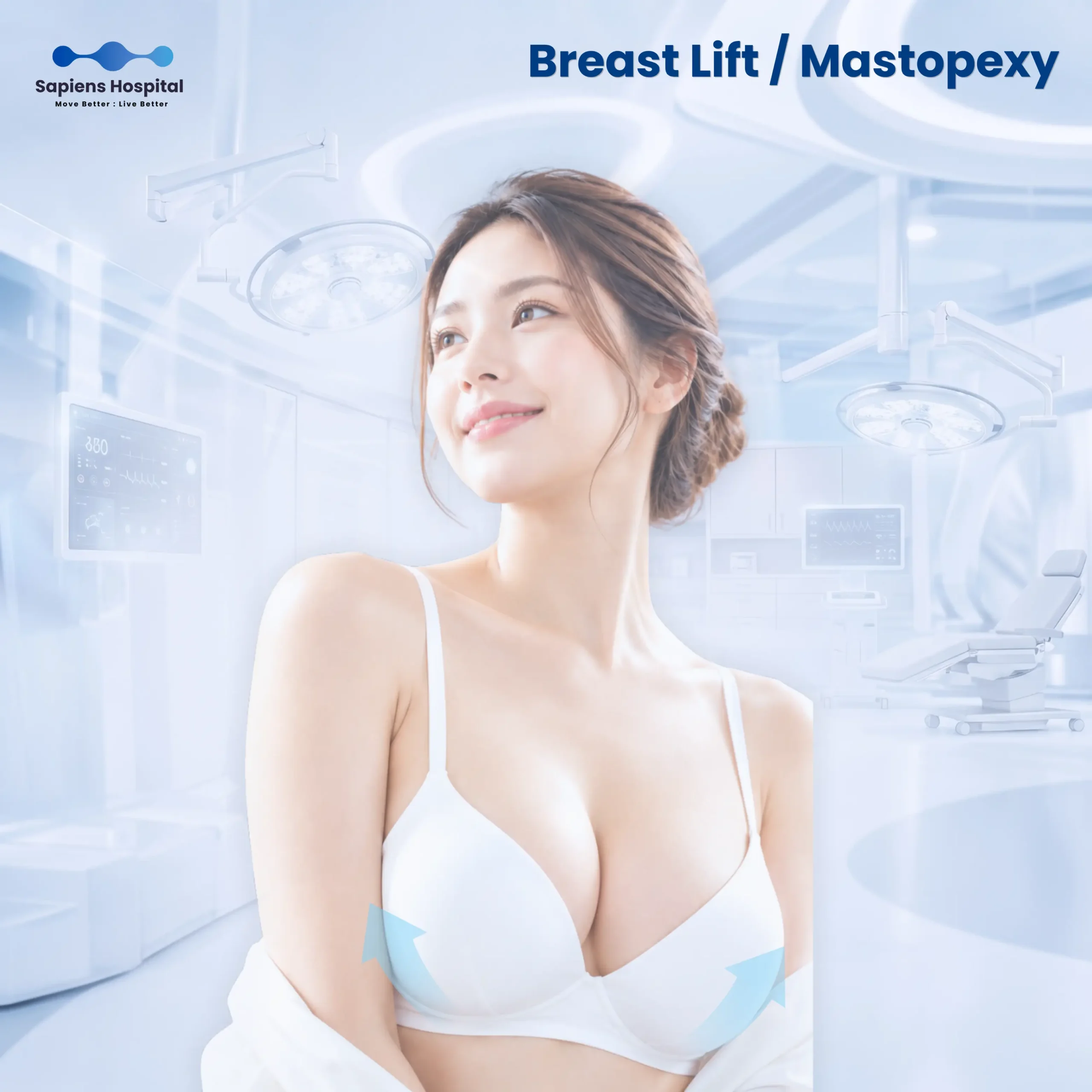
Breast Lift (Mastopexy): A surgical procedure designed to correct breast ptosis (sagging) caused by aging, pregnancy, breastfeeding, or significant weight fluctuation. The surgeon excises excess skin and repositions the nipple-areolar complex and glandular tissue into a firmer, elevated contour.
Breast Reduction: A surgical procedure to remove excess glandular tissue, fat, and skin. It is indicated for individuals experiencing macromastia (excessively large breasts) that causes physical discomfort, such as chronic neck, shoulder, and back pain, or intertrigo in the inframammary fold.
Revision Breast Surgery: A secondary intervention performed to refine or correct prior surgical outcomes, such as addressing implant malposition, managing capsular contracture, or exchanging implants for size adjustments.
Who is an Ideal Candidate for Breast Augmentation?
While body aesthetic preferences are personal, breast augmentation should be performed when the patient’s physiological and anatomical framework is fully assessed and prepared. Ideal candidates frequently include:
- Individuals with naturally small breast parenchyma seeking improved overall body proportions.
- Individuals experiencing volume deflation and loss of skin elasticity postpartum or after breastfeeding.
- Patients with pronounced breast asymmetry regarding volume, shape, or inframammary fold position.
- Patients seeking breast reconstruction following therapeutic breast resection or oncologic surgery.
- Individuals in good general medical health without systemic contraindications to general anesthesia.
- Individuals who maintain realistic expectations aligned with anatomical possibilities.
Surgical suitability requires comprehensive clinical evaluation by board-certified plastic surgeons to measure skin envelope thickness, pectoralis muscle tone, and thoracic cage architecture prior to surgical planning.
What Techniques and Modalities Are Available for Breast Augmentation?
Modern aesthetic surgical techniques allow surgeons to customize the surgical approach with high precision. Standard clinical approaches include:
- Silicone Implant Augmentation
The global gold standard for breast enhancement, ideal for patients seeking predictable volume expansion and definitive contour control. Modern medical-grade silicone implants feature cohesive gel technology, high biocompatibility, and rigorous international regulatory approvals. - Simultaneous Augmentation-Mastopexy (Breast Lift with Implants)
When breast ptosis is accompanied by upper-pole volume deflation, implants alone may not adequately elevate sagging tissue. Combining mastopexy with implant placement simultaneously restores upper-pole fullness and reposition the nipple-areolar complex. - Breast Asymmetry Correction
While natural anatomical asymmetry exists in all bodies, pronounced discrepancies can be harmonized by utilizing different implant volumes, profiles, or distinct surgical techniques on each breast to achieve optimal symmetry. - Breast Revision & Implant Exchange
Indicated for patients with long-standing implants or those presenting with complications such as capsular contracture, implant displacement, or evolving aesthetic preferences. The surgeon evaluates existing incisions and tissue envelope integrity to execute a safe revision plan.
How to Select the Right Breast Implant?
A frequent clinical inquiry is: “Which breast implant is the best?” In clinical reality, there is no single best implant for every patient—only the implant that is optimal for your unique anatomy. The surgeon evaluates key clinical parameters:
| Clinical Parameter | Clinical Implications & Surgical Impact |
| Base Width | Determines the maximum implant diameter permissible without lateral displacement or medial symmastia. |
| Tissue Pinch Thickness | Thin soft tissue coverage necessitates conservative profile selection to prevent visible implant edge visibility or rippling. |
| Implant Shape | Round implants deliver pronounced upper-pole fullness, whereas anatomical (teardrop) implants provide a natural sloped slope. |
| Implant Surface | Smooth or nano-textured surfaces influence cellular adherence and reduce the risk profile for capsular contracture. |
| Projection / Profile | Selection across Low, Moderate, High, to Extra High profiles matched to the patient’s thoracic dimensions and tissue elasticity. |
Implant selection extends beyond simply choosing a desired volume in cubic centimeters (CC); it involves careful geometric calculations relative to the chest wall to prevent excessive tissue tension and subsequent soft tissue thinning.
Key Considerations for Achieving Natural-Looking Results
Achieving natural aesthetic outcomes depends on the relationship across all anatomical dimensions, not merely selecting a conservative implant volume:
- Shoulder and Torso Proportions: In patients with narrow thoracic frames, oversized implants can extend laterally past the anterior axillary line, resulting in an unnatural silhouette.
- Upper-Pole Transition: Natural breasts feature a gentle slope descending from the clavicle. Submuscular or Dual Plane pocket placement conceals the upper implant border seamlessly beneath tissue.
- Dynamic Mobility: With posture changes, the augmented breast should move naturally with gravity rather than remaining rigid or unnaturally fixed.
- Softness on Palpation: Achieved through high-cohesivity, responsive silicone gel combined with adequate subcutaneous fat and parenchymal tissue coverage.
Standardized Clinical Steps for Breast Surgery
Surgical procedures adhere to a rigorous clinical pathway to prioritize patient safety and surgical precision:
- Consultation & Anatomical Assessment: Clinical measurements of base diameter, tissue pinch evaluation, skin elasticity testing, and alignment on patient goals.
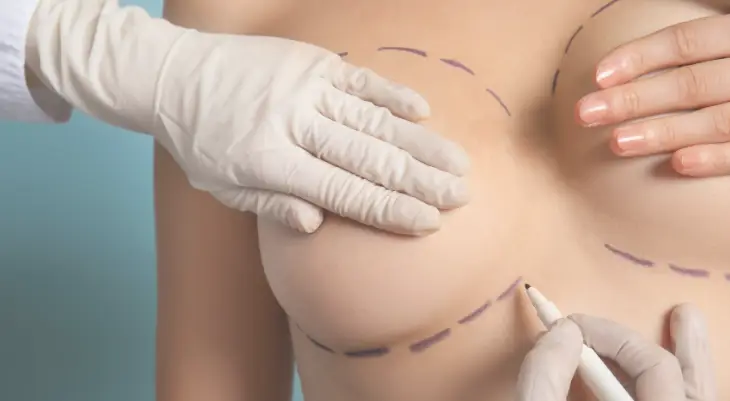
- Surgical Planning: Selection of implant dimensions, incision placement (inframammary, periareolar, or transaxillary), and pocket plane (subpectoral, subfascial, or Dual Plane).
- Pre-operative Screening: Complete blood count, chest radiography, electrocardiogram (EKG), and breast ultrasound or mammography based on clinical indications.
- Anesthesia & Operation: General anesthesia administered and monitored by board-certified anesthesiologists within positive-pressure, HEPA-filtered operating suites.
- Recovery & Follow-up: Monitored post-anesthesia care, followed by structured outpatient follow-up visits for wound evaluation, suture removal, and long-term implant positioning checks.
Pre-Operative Preparation
Systematic patient preparation optimizes procedural safety and enhances postoperative wound healing:
- Disclose Full Medical History: Report all chronic conditions, known drug allergies, past surgical history, and previous breast interventions.
- Discontinue Anticoagulants and Supplements: Cease aspirin, NSAIDs (e.g., ibuprofen), vitamin E, fish oil, Ginkgo biloba, and ginseng at least 1–2 weeks preoperatively under physician guidance.
- Cessation of Smoking and Alcohol: Abstain from smoking and alcohol for at least 2–4 weeks perioperatively, as nicotine causes vasoconstriction, impairing microvascular perfusion and wound healing.
- Fasting Guidelines (NPO): Strict adherence to fasting instructions from the anesthesiology team (typically 6–8 hours prior to surgery).
- Appropriate Attire: Prepare loose-fitting, front-buttoned clothing to avoid shoulder elevation and strain following surgery.
Postoperative Recovery Timeline
Recovery duration depends on individual physiological response, surgical technique, and pocket plane selection:
- Days 1–3: Peak chest tightness and mild soreness. Rest is prioritized, minimizing arm exertion and pectoralis strain.
- Days 5–7: Discomfort subsides significantly. Most patients resume sedentary desk work and light activities of daily living.
- Weeks 2–4: Edema progressively decreases, and upper limb mobility improves; heavy lifting and strenuous physical exercise remain restricted.
- Months 1–3 and Beyond: Tissues settle into their final position (“drop and fluff”), softening naturally; exercise routines may be resumed as cleared by your surgeon.
Postoperative Care Instructions
Proper postoperative self-care is as crucial to clinical success as surgical execution:
- Wear a Medical Support Bra: Provides continuous stabilization, reduces postoperative edema, and prevents implant malposition.
- Maintain Dry and Sterile Incisions: Keep surgical dressings dry until clearance is granted, following clinical wound care instructions provided by the nursing staff.
- Sleeping Position: Sleep supine with the head and upper torso elevated on pillows for the first 2–4 weeks; avoid prone or side-sleeping positions.
- Limit Upper Body Exertion: Refrain from heavy lifting, long-distance driving, and upper-body resistance training during the first month.
- Medication Compliance & Follow-up: Complete prescribed antibiotics and anti-inflammatory medications, and attend all scheduled clinical follow-up consultations.
Potential Risks and Complications
Understanding potential surgical risks is fundamental to informed medical consent. Potential complications include:
- Edema, Ecchymosis, and Soreness: Standard post-surgical physiological reactions that resolve gradually over time.
- Hematoma or Seroma: Localized fluid or blood accumulation requiring clinical observation or drainage by the surgical team.
- Infection: Mitigated by sterile operating theatre protocols, strict surgical antisepsis, and diligent postoperative hygiene.
- Capsular Contracture: A physiological foreign-body reaction where fibrous tissue tightens around the implant; severe cases may cause firmness or distortion requiring secondary management.
- Sensory Changes: Transient numbness or hypersensitivity around the nipple-areolar complex and skin envelope, which typically normalizes over time.
Undergoing surgery in an accredited hospital facility and adhering strictly to clinical guidance minimizes the incidence of these complications significantly.
Why Choose Hospital-Based Breast Surgery?
Patient safety is the absolute cornerstone of aesthetic plastic surgery. Undergoing breast procedures within a fully licensed hospital environment provides vital clinical safeguards:
- International Operating Theatre Sterility Standards: Positive-pressure airflow systems, HEPA filtration, and strict environmental controls minimize infection risks.
- Dedicated Board-Certified Anesthesiologists: Continuous hemodynamic monitoring throughout surgery and recovery by qualified anesthesiology specialists.
- Emergency Preparedness and Resuscitation Facilities: Immediate on-site access to life-support equipment, emergency medications, a blood bank, and multidisciplinary medical teams.
- Comprehensive Diagnostic & Laboratory Infrastructure: On-site pathology, clinical laboratory testing, and diagnostic imaging (X-ray, ultrasound) under one roof.
- Long-Term Continuity of Care: Secure electronic medical records, standardized follow-up tracking, and private hospital clinical nursing governance.
Breast Surgery at Sapiens Hospital
At Sapiens Hospital (Bangkok), our plastic and reconstructive surgery practice is anchored in clinical safety, anatomical balance, and dedicated patient satisfaction.
- Personalized Assessment: Detailed anatomical analysis to select implant dimensions that complement your natural frame without stressing soft tissue envelopes.
- Hospital Standard of Care: Every phase is governed by hospital-grade protocols, supported by surgical specialists, clinical nurses, and anesthesiologists.
- Transparent Consultation: Clear, objective discussion of procedural benefits, anatomical limitations, and expected surgical trajectories to empower shared decision-making.
If you are exploring breast surgery to refine your silhouette and enhance your personal confidence, scheduling an initial consultation with our clinical specialists is your first step forward.
Schedule your clinical consultation today for a personalized anatomical assessment and tailored breast surgical plan.
For more details or to book your clinical evaluation, please contact the Plastic Surgery Department at Sapiens Hospital.