
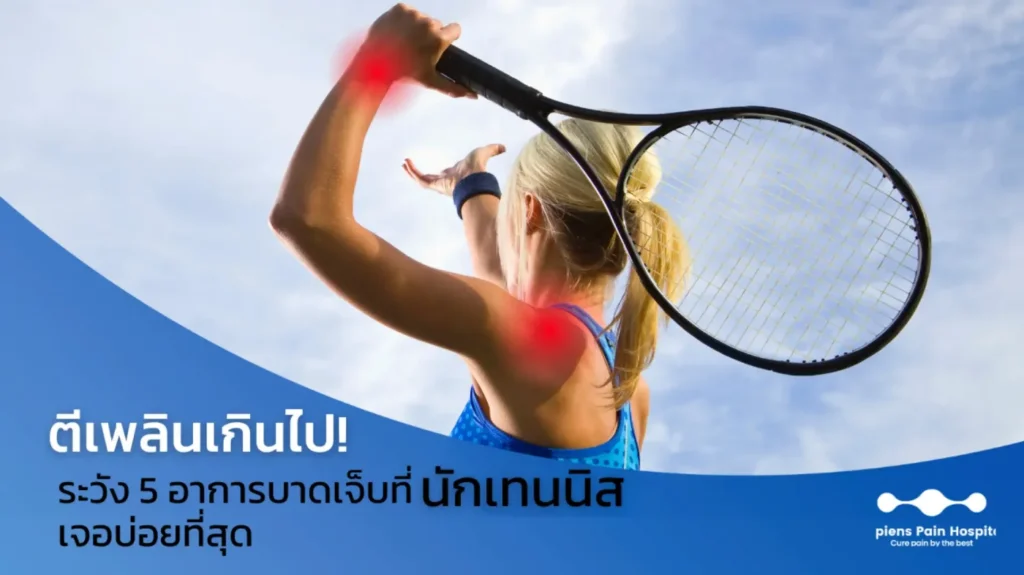
Got Carried Away on the Court? Watch Out for These 5 Common Tennis Injuries
Tennis combines explosive movements with repetitive actions. Serving, groundstrokes, rapid acceleration, deceleration, and repeated changes of direction place considerable demands on the joints, muscles, and tendons. Injuries may occur suddenly or develop gradually from repeated loading, particularly in regular or competitive players. Shoulder pain, including right shoulder pain, is one of the problems that can affect tennis players.
Sapiens Hospital approaches sports injuries by assessing the actual diagnosis, biomechanics, movement patterns, training load, and factors contributing to pain. Treatment may combine appropriate interventional pain procedures with individualized rehabilitation and neuromuscular training according to the athlete’s condition.
Here are 5 injuries commonly seen in tennis players and the treatment approaches that may be considered at Sapiens Hospital.
1. Tennis Elbow (Lateral Elbow Tendinopathy)
Symptoms: Pain and tenderness around the outside of the elbow, often aggravated by gripping, lifting, or repetitive wrist and forearm activity. The condition involves the common extensor tendon, particularly the extensor carpi radialis brevis (ECRB), and persistent cases are generally considered a tendinopathy rather than simply ongoing inflammation.
Treatment Approach at Sapiens:
- Progressive strengthening and loading exercises combined with movement and neuromuscular rehabilitation
- Ultrasound-guided procedures, including PRP, may be considered in selected persistent cases after clinical assessment
- ESWT (Extracorporeal Shockwave Therapy) may be considered for selected persistent tendinopathy; TENS may be used as an adjunct for symptom relief in some patients
- Individualized rehabilitation with a physical therapist based on the patient’s symptoms, strength, function, and sporting demands
2. Rotator Cuff Tendinopathy
Symptoms: Shoulder pain that may worsen when lifting the arm overhead, serving, or performing repeated strokes. Rotator cuff tendinopathy can involve tendons such as the supraspinatus and infraspinatus and is influenced by tendon load, capacity, biomechanics, age, and other individual factors.
Treatment Approach at Sapiens:
- Clinical examination and musculoskeletal ultrasound when appropriate to evaluate the rotator cuff and surrounding structures
- Activity and load modification combined with progressive rotator cuff and scapular strengthening; cold therapy or selected physical modalities may be used for symptom relief
- Ultrasound-guided corticosteroid injection may be considered for selected patients when clinically indicated, but it is not a routine treatment for every case of rotator cuff tendinopathy
- Surgery is not determined by symptom duration alone. It may be considered when there is significant structural pathology or persistent functional limitation despite appropriate non-surgical treatment, depending on the specific diagnosis
3. Ankle Sprain
Symptoms: An ankle sprain may occur during sudden stopping, landing, or rapid changes of direction. Most cases involve the lateral ankle ligaments, particularly the anterior talofibular ligament (ATFL), with the calcaneofibular ligament (CFL) involved in some injuries.
Treatment Approach at Sapiens:
- Clinical examination with point-of-care musculoskeletal ultrasound when appropriate; X-ray, MRI, or other imaging may be selected if another injury is suspected
- Progressive rehabilitation focusing on range of motion, strength, balance, proprioception, and neuromuscular control; manual therapy may be used as an adjunct when appropriate
- PRP is not routinely required for uncomplicated ankle sprains. Its use may be considered in selected cases, but evidence and indications depend on the specific ligament or tendon condition
- For persistent mechanical instability despite adequate rehabilitation, surgical stabilization or reconstruction may be considered after specialist assessment
4. Jumper’s Knee (Patellar Tendinopathy)
Symptoms: Load-related pain around the patellar tendon, usually near the lower pole of the kneecap. Symptoms may become more noticeable during jumping, lunging, rapid acceleration, deceleration, or other high-load movements on court.
Treatment Approach at Sapiens:
- Load management combined with progressive tendon-strengthening exercises; bracing or biofeedback may be considered for selected patients
- Dry needling or other minimally invasive tendon procedures may be considered in selected persistent cases after an accurate diagnosis
- Focused ESWT may be considered as an adjunct for selected chronic patellar tendinopathy
- Surgery is reserved for selected refractory cases that remain significantly symptomatic despite an adequate rehabilitation program and specialist evaluation
5. Stress Fracture (Bone Stress Injury)Symptoms: Localized pain that typically becomes more noticeable with repeated weight-bearing or sporting activity. In tennis players, bone stress injuries may affect sites such as the tibia or bones of the foot. Risk is related to factors such as rapid increases in training load, insufficient recovery, nutrition and energy availability, bone health, biomechanics, and previous injury rather than a fixed number of training sessions per week.
Treatment Approach at Sapiens:
- Clinical assessment followed by appropriate imaging. X-rays may be used initially in some cases, while MRI is particularly useful when a bone stress injury is suspected but not visible on an initial X-ray
- Management focuses primarily on reducing or modifying bone loading and addressing contributing factors; adjunctive bone-stimulation therapies may be considered only for selected indications
- Individualized rehabilitation with assessment of biomechanics, strength, walking and running patterns, training load, and other relevant risk factors
- Higher-risk injuries may require temporary protected weight-bearing or an off-loading boot. Follow-up imaging and the timing of return to sport are individualized according to the location, severity, symptoms, and evidence of healing
Why Choose Sapiens Hospital?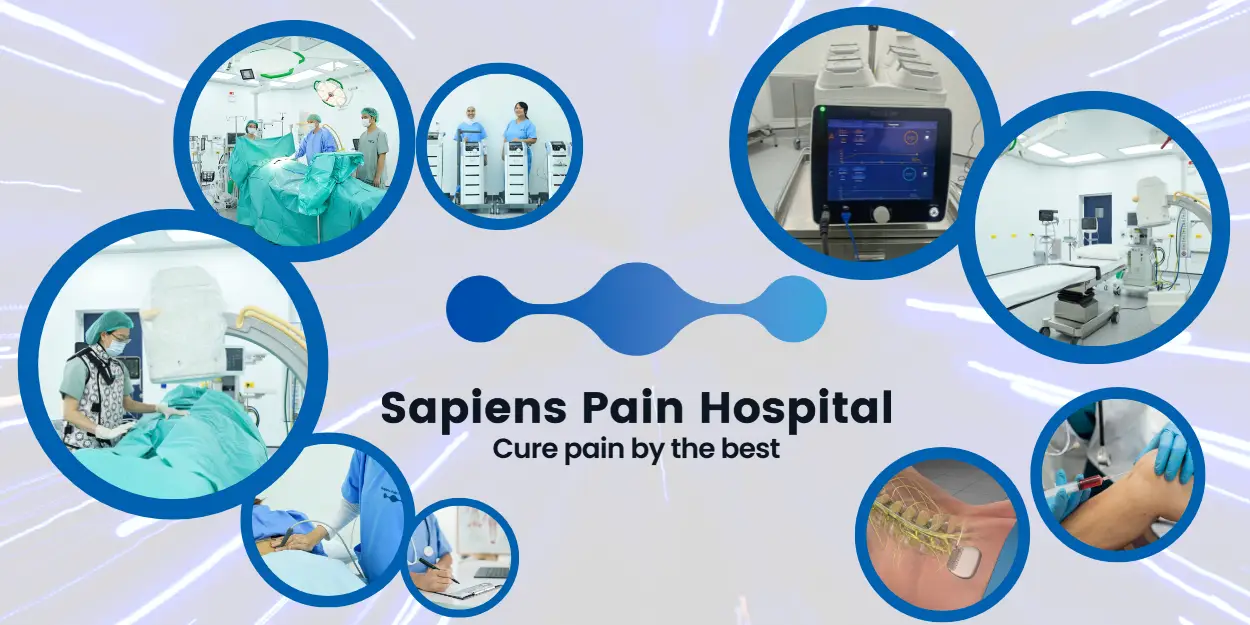
Sapiens Hospital provides integrated care for sports-related musculoskeletal injuries and pain, combining clinical assessment, appropriate diagnostic technology, interventional treatment when indicated, and individualized rehabilitation for each athlete.
Our Approach:
- Multidisciplinary assessment and treatment involving physicians and rehabilitation professionals according to the athlete’s condition
- Diagnostic and treatment technologies such as musculoskeletal ultrasound and selected rehabilitation or physical therapy modalities when clinically appropriate
- Individualized rehabilitation and Personalized Return to Play Program
- Functional assessment and progressive rehabilitation designed around the demands of tennis and the athlete’s training environment
Tennis associations, tennis clubs, courts, athletes, and tournament organizers seeking medical support can work with Sapiens Hospital to develop assessment, treatment, rehabilitation, and return-to-play plans tailored to tennis-related injuries and the needs of each athlete.