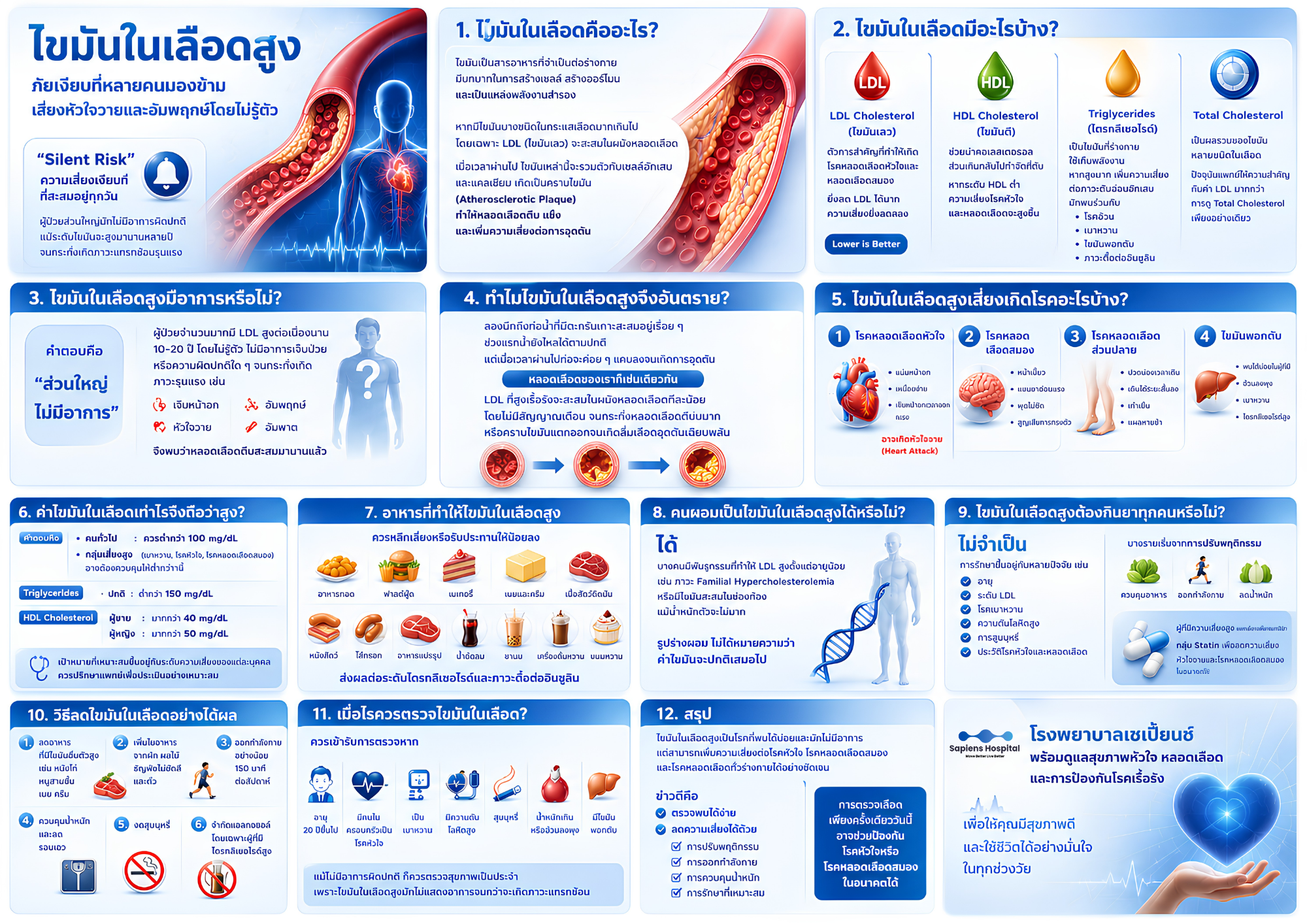
High Cholesterol: A Silent Health Risk That Can Lead to Heart Attack and Stroke
Many people pay close attention to diabetes and high blood pressure but may overlook high cholesterol, assuming that it is simply a number on a health screening report. In fact, abnormal blood lipid levels—particularly elevated LDL cholesterol—are an important risk factor for cardiovascular disease. One of the major concerns is that high cholesterol usually causes no noticeable symptoms and may remain undetected for years until serious complications develop, such as:
- Coronary artery disease
- Myocardial ischemia
- Stroke
- Weakness or paralysis resulting from stroke
- Peripheral artery disease
For this reason, high cholesterol is often described as a “silent risk” because vascular damage can develop without obvious warning signs.
What are blood lipids?
Lipids are essential substances that the body uses to build cell membranes, produce hormones, and store energy. However, excessive levels of certain lipoproteins in the bloodstream—particularly LDL cholesterol—can promote cholesterol deposition within artery walls.
Over time, cholesterol, inflammatory cells, and other substances can contribute to the formation of atherosclerotic plaque. This process may narrow and stiffen the arteries and increase the risk of cardiovascular events.
What types of blood lipids are commonly measured?
- LDL Cholesterol
LDL cholesterol is a major contributor to atherosclerotic cardiovascular disease. In general, higher LDL levels are associated with greater cardiovascular risk. Lowering LDL in people who require treatment can substantially reduce the risk of heart attack and ischemic stroke. - HDL Cholesterol
HDL participates in transporting cholesterol from peripheral tissues back toward the liver. Low HDL levels can be associated with increased cardiovascular risk, but cardiovascular assessment should not rely on HDL alone. - Triglycerides
Triglycerides are a major form of stored energy in the body. Elevated levels are commonly associated with metabolic conditions, while very high triglyceride levels can substantially increase the risk of acute pancreatitis. Elevated triglycerides may occur together with:
– Obesity
– Diabetes
– Fatty liver disease
– Insulin resistance
- Total Cholesterol
Total cholesterol reflects several cholesterol-containing lipoproteins in the blood. Cardiovascular risk assessment therefore considers LDL and other risk factors rather than relying on total cholesterol alone.
Does high cholesterol cause symptoms?
The answer is: usually not. This is one of the reasons high cholesterol can be dangerous. A person may have elevated LDL for many years without pain or other noticeable symptoms. In some cases, the problem is discovered only after cardiovascular disease develops, which may present as:
- Chest pain
- Heart attack
- Stroke
- Weakness or paralysis associated with stroke
Why is high cholesterol dangerous?
Think of an artery as a pipe in which deposits gradually accumulate. At first, blood may continue to flow normally. Over time, however, atherosclerotic plaque can progressively develop within the arterial wall. If a plaque becomes unstable and ruptures, a blood clot may form suddenly and block blood flow, potentially causing a heart attack or ischemic stroke.
What conditions are associated with high cholesterol?
1. Coronary artery disease Possible symptoms of reduced blood flow to the heart include:
- Chest pressure or tightness
- Shortness of breath or reduced exercise tolerance
- Chest pain during exertion
If a coronary artery becomes suddenly blocked, a heart attack may occur.
2. Cerebrovascular disease Elevated LDL contributes to atherosclerotic cardiovascular disease and may increase the risk of ischemic stroke. Warning signs can include:
- Sudden facial drooping
- Sudden weakness or numbness of an arm or leg
- Sudden difficulty speaking or slurred speech
- Sudden loss of balance or coordination
3. Peripheral artery disease Possible symptoms include:
- Calf or leg pain while walking
- Reduced walking distance
- Cold feet
- Slow-healing wounds on the feet or legs
4. Fatty liver disease Fatty liver disease and abnormal blood lipids often share metabolic risk factors and may occur together, particularly in people with:
- Abdominal obesity
- Diabetes
- High triglycerides
What cholesterol levels are considered high?
LDL Cholesterol
- There is no single LDL target that is appropriate for everyone. For many adults, an LDL level below 100 mg/dL is generally considered desirable.
- People at high or very high cardiovascular risk—such as some patients with established cardiovascular disease, diabetes, chronic kidney disease, or other major risk factors—may require substantially lower LDL targets as determined by their physician.
Triglycerides A fasting level below 150 mg/dL is generally considered normal.
HDL Cholesterol
- Low HDL is commonly defined as below 40 mg/dL in men.
- Low HDL is commonly defined as below 50 mg/dL in women.
However, treatment decisions should be based on a person’s overall cardiovascular risk rather than any single cholesterol value. A physician can help determine an appropriate individualized target.
Foods that can contribute to unhealthy blood lipid levels Foods high in saturated or trans fats should be limited, including some fried foods, fast foods, baked goods, butter, cream, fatty meats, processed meats, and animal skin. Sugary beverages, sweetened tea, desserts, and other foods high in added sugars can also contribute to elevated triglycerides and metabolic problems when consumed excessively.
Can a thin person have high cholesterol?
Yes. Body size alone cannot determine cholesterol levels. Some people have genetic conditions that cause very high LDL from a young age, such as Familial Hypercholesterolemia. Others may have metabolic risk factors despite having a body weight within the normal range. Therefore, being thin does not necessarily mean that cholesterol levels are normal.
Does everyone with high cholesterol need medication? No. Treatment depends on several factors, including:
- Age
- LDL level
- Diabetes
- High blood pressure
- Smoking
- History of cardiovascular disease
For some people, treatment may begin with lifestyle modification.
- Improve dietary habits
- Exercise regularly
- Achieve and maintain an appropriate body weight
For people whose cardiovascular risk warrants medication, physicians may prescribe a statin or other lipid-lowering therapy to reduce LDL and lower the risk of cardiovascular events. Treatment should be individualized according to overall cardiovascular risk, LDL level, medical history, treatment response, and medication tolerance.
Effective ways to improve blood lipid levels
- Reduce foods high in saturated fat, such as fatty meats, animal skin, butter, and cream
- Increase dietary fiber from vegetables, fruits, whole grains, legumes, and nuts
- Aim for at least 150 minutes of moderate-intensity aerobic physical activity per week, or an appropriate equivalent, depending on health and physical ability
- Maintain a healthy weight and waist circumference
- Do not smoke
- Limit alcohol consumption, particularly if triglycerides are elevated
When should blood cholesterol be checked? Lipid screening is recommended for adults, although the appropriate starting age and testing interval vary according to individual risk factors and clinical guidelines. Screening is particularly important for people who:
- Are adults who have not had their cardiovascular risk assessed
- Have a family history of premature cardiovascular disease or very high cholesterol
- Have diabetes
- Have high blood pressure
- Smoke
- Are overweight or have abdominal obesity
- Have fatty liver disease or other metabolic risk factors
Even without symptoms, regular health screening can be important because high cholesterol often causes no warning signs before cardiovascular complications occur. Elevated LDL cholesterol is common and can substantially increase the risk of coronary artery disease, ischemic stroke, and other forms of atherosclerotic cardiovascular disease.
The good news is that abnormal cholesterol levels can be detected with a blood test, and cardiovascular risk can often be reduced through appropriate lifestyle changes, regular physical activity, weight management, control of other risk factors, and medication when clinically indicated. Knowing your cholesterol levels and overall cardiovascular risk can help you and your healthcare team make appropriate decisions for long-term health.
Sapiens Hospital provides medical assessment and individualized care to support the prevention and management of chronic health conditions and cardiovascular risk factors.