

Understanding “Influenza” — Why Do You Need a Flu Vaccine Every Year?
When the rainy season or winter arrives, one of the common illnesses that tends to return and cause concern is “influenza” (Influenza). Many people may think it is simply a common cold, but in reality, complications from influenza can potentially become life-threatening. Today, our hospital will take you through the important facts about influenza symptoms, virus types, and the importance of vaccination.
How Are Influenza Symptoms Different from the Common Cold, and How Long Does It Take to Recover?
Influenza symptoms usually appear suddenly and tend to be more severe than those of the common cold. Common signs include:
- Sudden high fever, usually 38°C or higher, often accompanied by chills
- Significant muscle and joint aches, often affecting the back and upper legs
- Severe headache and pronounced fatigue
- Respiratory symptoms such as dry cough, nasal congestion, and sore throat
How Many Days Does Influenza Usually Last?
For people without complications, fever and other acute symptoms generally improve within 5–7 days. However, cough, fatigue, or nasal congestion may continue for 1–2 weeks.
How Many Types of Influenza Are There, and How Are They Different?
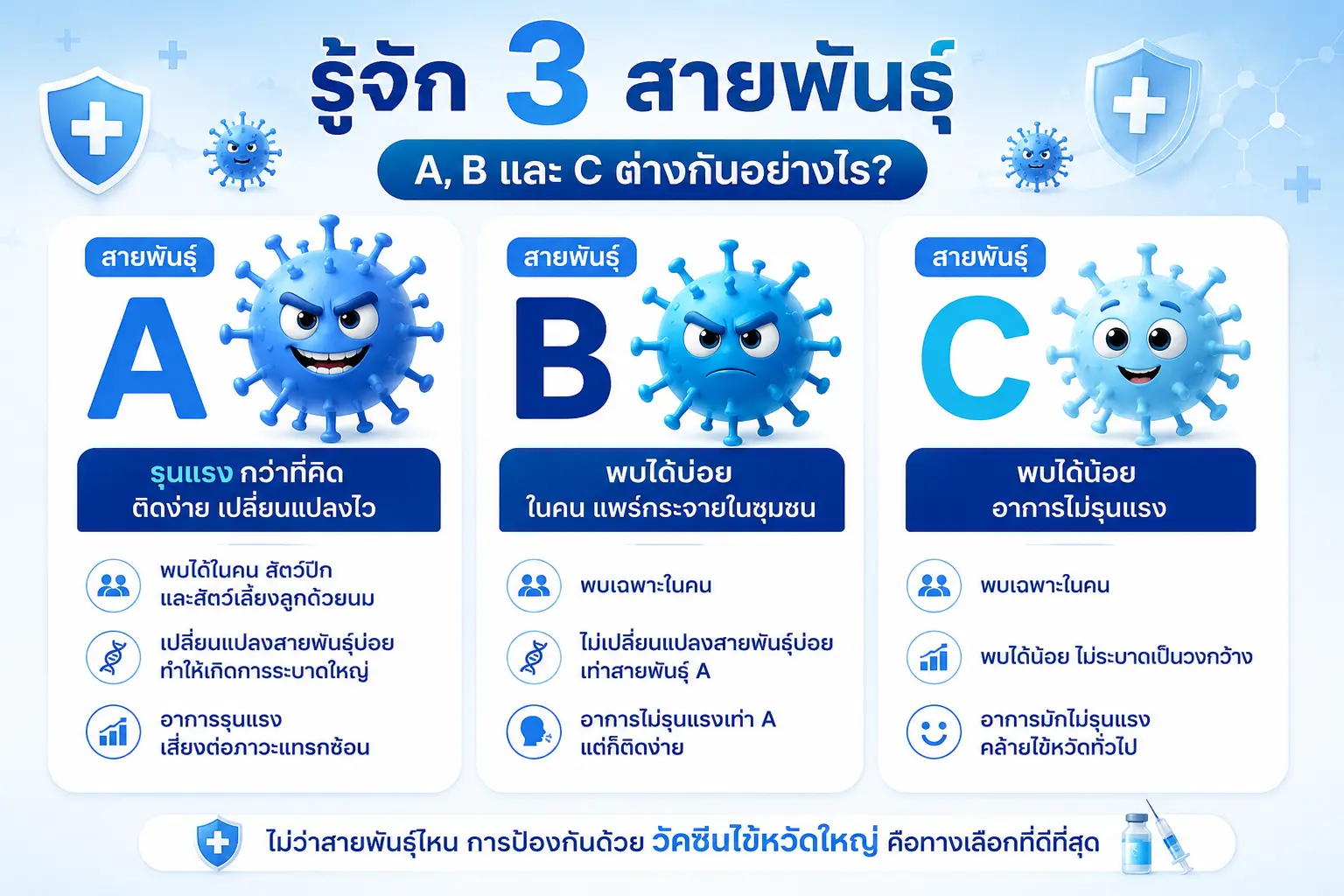
Influenza viruses that infect humans are commonly divided into 3 major types, each differing in their characteristics and patterns of transmission:
| Influenza Type | Severity and Outbreak Characteristics |
| Type A | Can undergo significant genetic changes and is associated with large-scale outbreaks and pandemics. Some influenza A viruses can also circulate between animals and humans, such as the H1N1 influenza strain. |
| Type B | Commonly causes seasonal influenza outbreaks and may spread readily in settings where people gather closely together, such as schools, offices, and communities. |
| Type C | Generally causes milder illness resembling the common cold and is not typically associated with large-scale epidemics. |
How Is Influenza Diagnosed?
If you experience symptoms consistent with influenza, you can visit the hospital for medical evaluation and testing. A healthcare professional may collect a specimen from the nose or throat using a nasopharyngeal swab for influenza testing. The results can help the physician make an appropriate diagnosis and determine whether antiviral treatment is indicated. Depending on the type of test used, results may be available within approximately 30–45 minutes.
Why Should You Get an Influenza Vaccine Every Year?
Influenza viruses continually change over time, and the influenza vaccine is updated regularly to better match the strains expected to circulate during each influenza season. In addition, protection from vaccination may decrease over time. Annual vaccination therefore helps maintain protection and can reduce the risk of severe illness, complications, and hospitalization from influenza.
Target Groups for Influenza Vaccination (7 High-Risk Groups for Whom Vaccination Is Strongly Recommended)
- Pregnant women, particularly from the fourth month of pregnancy onward
- Young children aged 6 months to 2 years
- Older adults aged 65 years and above
- People with chronic medical conditions, including respiratory disease, heart disease, kidney disease, neurological disease, diabetes, cancer, and liver disease
- People with neurological disabilities who are unable to care for themselves independently
- People with thalassemia or immunodeficiency, including people with symptomatic HIV infection
- People with obesity (body weight > 100 kg or BMI > 35)
❓ Frequently Asked Questions (FAQ) About Influenza Vaccination
Q: How should I prepare before receiving an influenza vaccine?
A: Get adequate rest and avoid vaccination when you are acutely unwell or have a high fever. If you have an underlying medical condition or a history of medication or food allergies, inform your doctor or nurse before vaccination. This includes a history of severe egg allergy, as some influenza vaccines are manufactured using egg-based processes.
Q: Can pregnant women receive the influenza vaccine?
A: Yes. Influenza vaccination is recommended during pregnancy because pregnant women have a higher risk of developing severe influenza-related complications. Vaccination can help protect the mother, and maternal antibodies can also be transferred to the baby and provide some protection during the first months of life.
Q: Can I donate blood after receiving an influenza vaccine?
A: Blood donation may be possible after influenza vaccination if you are feeling well and have no significant side effects such as fever or severe swelling at the injection site. Eligibility requirements may vary depending on the blood donation service, so it is advisable to confirm with the blood donation center before donating.
Influenza vaccination services are available at Sapiens Hospital.
Prevention is an important part of protecting yourself and the people you care about from influenza. Sapiens Hospital provides medical assessment, influenza testing, and seasonal influenza vaccination covering influenza A and B strains included in the current vaccine formulation.
For package information and advance appointments, please contact:
Tel: 02-111-3703
Line Official: @sapienshospital