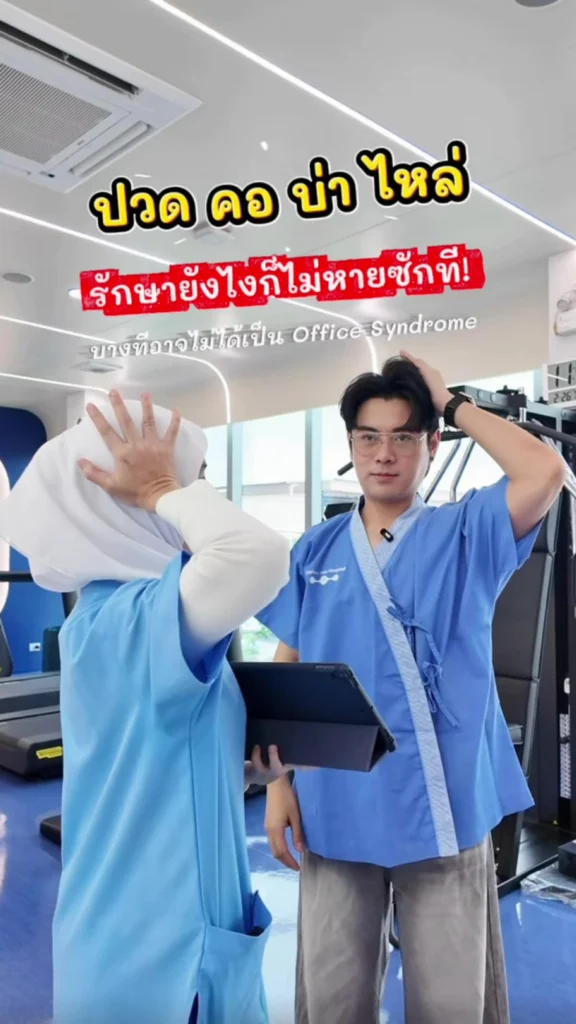
Chronic neck, shoulder, and upper back pain that keeps coming back despite physical therapy? It may not be just “Office Syndrome.”
Many people who spend long hours working in front of a computer experience neck, shoulder, and upper back pain, sometimes radiating into the arm. These symptoms are often quickly labeled as “Office Syndrome,” leading people to repeatedly try massage, acupuncture, or physical therapy. But why do the symptoms sometimes improve only temporarily before returning?
One possibility is that the underlying cause of the pain has not yet been clearly identified, and the condition may involve more than muscle tension associated with prolonged desk work.
Why might physical therapy alone not resolve the symptoms? Pain specialists at Sapiens Hospital explain that massage, acupuncture, and physical therapy can play different roles in managing musculoskeletal pain. However, treatment should be based on the underlying cause. When symptoms are related to muscle weakness, reduced physical capacity, posture, or repetitive loading, an individualized exercise and rehabilitation program focusing on strength, mobility, and movement patterns may be an important part of treatment.
Could cervical spine degeneration be involved? Persistent neck pain lasting more than three months can have many possible causes. One of them is age-related or degenerative change in the cervical spine, but chronic neck pain should not automatically be attributed to cervical degeneration. Muscle and joint problems, nerve irritation, disc conditions, and other factors may also contribute. A proper medical assessment is therefore important before deciding on treatment.
Treatment does not necessarily mean surgery. If symptoms persist despite appropriate activity modification, exercise, and rehabilitation, a doctor may consider further evaluation and, for selected patients, interventional pain procedures such as:
Diagnostic Injection: When a particular joint or pain-generating structure is suspected, a carefully targeted diagnostic block may help determine whether that structure is contributing to the patient’s pain. The result is interpreted together with the medical history, physical examination, and imaging when appropriate.
Radiofrequency (RF) Treatment: For selected patients whose neck pain is confirmed to arise from cervical facet joints, radiofrequency treatment may be used to interrupt pain signals from specific small sensory nerves supplying those joints. This may provide pain relief for an appropriate period in some patients and can be considered as a non-surgical treatment option when clinically indicated.
Treat the Cause, Not Just the Symptoms: If neck, shoulder, or upper back pain continues to return despite previous treatment, consultation with an appropriate specialist may help identify possible pain generators and determine a more individualized treatment plan. Sapiens Hospital provides comprehensive pain assessment and treatment, including rehabilitation, interventional pain management, and surgical consultation when clinically indicated. The hospital has also received AACI international accreditation. Sapiens Hospital is located in the Huai Khwang–Rama 9 area on Pracha Uthit Road, Soi Rojanamin.
Don’t assume that every case of chronic neck, shoulder, and upper back pain is simply “Office Syndrome.” Identifying the underlying cause is an important step toward choosing an appropriate treatment and supporting long-term recovery.
