
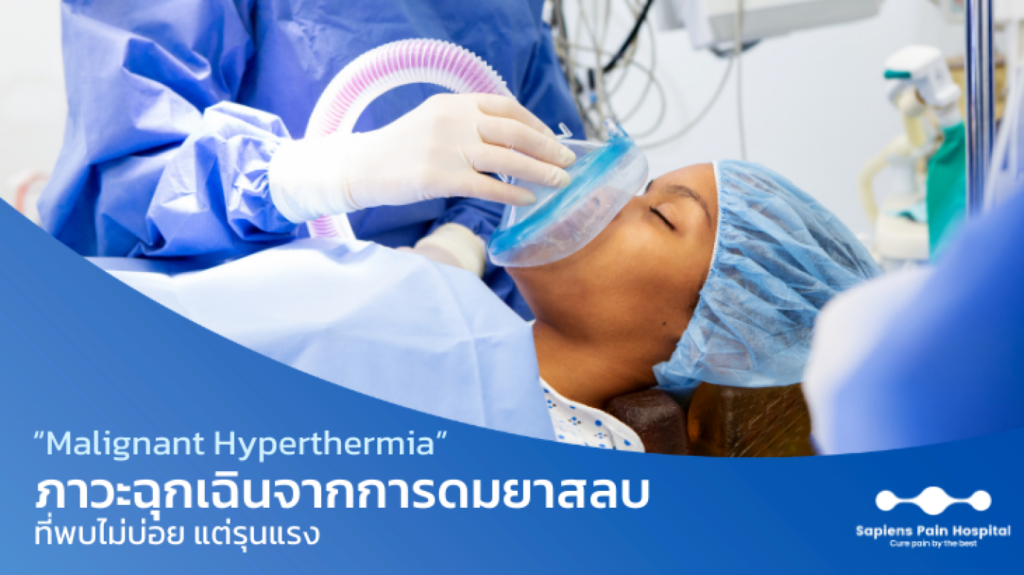
Understanding “Malignant Hyperthermia”
A Rare but Life-Threatening Emergency Related to General Anesthesia
Many people may have recently heard the term Malignant Hyperthermia (MH) in connection with serious complications occurring during general anesthesia, including during surgical procedures. MH is not a typical “allergic reaction” to anesthesia. It is a rare, inherited pharmacogenetic disorder in which susceptible individuals develop an abnormal hypermetabolic response after exposure to certain triggering anesthetic agents. Although uncommon, MH is a medical emergency that requires immediate recognition and treatment because it can become life-threatening.
What Is Malignant Hyperthermia?
Malignant Hyperthermia occurs when skeletal muscle responds abnormally to certain anesthetic agents. This causes excessive release of calcium within muscle cells, leading to sustained muscle activity and a rapid increase in metabolism. As a result, patients may develop muscle rigidity, increased carbon dioxide production, metabolic and respiratory acidosis, hyperkalemia, rising body temperature, and muscle breakdown.
If untreated, complications can include cardiac arrhythmias, rhabdomyolysis, acute kidney injury, coagulation abnormalities, and cardiac arrest.
MALIGNANT HYPERTHERMIA (MH)
A rare emergency associated with exposure to specific anesthetic agents. Reported incidence varies considerably depending on age, population, procedure type, and how cases are identified.
Cause
Genetic susceptibility + exposure to specific triggering anesthetic agents
Common Triggering Agents
• Sevoflurane
• Isoflurane
• Desflurane
• Succinylcholine
Important Signs
• Unexplained rise in end-tidal CO₂
• Rapid heart rate
• Muscle rigidity
• Rapidly increasing body temperature, often later in the episode
• Cardiac arrhythmias
Treatment
1. Stop all triggering anesthetic agents
2. Give 100% oxygen with high-flow ventilation
3. Administer Dantrolene promptly
4. Treat metabolic and other complications
Early recognition and rapid treatment can be lifesaving.
How Common Is Malignant Hyperthermia?
Malignant Hyperthermia is uncommon. Reported rates of clinical MH episodes vary widely across studies because susceptibility may remain unnoticed until a person is exposed to a triggering agent, and not every susceptible individual develops a reaction with every anesthetic exposure.
Genetic susceptibility may be more common than actual clinical episodes. Therefore, a person can carry an MH-associated genetic variant without ever experiencing an MH crisis.
What Causes It?
MH is associated with inherited abnormalities in calcium regulation within skeletal muscle. The most commonly implicated gene is RYR1, while CACNA1S and other genetic variants may also be involved. When susceptible muscle is exposed to a triggering agent, excessive calcium release can lead to sustained muscle contraction and a severe hypermetabolic state.
Triggering Agents Include
– Volatile inhaled anesthetics such as Sevoflurane, Isoflurane, and Desflurane
– The depolarizing muscle relaxant Succinylcholine
Therefore, MH most commonly develops during or shortly after exposure to triggering anesthetic agents in the operating room.
Early Signs
• Unexpected rise in carbon dioxide despite ventilation
• Rapid heart rate
• Generalized or localized muscle rigidity
• Masseter muscle rigidity in some cases
• Metabolic or respiratory acidosis
A key point is that high fever is often not the earliest sign. If the condition progresses untreated, patients may develop rapidly rising body temperature, rhabdomyolysis, dark urine due to myoglobin, hyperkalemia, acute kidney injury, cardiac arrhythmias, disseminated intravascular coagulation, and cardiac arrest.
Treatment : If MH is suspected, treatment should begin immediately without waiting for confirmatory testing.
Key Treatment Steps include
1. Stop all triggering anesthetic agents immediately.
2. Give 100% oxygen with high-flow ventilation to increase oxygen delivery and help remove excess carbon dioxide.
3. Administer Dantrolene promptly. Dantrolene is the specific treatment for MH and reduces abnormal calcium release in skeletal muscle.
4. Treat complications as needed, including active cooling when hyperthermia is present, correction of hyperkalemia and acidosis, management of arrhythmias, fluid therapy, monitoring for rhabdomyolysis and kidney injury, and other supportive treatment.
Can Genetic Testing Assess Risk?
Genetic testing may help identify MH susceptibility in selected individuals, particularly those with a personal or family history suggestive of MH. Testing commonly includes genes such as RYR1 and CACNA1S. However, a negative genetic test does not completely exclude MH susceptibility because not all causative variants are currently identifiable. In some cases, specialized contracture testing of muscle tissue may be considered through an experienced referral center.
About Dantrolene Availability
Dantrolene is the specific drug used to treat an MH crisis. International recommendations emphasize that facilities using MH-triggering anesthetic agents should have systems in place for rapid access to Dantrolene and for immediate management of an MH emergency. Actual availability and local regulatory requirements may vary by country and healthcare facility.
What the Public Should Know
Although Malignant Hyperthermia is rare, it can be extremely serious. The most important factors are recognizing the warning signs early, stopping triggering agents immediately, administering Dantrolene promptly, and treating complications aggressively. With rapid diagnosis and appropriate treatment, outcomes are significantly better.
Article by Dr. Nattaya Udomsakdi
Specialist in Pain Management