
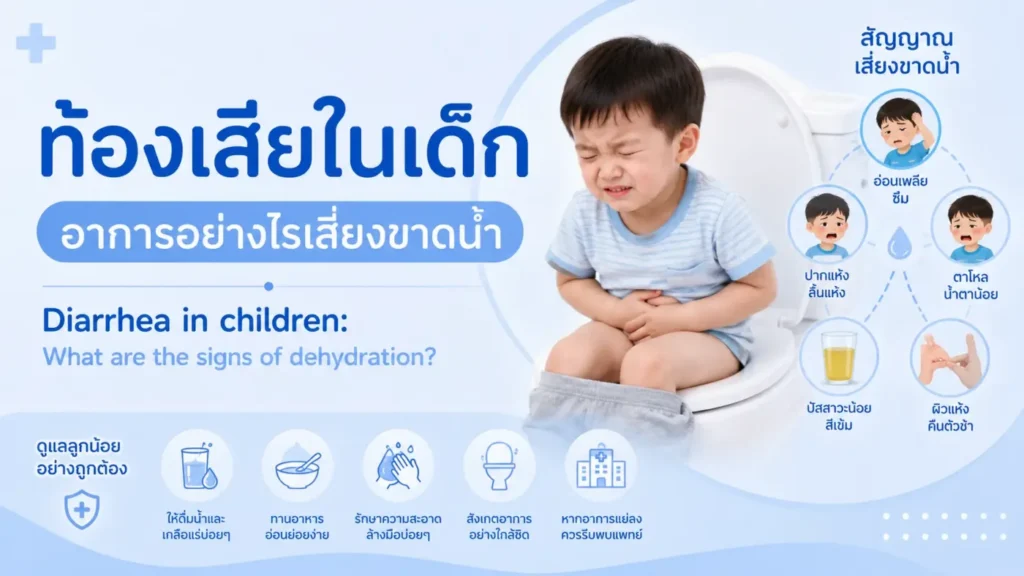
Diarrhea in Children: What Symptoms Indicate a Risk of Dehydration?
When a child develops diarrhea, has frequent watery stools, or vomits as well, parents often immediately wonder, “Is my child becoming dehydrated?” and “Do we need to go to the hospital now?” Young children are different from adults. Their bodies contain a higher proportion of water, they can lose fluids more quickly, and their condition can sometimes change from appearing relatively well to becoming significantly weak within a short period.
Most diarrhea in children is caused by gastrointestinal infections, particularly viruses such as rotavirus, norovirus, and other viruses. Children may develop watery stools, vomiting, fever, abdominal pain, poor appetite, or irritability. Many improve on their own within a few days, but the most important concern is not simply the number of bowel movements. It is “dehydration” and “warning signs that suggest this may be more than uncomplicated diarrhea.”
NICE guidance from the United Kingdom notes that diarrhea from gastroenteritis in young children commonly lasts around 5–7 days and usually stops within 2 weeks. Vomiting usually lasts 1–2 days and in most cases stops within 3 days. However, children with signs of dehydration, severe symptoms, or findings suggesting another illness should be assessed earlier rather than simply waiting because “it will probably get better on its own.”
What Is Diarrhea in Children, and Why Do Children Become Dehydrated Easily?
Diarrhea generally means stools that are looser or more watery than usual. A child may also have frequent bowel movements, abdominal cramps, or vomiting. In infants and young children, whether stool is abnormally loose should be compared with the child’s usual bowel pattern because some children, especially breastfed infants, normally have frequent soft stools without being ill.
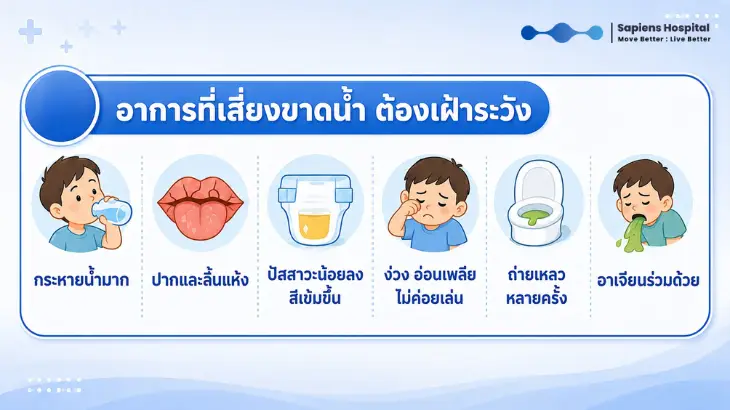
The main concern with diarrhea and vomiting is that the body loses not only water but also important electrolytes such as sodium, potassium, and bicarbonate. If a child drinks less milk or fluid while stool losses increase, dehydration can develop. The child may develop a dry mouth, reduced urination, sunken eyes, or drowsiness. In severe cases, the hands and feet may become cold, the pulse and breathing may become rapid, and blood pressure may fall.
Royal Children’s Hospital Melbourne classifies dehydration in children as mild, moderate, or severe. Severe dehydration may cause reduced consciousness, a fast heart rate, rapid or abnormally deep breathing, pale or mottled skin, cold extremities, and low blood pressure, and requires urgent hospital treatment.
What Symptoms Suggest That Dehydration May Be Starting?
Early signs that parents can observe include increased thirst, drinking or breastfeeding more frequently, dry mouth and tongue, reduced saliva, fewer tears when crying, reduced urination, darker urine, or diapers remaining dry longer than usual. Some children become more irritable, tire more easily, or lose interest in playing. If the child remains alert, can drink, continues to urinate, and is not significantly weak, there may be only mild dehydration or no clear dehydration yet. However, appropriate fluid replacement should begin promptly. Do not wait until the child becomes drowsy, because drowsiness may indicate that dehydration has progressed.
NICE recommends assessing whether the child appears unwell or is getting worse and whether responsiveness has changed, such as increasing irritability or drowsiness. Reduced urine output, pale or mottled skin, and cold hands and feet are also important signs of dehydration and may progress to shock if not treated.
What Symptoms Suggest Significant Dehydration and Require Prompt Medical Attention?
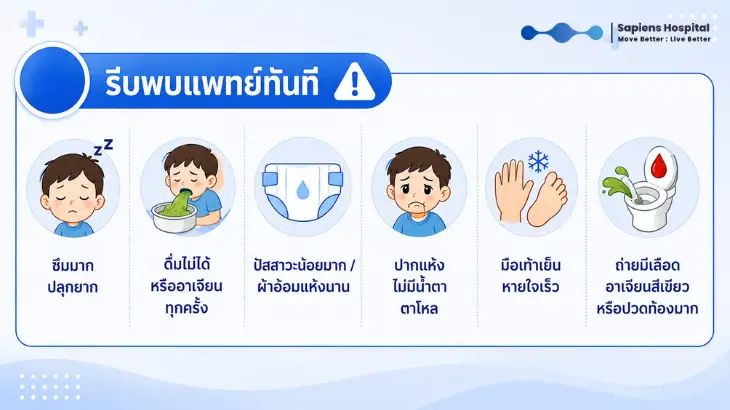
Seek prompt medical care if the child cannot drink or breastfeed, vomits every time fluids are offered, has large-volume watery diarrhea, urinates very little or has not urinated for several hours, has a very dry mouth, sunken eyes, a sunken fontanelle in an infant, no tears when crying, unusual drowsiness, difficulty waking, cold hands and feet, mottled skin, rapid breathing, or marked weakness.
The World Health Organization assesses dehydration in children with diarrhea using the child’s general condition, sunken eyes, ability to drink, and how quickly the skin returns after a gentle skin pinch. A child who is lethargic or unconscious, has sunken eyes, cannot drink or drinks poorly, and has a skin pinch that returns very slowly may meet criteria for severe dehydration and requires urgent fluid replacement.
Importantly, dehydration is not determined solely by how many times a child has diarrhea. A child who has only a few watery stools but cannot drink and vomits repeatedly may become dehydrated, while another child who has frequent stools but drinks ORS well, urinates normally, and remains active may not have severe dehydration. Always look at the “overall condition of the child.”
Which Children Need Extra Attention?
Children younger than 1 year, especially those younger than 6 months, require particular caution because they are small, can lose fluids quickly, and cannot describe their symptoms. Infants with low birth weight, children who have passed more than 5 diarrheal stools in 24 hours, those who have vomited more than twice in 24 hours, children unable to drink or take milk, those who stop breastfeeding during illness, and children with poor nutritional status are at increased risk of dehydration.
Children with underlying conditions such as kidney disease, heart disease, metabolic disorders, or immune deficiency or those taking certain medications may need earlier medical advice because fluid and electrolyte loss may affect them more significantly than otherwise healthy children. Children with high fever together with diarrhea and significant vomiting may also lose additional fluid through the gastrointestinal tract and increased insensible fluid loss during fever.
ORS Is More Appropriate Than Sugary Drinks, Fruit Juice, or Sports Drinks
When a child has diarrhea, many parents try to encourage large amounts of water. Although this is well intentioned, plain water alone may not adequately replace the electrolytes lost during significant diarrhea. Oral rehydration solution (ORS) is generally the preferred option for preventing and treating mild to moderate dehydration because it contains water, glucose, and electrolytes in proportions that support intestinal absorption of fluid.
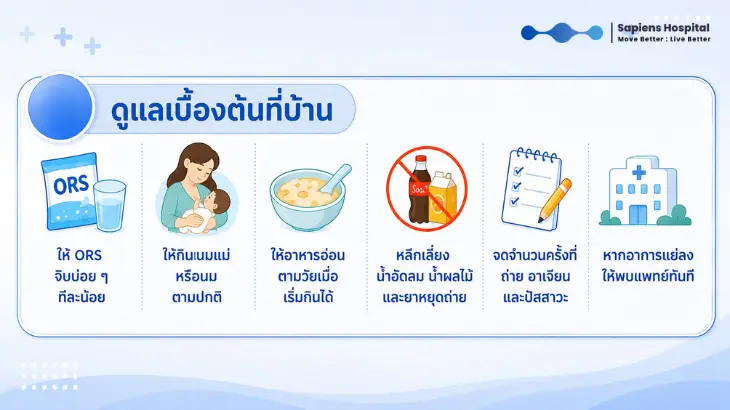
CDC guidance recommends additional fluids and continued age-appropriate feeding in children without obvious dehydration. Children with mild to moderate dehydration should receive ORS to replace fluid losses. In children who vomit easily, small amounts such as approximately 5 milliliters or one teaspoon at a time may be offered frequently and gradually increased as tolerated.
Fruit juice, soft drinks, sugary drinks and sports drinks often contain large amounts of sugar and may not contain an appropriate electrolyte balance for children with diarrhea. In some cases, high sugar content can worsen watery stools by drawing additional water into the intestine. NICE therefore recommends avoiding fruit juice and carbonated drinks in children with gastroenteritis, particularly those at risk of dehydration.
How Should ORS Be Given When the Child Is Also Vomiting?
If the child vomits, avoid giving a large amount of fluid all at once because an irritated stomach may not tolerate it and vomiting may recur. Instead, pause briefly and then restart ORS in small, frequent amounts using a spoon, syringe, or small cup. Offer small sips every 1–2 minutes and gradually increase the amount when the child begins to tolerate it.
CDC guidance describes 50–100 milliliters of ORS per kilogram of body weight over the first 2–4 hours as a rehydration approach for children with mild to moderate dehydration, with additional fluid given to replace continued stool or vomiting losses.
If the child vomits occasionally but can continue taking small amounts of ORS, close observation may still be possible. However, if the child vomits every time they drink, cannot keep any fluid down, becomes drowsy, urinates less, or develops cold hands and feet, medical assessment is recommended because enteral fluids through a feeding tube or intravenous fluids may be needed depending on severity.
Should Milk or Food Be Stopped?
In general, food should not be withheld for prolonged periods without a specific reason. Children with diarrhea should receive adequate fluids and resume age-appropriate food as soon as vomiting improves. Breastfed infants should continue breastfeeding because breast milk provides fluid, nutrition, and immune support. Formula-fed infants generally do not need their formula diluted unless a doctor specifically advises it.
NICE recommends continuing breastfeeding and usual milk in children without clear dehydration, offering appropriate additional fluids, and returning to normal milk and age-appropriate food after rehydration. Fruit juice and carbonated drinks should be avoided until diarrhea has stopped.
As symptoms begin to improve, easily tolerated foods such as rice porridge, bananas, bread, soup, or other age-appropriate soft foods may be offered. However, there is no need to restrict the child to only a few bland foods for a prolonged period. Once eating becomes easier, gradually return to the child’s usual diet to support intestinal recovery and reduce the risk of weight loss.
When Should Parents Suspect That This Is More Than Simple Diarrhea?
Diarrhea in children is not always caused by a viral infection. Other causes can include bacterial infection, parasites, food poisoning, appendicitis, intussusception, or other illnesses requiring specific treatment. Seek medical assessment if the child has very high fever, marked drowsiness, severe or localized abdominal pain, significant abdominal distension, green vomit, blood or bloody mucus in the stool, abnormal black stool, neck stiffness, a non-blanching rash, or signs of dehydration.
NICE identifies features that may suggest a diagnosis other than gastroenteritis, including age-dependent high fever, rapid or difficult breathing, altered consciousness, neck stiffness, a bulging fontanelle, a non-blanching rash, blood or mucus in the stool, green vomit, severe localized abdominal pain, abdominal distension, or rebound tenderness.
If there is blood or bloody mucus in the stool, parents should not self-treat with antidiarrheal medicines or antibiotics. Some conditions require further investigation, and inappropriate treatment may complicate the clinical picture. The doctor will determine whether stool testing, blood tests, or other investigations are necessary.
Are Intravenous Fluids, Antibiotics, or Antidiarrheal Medicines Needed?
Antidiarrheal medicines are generally not recommended for children without medical advice. Some products reduce intestinal motility and may cause adverse effects, particularly in young children.
NICE specifically advises against antidiarrhoeal medications in children with gastroenteritis. Antibiotics are also not routinely recommended for uncomplicated childhood diarrhea unless there is a specific indication, such as suspected sepsis, selected cases involving immune deficiency, or a particular bacterial infection for which a clinician determines that antibiotic treatment is required.
Rotavirus and Severe Diarrhea in Children
Rotavirus is an important cause of severe diarrhea in infants and young children. Children may develop profuse watery diarrhea, vomiting, fever, abdominal pain, poor appetite, and rapid dehydration. CDC information notes that rotavirus can cause severe watery diarrhea and vomiting in infants and young children, and some children become dehydrated enough to require hospitalization. Rotavirus vaccination is an important measure for reducing severe disease.
Children who have received rotavirus vaccination can still develop diarrhea from other infections, but vaccination reduces the risk of severe rotavirus disease and hospitalization. This is important because vaccines do not necessarily prevent every infection 100%, but many significantly reduce the risk of severe illness, complications, and severe dehydration.
When Can a Child Be Cared for at Home?
A child with watery diarrhea who remains reasonably active, can drink water or ORS, does not have significant vomiting, is still urinating normally, has no blood in the stool, no very high fever, no severe abdominal pain, and no drowsiness or cold hands and feet may initially be cared for at home with close observation. Focus on ORS, age-appropriate food, breastfeeding or usual milk as appropriate, and careful monitoring.
Home care should include a “monitoring plan”, not simply waiting while diarrhea continues. Parents can record the number of diarrheal stools, episodes of vomiting, amount of water or ORS taken, urination frequency, temperature, and the child’s behavior. If the child becomes more drowsy, drinks less, urinates less, or diarrhea suddenly becomes much more frequent, medical assessment should be sought promptly.
What Will the Hospital Do When a Child Is at Risk of Dehydration?
When a child is assessed, the doctor evaluates the severity of dehydration, vital signs, weight, level of consciousness, skin color, temperature of the hands and feet, urine output, sunken eyes, oral mucosa, skin elasticity, and associated symptoms. Many children with mild to moderate dehydration can be treated with ORS while being observed. Severe dehydration, shock, inability to drink, or persistent vomiting may require intravenous fluids.
Royal Children’s Hospital Melbourne states that oral or enteral rehydration is preferred for children with mild to moderate dehydration when feasible, while intravenous fluids are needed for severe dehydration or when oral or enteral rehydration cannot be achieved.
Frequently Asked Questions From Parents
- My child has had several watery stools but is still playing. Do we need to go to the hospital immediately?
If the child can drink water or ORS well, urinates normally, has no high fever, no blood in the stool, no significant vomiting, and remains responsive, short-term home care with close observation may be reasonable. However, a child younger than 6 months, a child with frequent diarrhea or vomiting, or one who begins drinking less should be assessed earlier. - My child vomits every time after drinking ORS. What should I do?
Pause briefly, then restart with a very small amount, such as one teaspoon at a time, but offer it more frequently. If the child continues to vomit every attempt, cannot drink at all, urinates less, or becomes drowsy, seek medical care because fluid replacement under medical supervision may be required. - Is blood in the stool dangerous?
Blood or bloody mucus in the stool should not be ignored. It may result from certain bacterial infections, significant intestinal inflammation, or another condition requiring further assessment. Seek medical care and do not self-treat with antidiarrheal drugs or antibiotics. - Does every child with diarrhea need a stool test?
Not necessarily. Children with mild watery diarrhea, no blood, no dehydration, and gradual improvement usually do not need stool testing. However, testing may be considered if there is blood or mucus in the stool, suspected severe infection, immune deficiency, recent international travel, prolonged symptoms, or diagnostic uncertainty.
Diarrhea is common in children, but dehydration requires careful attention, particularly in young children, infants younger than 6 months, children with frequent diarrhea or vomiting, children unable to drink, and those with reduced urination. Important signs parents should remember include dry mouth, absence of tears, sunken eyes, marked thirst, inability to drink, increasing drowsiness, reduced urination, cold hands and feet, or unusual weakness.
Appropriate care is not about stopping diarrhea as quickly as possible. The priorities are preventing and treating dehydration, giving ORS correctly, continuing breastfeeding or appropriate milk, returning to age-appropriate food as symptoms improve, and avoiding unnecessary sugary drinks, carbonated drinks, antidiarrheal medicines, and antibiotics.
If parents are unsure whether the child can still be safely cared for at home or needs hospital assessment, focus on signs of dehydration and the child’s overall condition. Children can deteriorate quickly when dehydration develops, and early medical assessment when warning signs appear may make treatment easier and reduce the risk of complications.
Sapiens Hospital
Move Better:Live Better
Tel. 02-111-3703
References
National Institute for Health and Care Excellence. Diarrhoea and vomiting caused by gastroenteritis in under 5s: diagnosis and management. NICE Clinical Guideline CG84.
Royal Children’s Hospital Melbourne. Clinical Practice Guidelines: Dehydration. Last updated April 2026.
Centers for Disease Control and Prevention. Managing Acute Gastroenteritis Among Children:
Oral Rehydration, Maintenance, and Nutritional Therapy. MMWR Recommendations and Reports.
World Health Organization. Pocket Book of Hospital Care for Children: Diarrhoea, assessment and
treatment of dehydration. Centers for Disease Control and Prevention. About Rotavirus. 2024.