

Understanding Cancer: Causes, Warning Signs, and Prevention for You and Your Loved Ones
Cancer remains one of the leading causes of death worldwide and is a health issue that should not be overlooked. Today, many types of cancer have better treatment outcomes when detected at an early stage and managed appropriately. Early diagnosis may improve treatment options, the likelihood of successful treatment, and long-term disease control.
This article provides an overview of the causes, risk factors, warning signs, prevention, screening, and treatment approaches for cancer.
1. Causes and Risk Factors of Cancer
Cancer develops when changes occur in the genetic material (DNA) of cells, disrupting normal mechanisms that regulate cell growth, division, and survival. These changes can cause abnormal cells to grow uncontrollably. Factors associated with cancer risk can broadly be divided into two groups:
- Internal Factors: Such as inherited genetic changes, increasing age, and certain conditions that weaken or suppress the immune system.
- External and Environmental Factors: Exposure to certain carcinogens and chemicals, such as asbestos and arsenic, ultraviolet (UV) radiation, as well as certain infections. Examples include hepatitis B and C viruses, which are associated with an increased risk of liver cancer, and Human Papillomavirus (HPV), which is associated with cervical cancer and several other cancers.
2. Risk Behaviors and Modifiable Risk Factors
Some lifestyle and environmental factors can increase the risk of developing certain types of cancer:
- Smoking and exposure to secondhand smoke: Tobacco use is a major preventable cause of cancer and is associated with lung cancer as well as cancers of the mouth, throat, larynx, and several other organs.
- Alcohol consumption: Drinking alcohol increases the risk of several cancers, including cancers of the liver, breast, mouth, throat, esophagus, and colorectum. Cancer risk generally increases with the amount of alcohol consumed.
- Dietary patterns: Frequent consumption of processed meats and an overall unhealthy dietary pattern may contribute to cancer risk. A balanced diet emphasizing vegetables, fruits, whole grains, and other minimally processed foods is generally recommended.
- Overweight and obesity: Excess body weight is associated with an increased risk of several cancers, including colorectal, postmenopausal breast, endometrial, kidney, liver, and pancreatic cancers.
- Excessive ultraviolet (UV) exposure: Prolonged exposure to sunlight or other sources of UV radiation without adequate protection can increase the risk of skin cancer.
3. Warning Signs That Should Not Be Ignored
Cancer can cause many different symptoms, and no single list of symptoms can diagnose cancer. However, persistent or unexplained changes should be assessed by a healthcare professional.
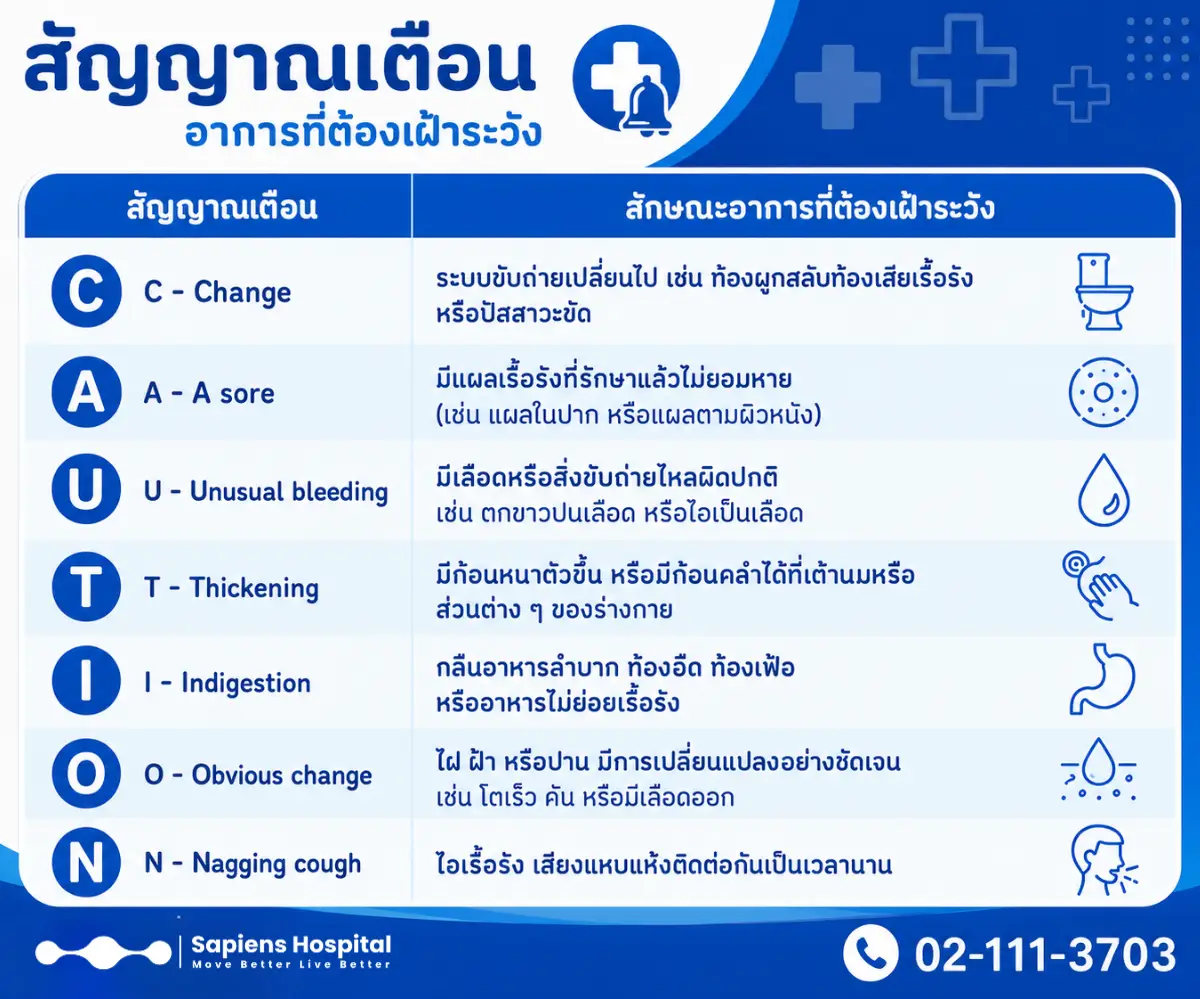
(Note: Unexplained weight loss, persistent fever, unusual bleeding, a new lump, changes in bowel or bladder habits, a persistent cough or hoarseness, difficulty swallowing, or other persistent unexplained symptoms should not be ignored. These symptoms do not necessarily mean cancer, but medical evaluation may be appropriate.)
4. Prevention and Screening
Not all cancers can be prevented. However, modifying preventable risk factors and receiving appropriate vaccination and screening can reduce the risk of developing or dying from certain cancers.
- Choose a healthy diet: Emphasize vegetables, fruits, whole grains, and other minimally processed foods while limiting processed meat and highly processed foods.
- Exercise regularly: Adults should generally aim for at least 150 minutes of moderate-intensity physical activity per week, together with appropriate muscle-strengthening activities.
- Avoid tobacco and limit or avoid alcohol: Avoiding tobacco is one of the most important ways to reduce cancer risk. For cancer prevention, drinking less alcohol—or not drinking—is associated with lower risk.
- Receive recommended vaccinations: Vaccines such as HPV and hepatitis B vaccines can help prevent infections associated with certain cancers.
- Receive appropriate cancer screening: Screening may help detect certain cancers or precancerous changes before symptoms develop. Examples include mammography for breast cancer, cervical cancer screening, and colorectal cancer screening. The appropriate tests and screening intervals depend on age, sex, family history, and individual risk factors. A complete blood count (CBC) is not a general screening test for most cancers.
5. Cancer Treatment and Medical Care
Cancer treatment depends on the type of cancer, stage, molecular characteristics, overall health, and individual treatment goals. Some patients may receive one treatment, while others may require a combination of treatments. Precision or personalized medicine may also help guide treatment for selected cancers.
- Surgery: Used to remove cancerous tissue when appropriate. Surgery may be used for localized cancers and, in selected circumstances, may also form part of treatment for more advanced disease.
- Chemotherapy: Uses medicines that kill cancer cells or interfere with their growth and division.
- Radiation Therapy: Uses high-energy radiation to damage cancer cells in a targeted treatment area.
- Targeted Therapy: Uses drugs designed to act on specific molecular targets involved in cancer growth or survival. Although these treatments can be more selective than conventional chemotherapy, they can still affect normal cells and cause side effects.
- Immunotherapy: Uses treatments that help the immune system recognize or attack cancer. Its effectiveness and suitability vary according to the type of cancer and individual biological characteristics.