
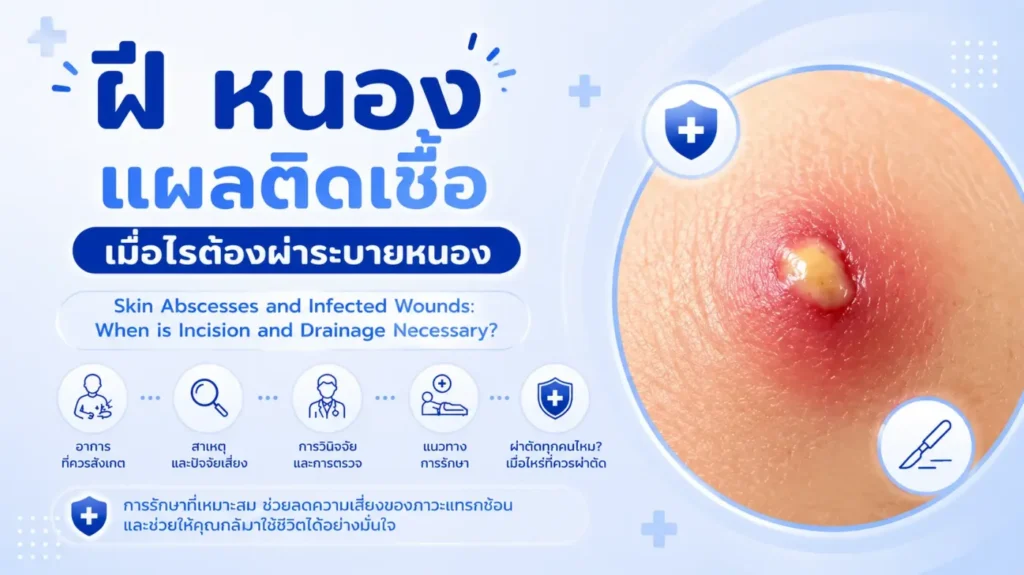
Abscess, Pus, and Infected Wounds: When Is Surgical Drainage Needed?
A Small Abscess May Not Always Be a Minor Problem
Many cases begin as a small red bump under the skin. At first, it may look like a pimple, an insect bite, or a minor abrasion. However, within a few days, the lump may become increasingly swollen, red, warm, and painful. Some people experience throbbing pain or a sensation that fluid is trapped beneath the skin. A pus-filled head, drainage, an unpleasant odor, or fever may also develop. This may not be just a simple inflamed wound—it could be an abscess or an infected wound with pus collected beneath the skin.
A common misconception is that an infected wound or pus can always be treated with antibiotics alone. In medical practice, when pus has collected in a cavity beneath the skin, medication alone may not be sufficient because antibiotics may have limited effectiveness within an enclosed collection of pus. In many cases, opening and draining the abscess is therefore an important part of treatment. Simply put, “if pus is trapped inside, it needs to be drained appropriately” rather than leaving the body to fight an infection within a closed abscess cavity.
This article explains what an abscess is, which infected wounds may require incision and drainage, when you should seek prompt medical attention, and why you should not squeeze, puncture, or cut an abscess yourself at home.
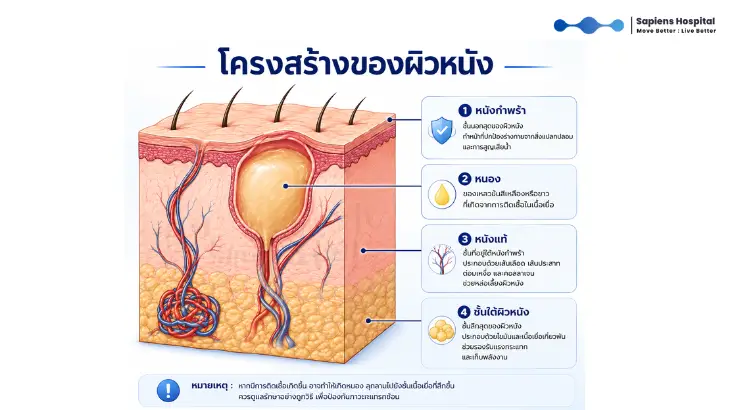
What Is an Abscess?
An abscess is an infection that causes a pocket of pus to form within tissue. Pus contains microorganisms, white blood cells, dead cells, and inflammatory fluid. Abscesses can occur in many areas of the body, including:
- Face
- Armpits
- Back
- Buttocks
- Groin
- Around the anus
- Breasts
- Hands and fingers
- Surgical wounds
- Areas where a cyst or lump previously existed beneath the skin
A common cause is bacteria entering the skin through a small break, abrasion, inflamed hair follicle, shaving injury, scratching, squeezing a pimple, or a wound that initially appears insignificant. When bacteria enter the skin, the body sends white blood cells to fight the infection. This produces inflammation, swelling, and redness. When dead tissue, microorganisms, and inflammatory material accumulate, pus can form and become trapped beneath the skin.
How Is an Abscess Different from an Ordinary Skin Infection?
An infected or inflamed area of skin may become red, warm, swollen, and painful without having a clearly defined pocket of pus. This condition is often called cellulitis, an infection of the skin and underlying soft tissue. When pus begins to collect, however, different features may appear, such as:
- A localized swollen lump
- Increasing pain
- Deep tenderness when pressed
- Tight or shiny skin
- A soft area in the center that feels as though fluid is underneath
- A visible pus-filled head or drainage of pus
- Fever or fatigue in some cases
In practice, some skin infections begin as cellulitis and later develop into an abscess when pus collects beneath the skin. Therefore, if redness and swelling continue to worsen despite treatment, or if you begin to feel a soft, painful lump, you should return to see a doctor to determine whether a hidden collection of pus has developed.
Why Does Pus Often Need to Be Drained?
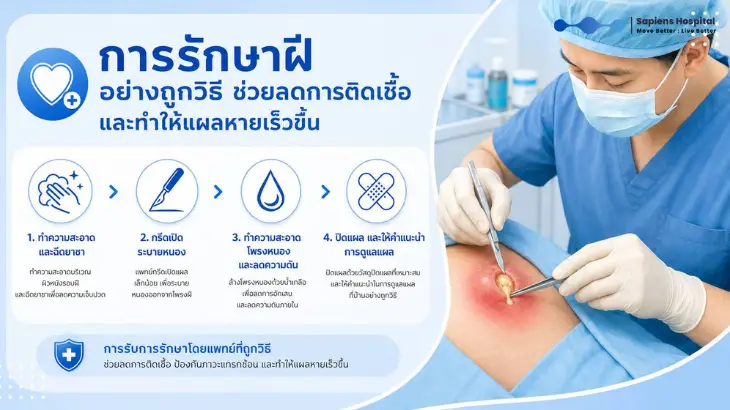
Pus trapped beneath the skin is contained within a closed cavity. If it is not drained, pressure inside the abscess may increase, causing more pain, further damage to surrounding tissue, and possible spread of infection. Incision and drainage is a procedure in which a doctor creates an opening to allow pus to leave the cavity, reduce pressure and bacterial burden, and help the wound begin to heal.
Antibiotics are useful in certain situations, but when a well-defined collection of pus is present, antibiotics alone may not be enough. It can be compared to a room filled with contaminated water: adding disinfectant may help to some extent, but the problem remains if the contaminated fluid is not drained.
Which Wounds May Require Incision and Drainage?
You should see a doctor for assessment and possible drainage if you have any of the following:
- A swollen, red, warm, painful lump with increasing pain If an inflamed lump becomes progressively more painful, especially with throbbing or deep pain, pus may have collected inside.
- The center feels soft or fluid-filled when pressed—known as fluctuation This finding may indicate a pocket of pus beneath the skin and often warrants drainage.
- A pus-filled head develops or pus begins to drain Even if pus starts draining spontaneously, this does not necessarily mean the abscess has emptied completely. The opening may be too small, allowing pus to remain inside and the abscess to recur.
- The wound becomes larger or redness spreads Increasing redness, swelling, or pain may indicate progression of the infection. A doctor should assess whether both an abscess and surrounding cellulitis are present.
- Fever, chills, or marked fatigue These symptoms may indicate a more significant systemic response to infection. Drainage together with antibiotics may be required.
- An abscess develops in a high-risk location Certain locations should be assessed promptly, including the face, around the eyes, hands, fingers, genital area, breasts, around the anus, or near a joint, because infection may spread or important structures may be nearby.
- The abscess occurs in a high-risk patient
Some patients have a higher risk of severe infection or delayed wound healing, including:
- People with diabetes
- People with weakened immune systems
- Older adults
- People with kidney disease
- People with liver disease
- People taking immunosuppressive medications or steroids
- People with cancer or receiving chemotherapy
- People with chronic wounds or peripheral arterial disease
People in these groups should not wait too long to seek medical care because infection may progress more rapidly and complications may occur more easily. Which wounds may not require immediate drainage? Not every red or inflamed wound needs to be surgically opened. If the condition is early cellulitis without a pus-filled cavity or visible collection, and a doctor finds no evidence of an abscess, treatment may involve wound cleansing, antibiotics when appropriate, and close observation.
Some small inflamed lesions, such as folliculitis or a very small bump, may improve with warm compresses, good hygiene, and observation. However, they should not be squeezed, picked, or punctured with a needle. If the condition does not improve within 24–48 hours, redness spreads, pain increases, or pus develops, seek medical attention.
How Is an Abscess Drained?
Incision and drainage is a minor procedure in many cases, but it should be performed using sterile technique and with appropriate assessment of the location. In general, the doctor may:
- Assess the location, size, and depth of the abscess
- Clean the skin
- Administer local anesthesia
- Make a small incision in an appropriate location
- Drain the pus
- Irrigate the abscess cavity when appropriate
- Collect a pus sample for culture in selected cases
- Place gauze packing or another drainage material in some cases
- Dress the wound and arrange wound care or follow-up
Pain often improves after drainage because pressure within the abscess decreases. However, continued wound care is necessary while the cavity gradually heals from the inside outward.
Does Everyone Need Antibiotics?
Not necessarily. For a small, uncomplicated abscess in an otherwise healthy person without fever or extensive surrounding redness, appropriate drainage may sometimes be sufficient. Antibiotics may be recommended in situations such as:
- Fever, chills, or other systemic symptoms
- Extensive spreading redness around the wound
- Associated cellulitis
- Multiple abscesses
- A large abscess
- A high-risk location such as the face, hands, perianal area, or genital area
- Diabetes
- A weakened immune system
- Older age or multiple underlying medical conditions
- Certain specific risk factors, such as a prosthetic heart valve, depending on clinical assessment
- Suspected resistant bacteria such as MRSA, depending on individual risk factors and local epidemiology
The choice of antibiotic depends on the type and severity of infection, underlying medical conditions, medication allergies, and suspected organisms. Antibiotics should not be self-prescribed because the wrong medication, incorrect duration, or delayed medical evaluation may contribute to treatment failure and antimicrobial resistance.
Why Should You Not Squeeze, Puncture, or Cut an Abscess Yourself?
Many people try to squeeze pus out because they believe it will make the abscess heal faster. However, attempting to drain an abscess yourself carries important risks, including incomplete drainage and recurrence.
- Infection spreading deeper into the tissue
- A larger wound
- More noticeable scarring
- Additional infection from unsterile instruments
- Bleeding
- Injury to blood vessels, nerves, or other important structures
- Making subsequent medical treatment more difficult
Abscesses on the face, around the nose or eyes, hands, fingers, genital area, and around the anus should particularly not be squeezed or punctured at home because these locations have a higher risk of spread and complications.
How Dangerous Can an Abscess Be?
Small abscesses that are treated early and drained appropriately usually heal well. However, delayed or inappropriate treatment can lead to complications such as:
- Spread of infection through the skin and subcutaneous tissue
- Deep abscess formation
- Chronic wounds
- Bloodstream infection
- Bone infection, particularly with deep foot wounds or in people with diabetes
- Tissue death
- Severe infection such as necrotizing fasciitis, which is uncommon but is a medical emergency
If a wound deteriorates rapidly, causes unusually severe pain, or is accompanied by high fever or marked weakness, do not wait to see if it improves on its own. Seek urgent medical care if you develop any of the following:
- High fever or chills
- Severe pain or pain that appears disproportionate to the visible wound
- Rapidly spreading redness
- Skin turning purple or black, or developing blisters
- A strongly foul-smelling wound
- A large amount of pus
- Drowsiness, severe weakness, or dizziness
- Rapid heartbeat or rapid breathing
- Severe nausea or vomiting
- An infected wound in someone with diabetes or a weakened immune system
- A foot infection in someone with diabetes
- A wound near the eyes, hands, fingers, genital area, or anus
- Severe pain when moving a finger, hand, foot, or joint
These symptoms may indicate an infection more serious than a simple abscess and should be assessed promptly by a doctor. How should the wound be cared for after drainage?
After an abscess has been drained, continued wound care is important because the cavity needs to heal gradually from the inside. If the surface closes too quickly while a cavity remains underneath, pus may collect again. General wound-care recommendations include:
- Care for the wound according to your doctor’s instructions
- Keep the wound clean and dry for the period advised by your doctor
- Do not remove packing or drainage material yourself unless instructed to do so
- Take prescribed medication as directed
- Wash your hands before and after touching the wound
- Avoid squeezing or pressing the wound
- Watch for increasing redness, swelling, pain, or pus
- Attend follow-up appointments so the doctor can assess whether the abscess cavity is resolving
If fever develops, pain worsens, pus increases, the odor becomes stronger, or redness spreads, return to see a doctor before your scheduled appointment.
How Can Abscesses and Wound Infections Be Prevented?
Prevention involves reducing opportunities for bacteria to enter the skin and managing medical conditions that increase susceptibility to infection. Helpful measures include:
- Maintain good skin hygiene
- Clean minor wounds promptly with clean water or saline
- Cover wounds in areas prone to friction or contamination
- Avoid picking, scratching, or squeezing pimples and inflamed bumps
- Do not share sharp personal items such as razors
- Treat fungal infections of the feet and cracked skin
- Keep diabetes well controlled
- Reduce friction and prolonged moisture in areas where abscesses repeatedly develop
- Change clothing and towels regularly
- If abscesses recur frequently, see a doctor to evaluate possible underlying risk factors
People who repeatedly develop abscess-like lesions, particularly in the armpits, groin, buttocks, or beneath the breasts, may need assessment for other conditions such as hidradenitis suppurativa, a chronic inflammatory skin disease. Recurrent lesions should not simply be treated repeatedly as ordinary abscesses without evaluating the underlying cause.
Frequently Asked Questions
- Can pus be treated with antibiotics alone?
Some inflamed wounds without an abscess cavity may respond to medication. However, when a clear collection of pus has formed, drainage is often the main treatment. Antibiotics may also be needed in certain cases, such as fever, spreading redness, diabetes, weakened immunity, or an abscess in a high-risk location. - Can I use a warm compress for a small abscess or inflamed bump?
A very small lesion without severe symptoms may sometimes be managed initially with a warm compress and observation. Do not squeeze or puncture it yourself. If pain increases, redness spreads, the lump enlarges, or pus develops, see a doctor. - Does incision and drainage hurt?
A doctor usually administers local anesthesia before opening and draining the abscess. You may still feel pressure or pulling during the procedure, but reducing pressure inside the abscess often provides significant pain relief afterward. - Does the wound need stitches after drainage?
Many abscess wounds are not tightly sutured closed immediately because pus and fluid may still need to drain and the cavity needs to heal from the inside outward. The doctor will determine the appropriate wound-closure method based on the size and location of the abscess. - Why do abscesses keep coming back?
Recurrent abscesses may be associated with friction, excessive moisture, folliculitis, diabetes, weakened immunity, repeated skin infection, or certain skin conditions such as hidradenitis suppurativa. Frequent recurrence should be medically evaluated. - Is foul-smelling pus dangerous?
A strong unpleasant odor may be associated with a significant infection or damaged tissue and should be medically assessed, especially if accompanied by fever, severe pain, spreading redness, or diabetes. - Which infected wounds require urgent hospital care?
Seek urgent medical care for high fever, chills, unusually severe pain, rapidly spreading redness, purple or black skin, large amounts of foul-smelling pus, drowsiness, or an infected wound in someone with diabetes or weakened immunity. Wounds involving the face, hands, fingers, genital area, or around the anus also require prompt assessment.
Abscesses, pus, and infected wounds are common but should not be ignored, particularly when pus has collected beneath the skin. In many cases, the main treatment is appropriate drainage rather than antibiotics alone. If a wound becomes increasingly swollen, red, warm, and painful, develops a soft center, a pus-filled head or drainage, fever, spreading redness, or occurs in someone with diabetes or weakened immunity, see a doctor to determine whether drainage is required. Do not squeeze, puncture, or cut an abscess yourself, as this may spread the infection, leave pus behind, enlarge the wound, or cause complications. Infected wounds treated early often heal well, whereas delayed treatment can allow infection to spread deeper and become more difficult to manage. Early medical assessment when warning signs appear is therefore the safest approach.
For information and appointments
Sapiens Hospital Move Better : Live Better
Tel. 02-111-3703
References
1. Stevens DL, Bisno AL, Chambers HF, et al. Practice Guidelines for the Diagnosis and Management of Skin and Soft Tissue Infections: 2014 Update by the Infectious Diseases Society of America. Clinical Infectious Diseases. 2014;59(2):e10–e52.
2. National Institute for Health and Care Excellence. Cellulitis and erysipelas: antimicrobial prescribing. NICE Guideline NG141. 2019.
3. Vermandere M, Aertgeerts B, Agoritsas T, et al. Antibiotics after incision and drainage for uncomplicated skin abscesses: a clinical practice guideline. BMJ. 2018;360:k243.
4. Ramakrishnan K, Salinas RC, Agudelo Higuita NI. Skin and Soft Tissue Infections. American Family Physician. 2015;92(6):474–483.
5. Wang W, Chen W, Liu Y, et al. Antibiotics for uncomplicated skin abscesses: systematic review and network meta-analysis. BMJ Open. 2018;8:e020991.
6. Pastorino A, Tavarez MM. Incision and Drainage. StatPearls Publishing. Updated 2023.
7. Raff AB, Kroshinsky D. Cellulitis: A Review. JAMA. 2016;316(3):325–337.