

Higher organisms have developed nervous systems capable of perceiving pain because pain serves as one of the body’s protective mechanisms against danger—for example, helping us escape from heat, cold, sharp objects, or physical impact. Imagine what might happen if we had no nervous system capable of sensing pain.
Anyone who has received local anesthesia before a tooth extraction and then tried to eat before the anesthetic had fully worn off may have accidentally bitten or chewed the lips, causing injury. Similarly, if we touched a very hot food tray without feeling anything, the result could be burned, blistered, swollen, or reddened skin.
Humans, scientifically known as Homo sapiens, have a highly developed nervous system capable of perceiving many forms of sensation, including pain.
Pain is often one of the body’s earliest warning signals that something may be wrong. Identifying the underlying cause and treating the condition appropriately may help relieve symptoms and prevent further progression. Common sources of pain include musculoskeletal disorders such as disc problems, knee osteoarthritis, muscle spasm, headache, abdominal pain, and conditions involving internal organs in women such as uterine tumors, menstrual pain, and ovarian cysts.
Cancer can sometimes be considered a “silent threat” because some cancers may cause little or no pain in their early stages. Pain associated with cancer may become more apparent when the disease has progressed.
Pain Treatment in Ancient Times (1,500–1,300 BC)
During this period, people often believed that pain and illness were caused by ghosts, evil spirits, or punishment from the gods. Treatment was therefore commonly provided by individuals who combined the roles of healer, physician, and spiritual practitioner.
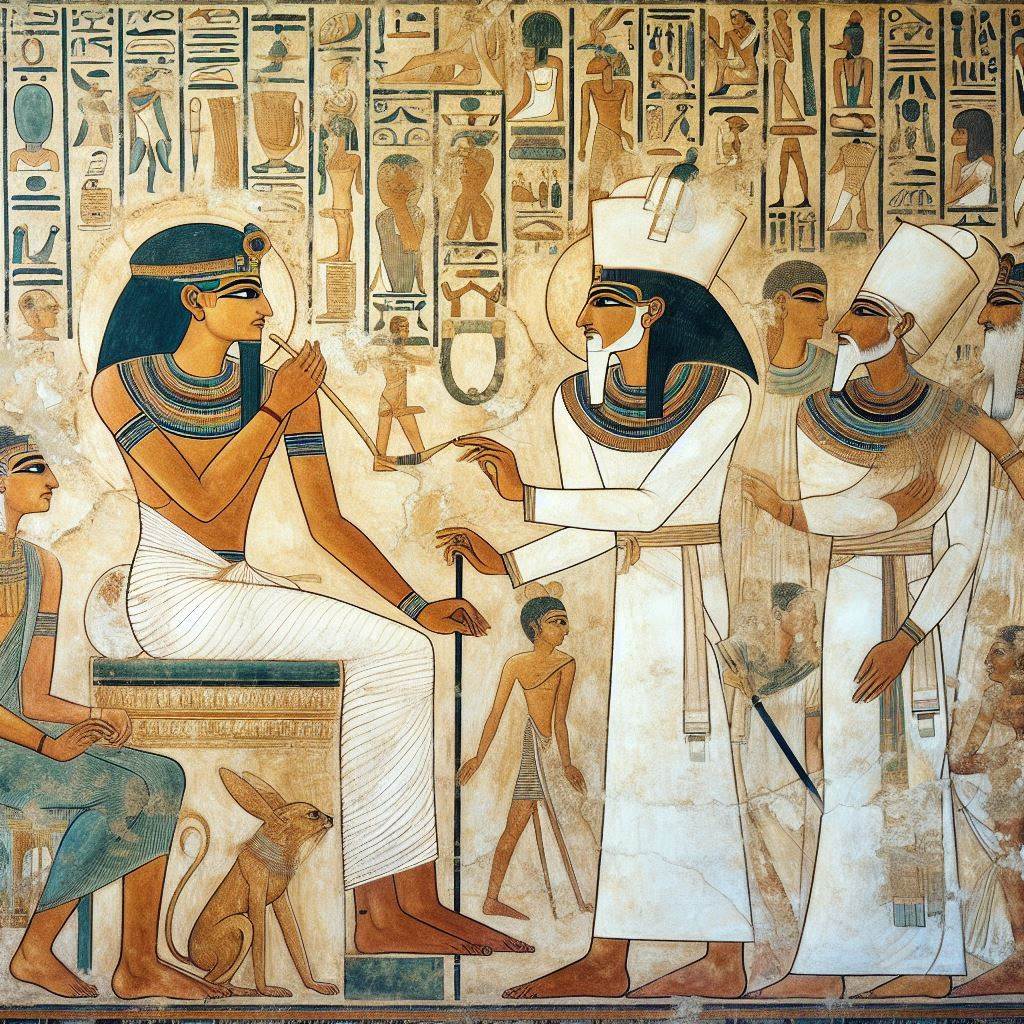
- Ancient Egyptians reportedly roasted frogs to obtain oil that was applied to painful areas while incantations were recited to treat migraine-like headaches.
- Ancient Incas used leaves from the coca plant to relieve pain. Coca was regarded as a sacred plant in South America and was used in ceremonies as well as for medicinal purposes. In Peru, coca leaves were reportedly used as a local anesthetic before ear piercing for ornaments.
- People in Egypt and Asia Minor were familiar with the use of raw opium. The Sumerians referred to it as the “flower of joy.”
- Ancient Egyptians prepared raw opium as oral pills and topical preparations. Raw opium was also mixed with oil and burned so that the smoke could be inhaled in attempts to relieve toothache.
- In India and China, opium was used to relieve toothache, bone pain, and joint pain.
Treatment during this period often combined herbs with sedative or hallucinogenic effects together with rituals based on contemporary beliefs.
Pain Treatment in the Classical Era: Ancient Greece and Rome (600–400 BC)
- Around 566 BC, Alcmaeon of Croton, a follower of Pythagoras, proposed that the brain—not the heart—was the center of sensation and reasoning.
- Around 460 BC, Hippocrates, often regarded as the father of Greek medicine, believed that pain resulted from an imbalance among the body’s four humors. He also used willow bark, which contains salicylate-related compounds, for symptoms such as abdominal discomfort, fever, and eye pain.
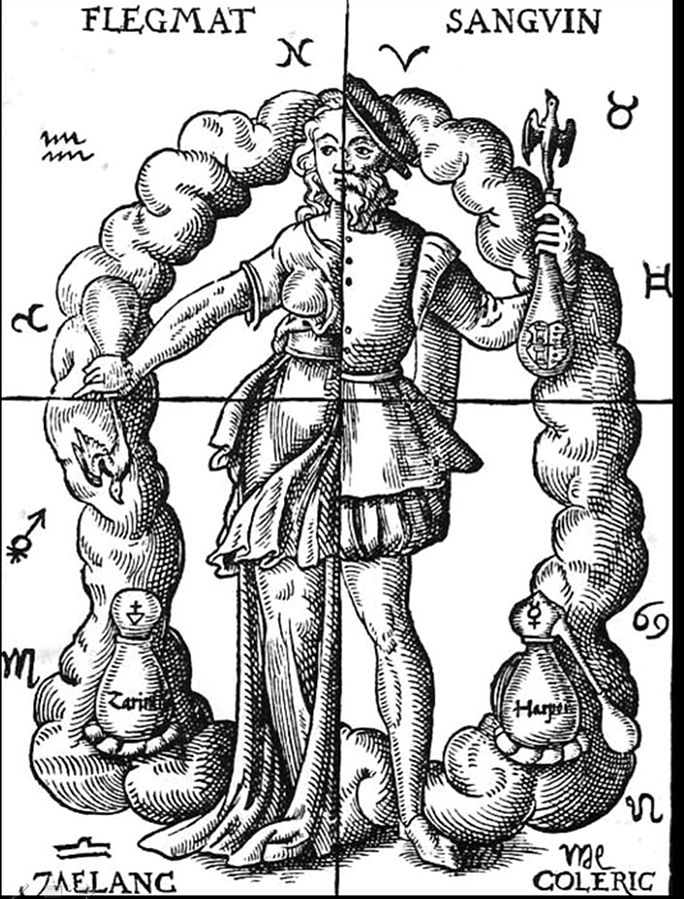
Illustration of the theory of the four bodily humors, 16th century. Source: Wikimedia Commons.
- Around 384 BC, Aristotle taught that the heart was the center of sensation, the soul, and life, while the brain served to cool the body and the heart provided warmth. Aristotle was one of the most influential thinkers of his era.
- Around 355 BC, Herophilus and Erasistratus of Alexandria studied human anatomy and identified nerves originating from the brain and spinal cord. They proposed that the brain was a major component of the nervous system and distinguished nerves involved in movement from those involved in sensation. Their ideas, however, did not receive widespread acceptance because they conflicted with the more established teachings of Aristotle.
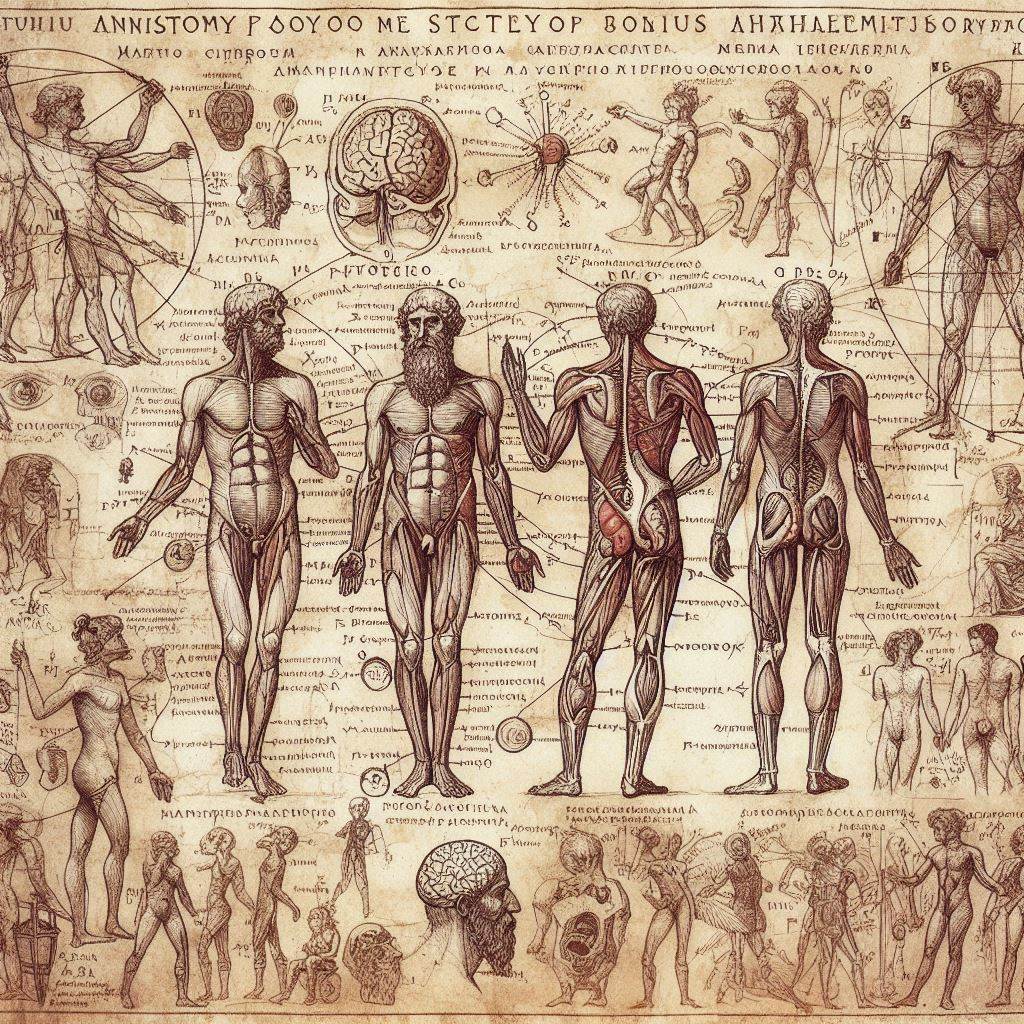
Opium was also used therapeutically during this era, while bloodletting was practiced in an attempt to restore the perceived balance of bodily fluids.
Thus, during the flourishing periods of ancient Greece and Rome, one of the major debates was whether the center of sensation was the brain or the heart.
Pain Treatment Around the Transition to the Common Era (300 BC–AD 50)
- Acupuncture is believed to have been practiced in China long before the Common Era. Clearer historical evidence of acupuncture being used for illness and pain appeared during this period, reflecting early attempts to understand pathways and points throughout the body.
- Electrical stimulation was also used in attempts to relieve pain. In ancient Egypt, Greece, and Rome, painful or inflamed body parts were reportedly placed in water containing electric fish from the Nile, including electric catfish and torpedo rays. Their electrical discharges were used historically in attempts to treat conditions ranging from pain to epilepsy, psychological disorders, stomach pain, and sexual dysfunction.
This period reflected growing recognition that sensory information traveled along nerves toward the central nervous system. Treatments that acted on nerves or altered their electrical signaling were therefore increasingly associated with pain relief.
Pain Treatment During the Middle Ages and Renaissance, AD 50–1800
- Around AD 160, the ideas of Herophilus and Erasistratus were revisited by Galen, a physician in Rome. He believed that the brain was the center of sensory processing and that it communicated with the peripheral nervous system. Pain could arise from strong external stimulation and could also originate inside the body, where internal pain might serve as a warning that something abnormal had begun.
- Galen recommended a compound preparation containing numerous ingredients, including opium, cinnamon, saffron, pepper, ginger, wine, and honey. Such preparations remained popular for centuries. Although opium could relieve pain, its undesirable effects were also increasingly recognized.
- In 1550, Jacobus Theodorus described the dangers of excessive opium use, including numbness, weakness, and the possibility of death during sleep. He advised reserving it for severe pain or serious insomnia.
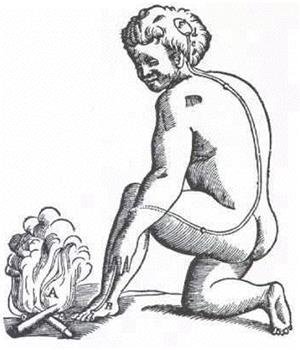
- Between 1596 and 1650, French philosopher René Descartes proposed that sensory information began at nerve endings in the skin and traveled toward the brain. He compared nerve transmission to pulling a rope connected to a bell: stimulation at one end produced a response at the other. His famous illustration depicted heat from a fire stimulating a child’s foot and transmitting a signal along nerves toward the brain.
The phenomenon in which a person continues to feel pain in an amputated arm or leg may also be understood in relation to the nervous system. Even after a limb has been removed, neural pathways associated with that limb may continue to generate sensations that the brain interprets as coming from the missing body part.
- During the 1670s, knowledge of Chinese acupuncture spread to Japan. Dutch physician and traveler Willem ten Rhijne, who visited Nagasaki, studied Eastern acupuncture practices and later described them to European audiences. Historical acupuncture practices used long, fine needles, including needles made from precious metals, and were applied to a variety of conditions.
- In 1784, British surgeon James Moore reported that opium was particularly useful for relieving postoperative pain, although it was less effective for controlling pain during surgery itself.
- In the late 18th century, Joseph Priestley isolated nitrous oxide, while Humphry Davy later investigated its pain-relieving effects. Nitrous oxide became associated with relief of dental and surgical pain, although it was also widely used recreationally during its early history.
This era represented a mixture of developing scientific knowledge about the brain and nervous system, the medicinal use of plant-derived substances, and strong religious beliefs. Pain could therefore be interpreted both scientifically and spiritually—as punishment from God or, conversely, as something relieved through remedies viewed as blessings from God.
Pain Treatment from the Industrial Revolution, AD 1800–1900
- During the early 19th century, increasingly systematic scientific experiments helped expand understanding of the mechanisms involved in pain sensation.
- In 1824, Marie-Jean-Pierre Flourens proposed that thought, memory, desire, and sensory perception were functions of the brain.
- Johannes Peter Müller developed the doctrine of specific nerve energies, proposing that the nature of a sensation depended not simply on the stimulus itself, but on the sensory organ and neural pathway being activated.
- In 1858, German physiologist Moritz Schiff argued that pain sensation differed from touch and involved different neural mechanisms. Other researchers proposed alternative theories, including the idea that sufficiently intense stimulation of sensory pathways could transform ordinary sensation into pain.
- In 1890, Sir Henry Head described relationships between sensory nerves supplying different regions of the body and spinal cord pathways. His observations contributed to understanding referred pain—the phenomenon in which a disorder of an internal organ may be perceived as pain in another area of the body. For example, pain caused by a ureteric stone may radiate toward the groin or upper thigh.
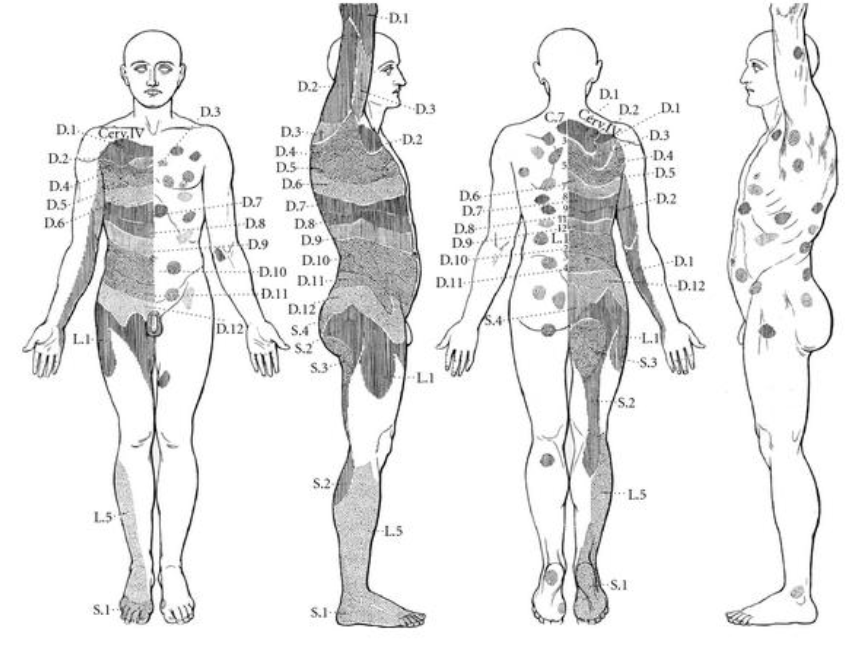
Body diagram associated with the work of Sir Henry Head.
From earlier beliefs involving mythology, shamans, rituals, divine punishment, and the will of God, the 19th century marked an important transition toward scientific theories of pain and treatment focused increasingly on identifying physiological causes.
Modern Theories of Pain
- Alfred Goldscheider (1858–1935) investigated distinct points of sensitivity to heat, cold, pain, and pressure on the skin. He emphasized the importance of stimulus intensity and the way sensory information is interpreted by the nervous system. Different theories of pain continued to be debated for many decades.
- In 1965, Ronald Melzack and Patrick Wall introduced the influential Gate Control Theory of Pain. Their theory proposed that neural mechanisms within the spinal cord, particularly in the region of the substantia gelatinosa, help regulate whether and how strongly pain signals are transmitted toward the brain. Pain perception therefore depends not only on stimulation of peripheral tissues, but also on processing within the spinal cord and central nervous system.
These concepts helped provide a scientific basis for approaches such as massage, pressure, and electrical nerve stimulation in pain management. One principle behind these approaches is that modifying sensory input and nerve signaling toward the spinal cord may influence how pain is perceived.
References:
https://painmanagementcollaboratory.org/pain-management-history-timeline/
https://www.britannica.com/science/pain
https://omegapaindoctor.com/blog/history-of-pain-management/