
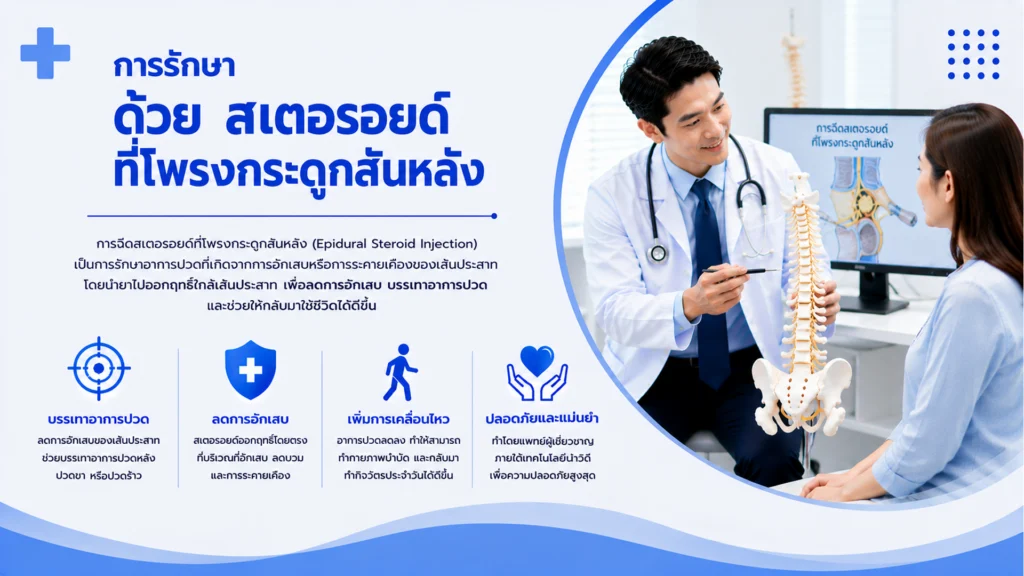
Epidural Steroid Injection (ESI) at Sapiens Hospital is a treatment option for selected patients with neck pain radiating into the arm (Cervical Radiculopathy) or lower back pain radiating into the leg (Lumbar Radiculopathy), particularly when symptoms are associated with inflammation around a spinal nerve root. Many cases of radicular pain improve with medication, activity modification, and physical therapy. When pain is severe, persistent, or significantly interferes with daily life, an epidural steroid injection may be considered to reduce inflammation around the affected nerve and improve pain control.
How Epidural Steroid Injection Works
Corticosteroids help reduce inflammation caused by inflammatory substances released around irritated or compressed nerve roots. In many patients, pain is related not only to mechanical compression but also to chemical irritation and inflammation around the nerve. This helps explain why the severity of pain does not always correspond directly to the size of a disc herniation seen on imaging.
Inflammation around spinal nerve roots may occur in conditions such as disc herniation, spinal stenosis, spondylolisthesis, scoliosis, vertebral compression fracture, or other disorders affecting the spinal canal and nerve roots. Epidural steroid treatment aims to reduce this inflammatory component and may also reduce pain signaling in selected patients.
Most patients with radicular pain are initially treated with conservative measures such as medication and physical therapy. If symptoms do not improve sufficiently, an epidural steroid injection may be considered to help reduce pain and support a faster return to normal activities. The degree and duration of benefit vary from person to person.
Who May Benefit from Epidural Steroid Injection?
- Cervical Radiculopathy – neck pain radiating into the arm
- Lumbar Radiculopathy – lower back pain radiating into the leg
- Spinal Stenosis with nerve root irritation or compression
- Spondylolisthesis with nerve root involvement
- Persistent radicular pain after spinal surgery such as Postlaminectomy Pain Syndrome
- Other causes of radicular pain such as scoliosis, vertebral compression fracture, facet cyst, or radiculitis
- Selected cases of nerve-related pain when the physician determines that epidural treatment is clinically appropriate
Who May Not Be Suitable for Epidural Steroid Injection?
- Active bloodstream infection or infection at the injection site
- Uncontrolled bleeding disorder or inability to safely stop certain anticoagulant or antiplatelet medicines when required
- Known allergy to medications or contrast agents used during the procedure
- Pregnancy, particularly when fluoroscopy would otherwise be required; alternative imaging guidance may be considered in selected cases
- Progressive or significant weakness in the arms or legs
- New bladder or bowel dysfunction associated with possible Cauda Equina Syndrome
- Spinal cord compression or Cervical Myelopathy
Weakness, loss of bladder or bowel control, saddle numbness, or rapidly worsening neurological symptoms require urgent medical assessment because they may indicate significant nerve or spinal cord compression.
Preparation Before Epidural Steroid Injection
The procedure is usually performed using local anesthesia with imaging guidance such as fluoroscopy to improve accuracy. Contrast material may be used to confirm the position and spread of the injection when appropriate. The procedure itself is generally relatively short, although total preparation and recovery time may be longer.
Patients should inform the physician about all medications, especially anticoagulants and antiplatelet drugs. These medicines should never be stopped without specific medical advice. Patients should also report any history of allergy to contrast media, local anesthetics, or steroids. Fasting instructions depend on whether sedation is planned and should follow the hospital’s pre-procedure instructions.
When Will Symptoms Improve After the Injection?
Some patients begin to notice improvement within several days, while others may take longer. Steroid effects are generally not immediate. Pain radiating into the arm or leg may respond better than purely axial neck or back pain in appropriately selected patients. Numbness may improve more slowly and may not completely resolve if there has been significant nerve injury.
If the first injection provides partial but meaningful benefit, the physician may consider whether another injection is appropriate. The timing and number of repeat injections should be individualized based on the patient’s response, diagnosis, steroid exposure, medical conditions, and overall risk-benefit assessment.
Possible Side Effects and Complications
Epidural steroid injection is commonly performed and serious complications are uncommon, but no invasive procedure is completely risk-free. Possible side effects and complications include:
- Temporary increase in blood glucose particularly in patients with diabetes
- Temporary suppression of the body’s steroid hormone system after corticosteroid exposure
- Temporary flushing, insomnia, mood changes, menstrual changes, hiccups, or soreness at the injection site
- Possible effects on bone health with repeated or high cumulative steroid exposure, especially in patients already at risk for osteoporosis
- Possible increase in intraocular pressure in susceptible patients such as those with glaucoma
- Rare but serious complications such as infection, bleeding, epidural hematoma, nerve injury, spinal cord injury, dural puncture, or other neurological complications
Patients with diabetes, osteoporosis, glaucoma, immune suppression, or those requiring repeated steroid injections should discuss these risks with the treating physician before the procedure.
How Long Does the Effect Last?
The duration of pain relief varies widely. Some patients experience benefit for several weeks or months, while others may have shorter or longer relief. The goal of treatment is often to reduce pain enough to improve movement, sleep, function, and participation in physical rehabilitation rather than to guarantee permanent pain elimination.
Long-term outcome also depends on the underlying spinal condition, severity of nerve irritation, exercise, physical therapy, body weight, smoking status, activity pattern, and other individual factors.
Patient Stories
Mr. Thitipong had a history of an accident together with age-related spinal degeneration, resulting in lower back pain radiating into the waist and leg. He underwent pain treatment with Dr. Nataya Udomsak, including an epidural steroid injection and physical rehabilitation. He later shared his personal treatment experience through Top Radio 93.5 MHz, describing improvement in his ability to walk and the importance of retraining his walking pattern after prolonged pain.
Mr. Jean Sebastien, a French patient, had a history of injury associated with cervical degeneration and spinal problems that caused severe difficulty with movement, walking, sleeping, turning, bending, and neck rotation. After evaluation of the affected nerves and treatment planning, he reported improvement in function and described his experience by saying, “I have my life back.”
Frequently Asked Questions (FAQ)
1. How often can epidural steroid injections be performed?
There is no single number that is appropriate for every patient. The physician considers the diagnosis, response to previous injections, total steroid exposure, medical conditions, and potential risks before recommending another injection. Repeated injections should not be performed automatically on a fixed schedule.
2. What can I do to reduce the chance that symptoms will return?
Follow an appropriate rehabilitation plan, maintain healthy body weight, avoid smoking, use correct lifting and exercise techniques, and strengthen the core and supporting muscles. The specific exercise program should be individualized according to the underlying spinal condition.
3. What if symptoms do not improve after the injection?
If pain remains severe, relief is very short-lived, or weakness or neurological symptoms develop, further evaluation is required. Depending on the cause, the next step may include additional imaging, a different pain intervention, rehabilitation, or surgical assessment by a spine specialist.
4. Is epidural steroid injection painful or dangerous?
The procedure is usually performed under local anesthesia with imaging guidance to improve accuracy. Most patients tolerate it well, although temporary discomfort can occur. Serious complications are uncommon but possible, which is why patient selection, sterile technique, imaging guidance, medication review, and specialist expertise are important.
5. Can pregnant patients receive epidural steroid injections?
Pregnancy requires individualized risk-benefit assessment. Fluoroscopy is generally avoided when possible, and alternative imaging guidance such as ultrasound may be considered for selected procedures. The decision should be made jointly by the treating specialists based on gestational age, severity of symptoms, and available alternatives.