
Decoding Neck Pain: An In-Depth Look at Its Causes and Treatment with Modern Medical Innovations
By the Medical Team at Sapiens Pain Hospital
Neck pain is a common health problem. In many cases, it is associated with degenerative changes in the cervical spine, muscles, and joints, or may result from maintaining inappropriate posture for prolonged periods.
1) Common Causes of Neck Pain
- Muscle and soft-tissue strain or inflammation related to posture (myofascial strain)
- Degenerative changes of the cervical facet joints (cervical facet arthropathy)
- Cervical disc herniation with nerve root compression (cervical disc herniation with radiculopathy)
- Narrowing of the cervical spinal canal (cervical spinal stenosis)
- Whiplash injury (whiplash-associated disorder)
- Potentially serious causes (red flags): infection, cancer, fracture, or vascular disease
2) Clinical Assessment and Diagnostic Imaging Evaluation begins with a medical history, physical examination, and screening for red flags. According to the American College of Radiology (ACR) guidelines, X-rays or MRI are not always necessary during the initial assessment unless there are significant neurological symptoms, major trauma, or suspicion of a serious underlying condition.
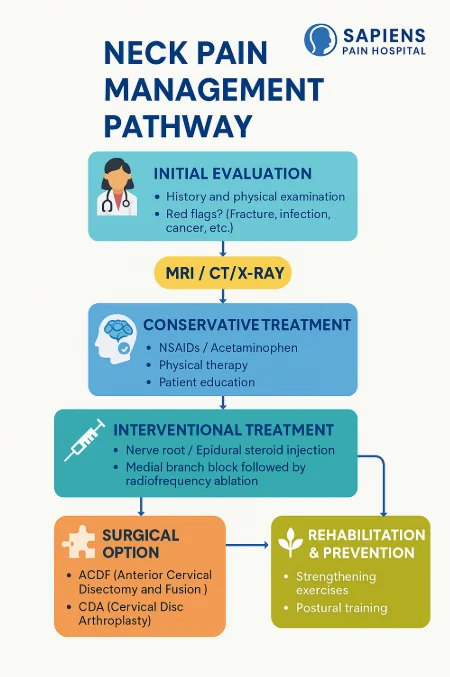
Clinical pathway for neck pain management, from initial screening to specialized treatment.
3) Recommended First-Line Treatment
- Education and behavioral modification: optimize sitting posture and screen height, avoid prolonged neck flexion, and take regular stretching breaks.
- Common pain medications: acetaminophen / NSAIDs when clinically appropriate.
- Physical therapy based on JOSPT/APTA guidance: neck and scapular strengthening exercises, manual therapy, and movement-control exercises, with treatment selected according to the individual patient.
4) Advanced Specialized Treatments
4.1 Selective Nerve Root Block / Cervical Epidural Steroid Injection
These procedures may be considered for selected patients with radiculopathy and pain radiating into the arm due to nerve root irritation or compression. They aim to reduce inflammation and provide short- to intermediate-term pain relief, which may help patients participate more effectively in rehabilitation. The procedure may be performed under C-arm fluoroscopic guidance for accurate needle placement.
4.2 Medial Branch Block and Radiofrequency Neurotomy (RFA) for Cervical Facet Pain
A diagnostic medial branch block may first be performed. If the patient has an appropriate response, Radiofrequency Neurotomy (RFA) may then be considered to reduce pain signals from the targeted nerves. International multidisciplinary guidelines support its use in appropriately selected patients.
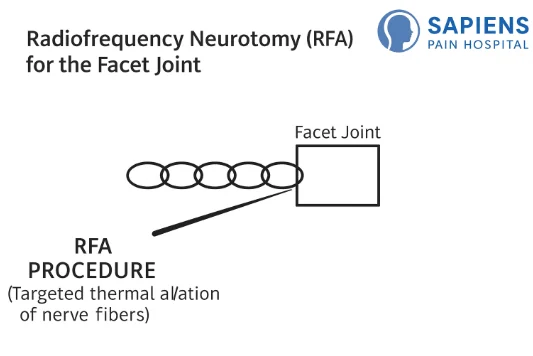
The concept of RFA involves applying controlled thermal energy through a specialized needle to targeted medial branch nerves to help reduce pain arising from the cervical facet joints.
4.3 Modern Surgical Treatments: ACDF and Cervical Disc Arthroplasty (CDA)
When non-surgical treatment does not provide adequate improvement and there is evidence of nerve root compression, a spine surgeon may consider ACDF or Cervical Disc Arthroplasty (CDA). Long-term studies have reported favorable outcomes with CDA, including a lower likelihood of subsequent surgery in selected patient groups.
5) Safety and Responsible Medication Use
Long-term opioid use is generally avoided for uncomplicated neck pain. A multimodal approach may include appropriate medical treatment together with rehabilitation and attention to sleep and psychological well-being.
6) When to Seek Prompt Medical Attention
Seek medical evaluation if there is progressive weakness, spreading numbness, loss of bladder or bowel control, fever or unexplained rapid weight loss, significant trauma, or persistent pain lasting more than 6–8 weeks despite appropriate self-care.