
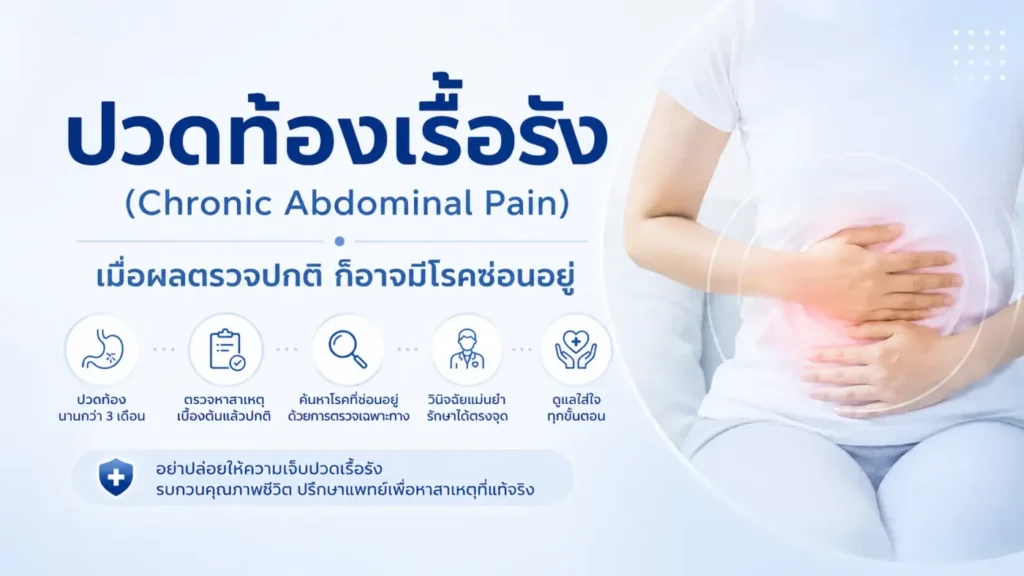
Chronic Abdominal Pain: Even When Test Results Are Normal, an Underlying Condition May Still Be Present
Chronic Abdominal Pain: When Normal Tests Do Not Mean “Nothing Is Wrong”
Chronic Abdominal Pain is a common problem that can significantly affect quality of life. Many patients experience symptoms for months or years and undergo multiple investigations, including blood tests, ultrasound, computed tomography (CT Scan), magnetic resonance imaging (MRI), or gastrointestinal endoscopy, yet no abnormality is found that fully explains their symptoms.
In the past, pain was often viewed mainly as a result of inflammation, infection, or direct organ abnormalities. Today, however, our understanding of chronic abdominal pain has evolved considerably. Research has shown that pain does not depend solely on the affected organ but can also involve interactions among the gut, brain, nervous system, and immune system.
Not All Abdominal Pain Comes from the Stomach or Intestines
Diseases of the gastrointestinal system remain important causes of chronic abdominal pain, including Irritable Bowel Syndrome (IBS), Functional Dyspepsia, Inflammatory Bowel Disease (IBD), and Chronic Pancreatitis.
However, some patients continue to experience pain even after the underlying disease has been treated, or when investigations do not reveal a clear abnormality. Greater attention is therefore being given to the mechanisms of chronic pain, particularly communication between the gut and brain and changes in the nervous system involved in pain perception.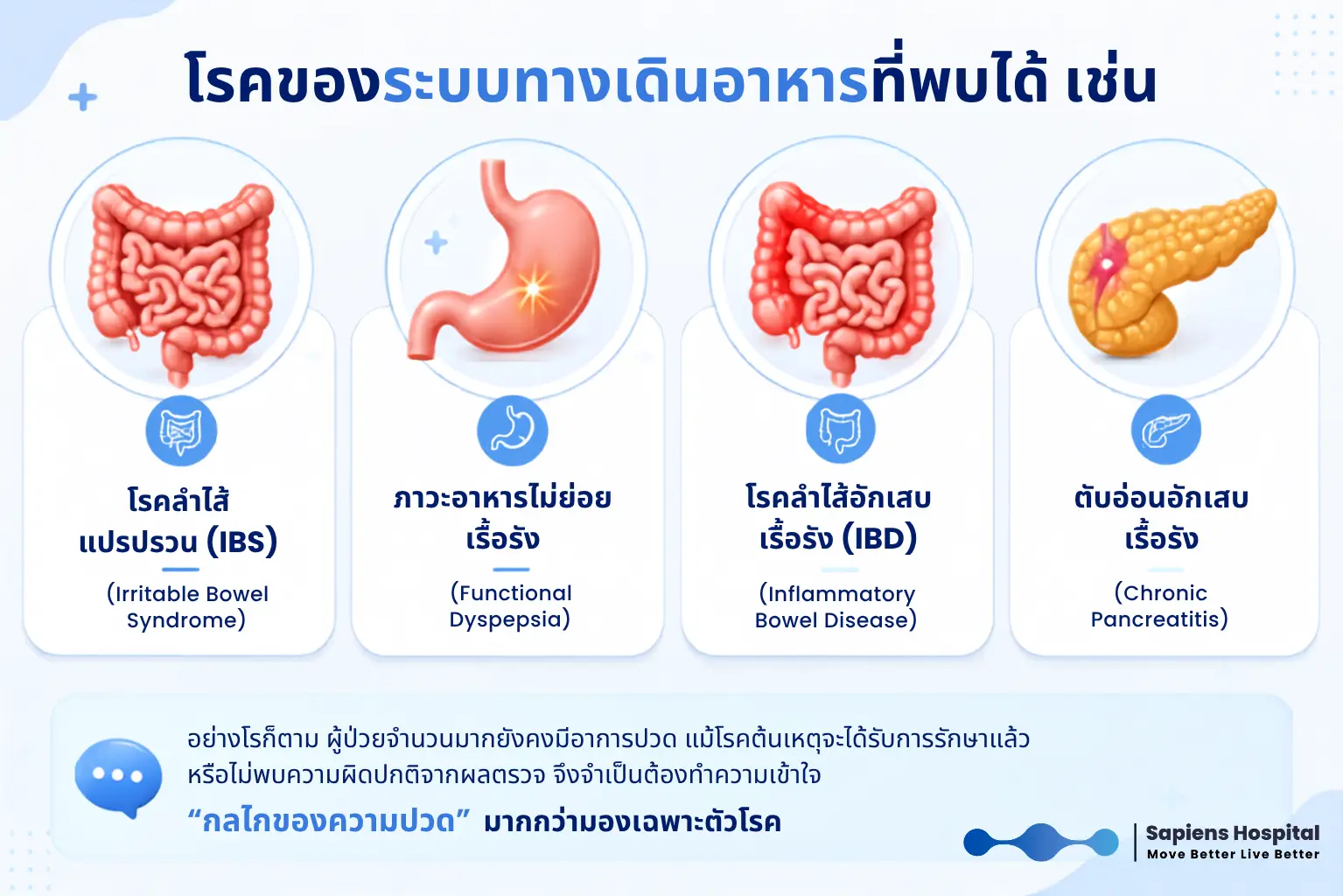
Q&A: Why Do I Still Have Pain Even After All the Tests Are Normal?
One important concept that has gained increasing recognition is the Gut-Brain Axis. The gut and brain constantly communicate with each other. Stress, inadequate sleep, anxiety, and emotional conditions can influence gastrointestinal function and the perception of pain. Conversely, gastrointestinal disturbances can also affect mood, sleep quality, and overall quality of life. This concept helps explain why some patients experience worsening symptoms during periods of stress or improvement when their overall health and sleep improve.
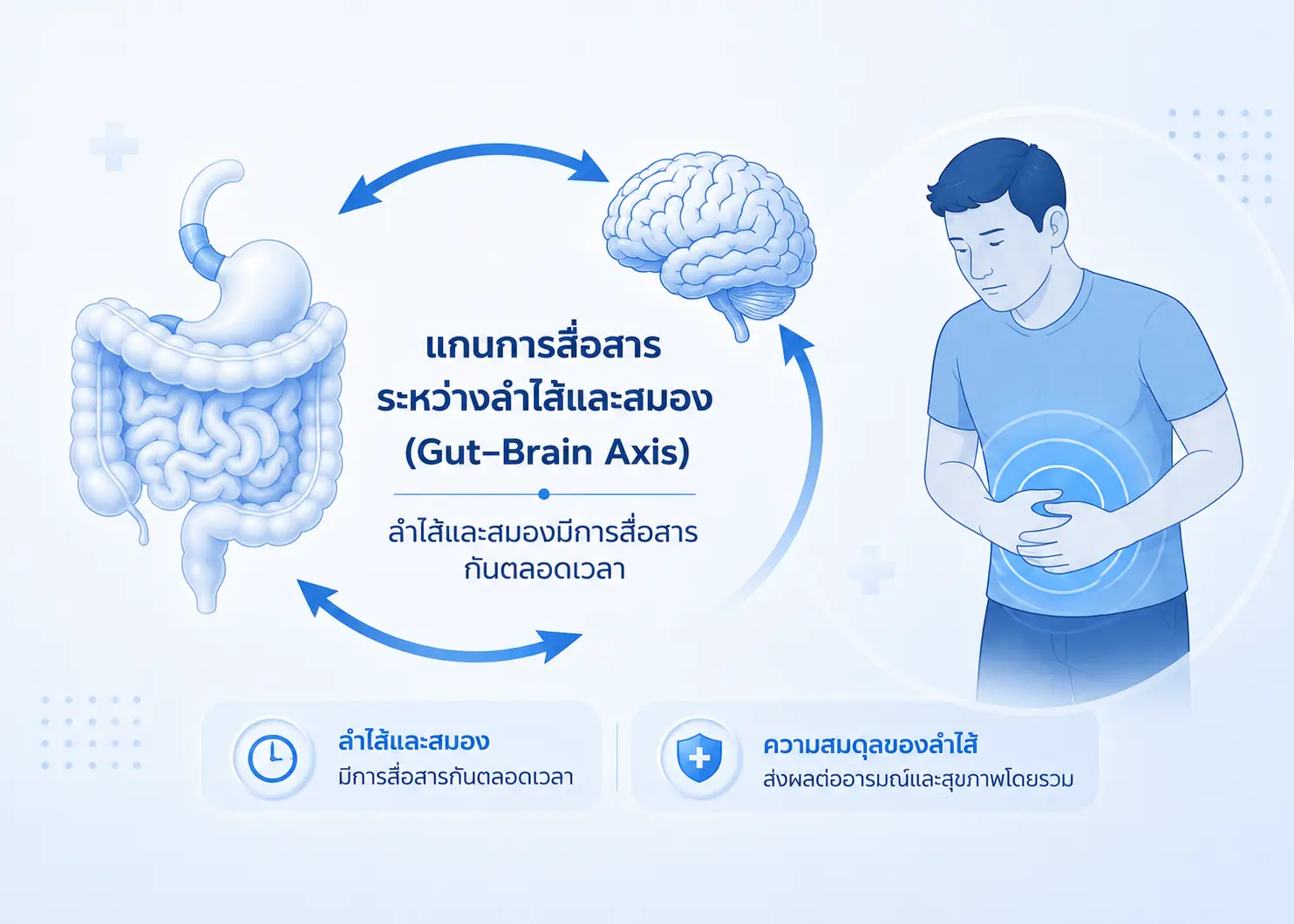
Q&A: Why Do Some People Experience Severe Pain Even When Test Results Are Normal?
In recent years, growing evidence has supported the concept of Visceral Hypersensitivity. Patients with this condition may have internal organs that function within normal limits but perceive certain internal stimuli as more painful than usual. This phenomenon is commonly observed in patients with Irritable Bowel Syndrome (IBS) and certain forms of chronic abdominal pain. It is therefore an important explanation for why pain severity does not always correlate with test results.
When the Nervous System Becomes More Sensitive to Pain
When pain persists for a long period, changes may occur in the nervous system involved in pain processing. This is known as Central Sensitization. Once it develops, the intensity of pain may no longer correspond directly to the severity of the underlying disease. Some patients continue to experience pain even after the original disease has improved or test results have normalized.
This concept can also help explain why some patients experience pain in multiple areas, such as:
- Chronic abdominal pain
- Chronic pelvic pain
- Chronic headaches
- Widespread muscle pain
- Abdominal wall pain and chronic postsurgical pain
Although most people think of the stomach or intestines when they experience abdominal pain, in some cases the cause may arise from the abdominal wall or nerves in the abdominal region. Patients may describe burning, stabbing, electric-shock-like pain, or associated numbness, and can often identify a fairly specific painful area. Examples include:
- Anterior Cutaneous Nerve Entrapment Syndrome (ACNES)
- Ilioinguinal/Iliohypogastric Neuralgia
These conditions may occur spontaneously or develop after surgery such as appendectomy, hernia surgery, cesarean section, or certain gynecological procedures. Some patients may also continue to experience pain after surgery even when the operation itself was successful and no obvious complication is found. Such pain may be related to nerve injury or irritation, scar tissue formation, or nervous system changes that develop after prolonged pain.
In patients who can clearly identify the location of pain and have a small, localized tender spot on the abdominal wall, abdominal wall pain should be considered because it can sometimes be mistaken for pain arising from internal organs.
Q&A: Are Abdominal Adhesions Always the Cause of Pain?
Abdominal adhesions can develop after surgery or inflammation within the abdominal cavity and are an important long-term cause of intestinal obstruction. However, finding adhesions does not necessarily mean that they are the cause of abdominal pain. Many patients have adhesions without symptoms, while others have significant pain without clear evidence that adhesions are directly responsible. In addition, surgical adhesiolysis does not improve pain in every patient and may lead to the formation of new adhesions.
Other Causes That May Be Overlooked
- Thoracic Radiculopathy: Irritation of nerve roots in the thoracic spine, particularly around the T6–T12 levels, can cause pain around the ribs or abdomen.
- Slipping Rib Syndrome: Abnormal movement of the cartilage of the lower ribs can cause pain around or beneath the rib cage and may sometimes be mistaken for liver, gallbladder, or stomach disease.
Diagnosis of Chronic Abdominal Pain
Diagnosis is not only about determining whether a disease is present or absent. It also involves understanding the mechanism responsible for the pain. In some patients, pain may originate directly from internal organs. In others, it may involve nerves or the abdominal wall. Some patients may have Visceral Hypersensitivity or Central Sensitization, while many may have several mechanisms occurring together.
A detailed medical history, physical examination, and review of previous investigations remain essential parts of diagnosis. In patients with suspected abdominal wall pain, a physician may perform a test known as Carnett’s Sign, which can help distinguish abdominal wall pain from pain arising from internal organs.
Treatment of Chronic Abdominal Pain
Current treatment approaches do not focus only on the organ believed to be responsible for the disease. They also take into account the underlying mechanisms of pain.
| Treatment Approach | Details and Treatment Options |
| Medication | Commonly used medications may include Amitriptyline, Duloxetine, Gabapentin, Pregabalin, and Mirogabalin. These medications can help modulate nervous system activity and reduce pain sensitivity. |
| Local Anesthetic Injection and Targeted Treatment | For patients with nerve-related or abdominal wall pain, a local anesthetic injection around the affected nerve (Nerve Block) may have both diagnostic and therapeutic roles. In selected patients, Hydrodissection may be used under ultrasound guidance to separate tissues that are compressing or irritating a nerve. |
| Treatment of Visceral Pain | In selected patients, specialized procedures such as Celiac Plexus Block or Splanchnic Nerve Block may be considered, particularly in patients with pancreatic cancer, chronic pancreatitis, or visceral pain arising from the upper abdomen. |
The Role of the Nervous and Immune Systems in Chronic Abdominal Pain
Current research has shown that the immune and nervous systems are closely interconnected. This concept is known as Neuroimmune Interaction. Immune cells may increase the sensitivity of nerves to pain, while nerves themselves may also influence inflammatory processes.
This concept may help explain why some patients continue to experience pain even after the underlying disease has become inactive, such as patients with inflammatory bowel disease in remission who continue to have abdominal pain, patients with chronic pancreatitis who continue to experience pain, or patients with persistent pain after surgery. This growing knowledge is changing the way chronic pain is understood and may contribute to the development of new treatment strategies in the future.
The Future of Chronic Abdominal Pain Treatment
In recent years, the treatment of chronic pain has evolved considerably. Rather than focusing only on the organ believed to cause the disease, greater attention is being given to the nervous system and the way pain signals are processed. This has contributed to the development of new technologies and treatment approaches aimed at modifying nervous system activity, known as Neuromodulation.
- Spinal Cord Stimulation: This technology has been used for many years in selected patients with chronic pain, particularly those who do not respond adequately to conventional treatments. It works by delivering low-level electrical signals to the spinal cord to modify the transmission of pain signals to the brain. In recent years, its use has increasingly been studied in selected patients with certain forms of Chronic Visceral Pain. Preliminary findings have been of interest, although it is currently reserved for carefully selected patients and remains an area of ongoing research.
- Vagus Nerve Stimulation: Another approach receiving increasing attention is stimulation of the vagus nerve, an important nerve connecting the brain with several internal organs, including the gastrointestinal system. Research suggests that the vagus nerve plays roles in regulating inflammation, autonomic nervous system function, and pain perception. This technology is currently being studied in several patient groups, including those with gastrointestinal disorders and some forms of chronic pain. Although it is not currently considered a standard treatment for chronic abdominal pain, it remains an area of potential future development.
- Personalized Medicine: One important lesson from chronic abdominal pain is that patients with similar symptoms may have very different underlying mechanisms. The problem may arise from the intestine, nerves, abdominal wall, immune system, or changes in the central nervous system related to pain perception. In many patients, several factors may occur together. For this reason, future treatment is increasingly moving toward individualized approaches rather than applying the same treatment to every patient.
Chronic abdominal pain is a complex condition and does not always arise solely from abnormalities of internal organs. Some patients may have Visceral Hypersensitivity, others may develop Central Sensitization, while some may experience pain originating from the abdominal wall, nerves, or postsurgical changes. Therefore, normal test results do not mean that the pain is not real or that there is necessarily no underlying explanation. A deeper understanding of the nervous system, immune system, and communication between the gut and brain is changing the way these patients are evaluated and treated and may lead to more effective treatment strategies in the future.
References
1. Drossman DA, Tack J, Ford AC, et al. Neuromodulators for Disorders of Gut-Brain Interaction (DGBI): A Rome Foundation Working Team Report. Gastroenterology. 2023;165(5):1320-1338. doi:10.1053/j.gastro.2023.08.001. PMID: 37541735.
2. Mayer EA. Gut feelings: the emerging biology of gut-brain communication. Nature Reviews Gastroenterology & Hepatology. 2022;19(6):352-368. doi:10.1038/s41575-022-00663-4.
3. Black CJ, Drossman DA, Talley NJ, Ruddy J, Ford AC. Functional gastrointestinal disorders and disorders of gut-brain interaction in clinical practice. Lancet Gastroenterology & Hepatology. 2023;8(6):568-581. doi:10.1016/S2468-1253(23)00071-3.
4. Simrén M, Tack J. Visceral hypersensitivity in disorders of gut-brain interaction. Gut. 2023;72(7):1252-1264. doi:10.1136/gutjnl-2022-328229.
5. Nijs J, Lahousse A, Kapreli E, et al. Nociplastic pain criteria and central sensitization in chronic pain conditions: a narrative review. Lancet Rheumatology. 2021;3(5):e383-e393. doi:10.1016/S2665-9913(21)00027-2
6. Ji RR, Donnelly CR, Nedergaard M. Neuroimmune interactions in chronic pain. Nature Reviews Immunology. 2023;23(6):361-378. doi:10.1038/s41577-022-00841-7.
7. van Assen T, Brouns JA, Scheltinga MRM, Roumen RMH. A systematic review of the treatment for Anterior Cutaneous Nerve Entrapment Syndrome (ACNES). World Journal of Surgery. 2020;44(10):3134-3144. doi:10.1007/s00268-020-05574-5.
8. Srinivasa RN, Greenbaum DS. Abdominal wall pain: clinical evaluation, differential diagnosis, and treatment. American Family Physician. 2018;98(7):429-436.
9. Schug SA, Lavand’homme P, Barke A, Korwisi B, Rief W, Treede RD. The IASP classification of chronic postsurgical pain for ICD-11: chronic postsurgical or posttraumatic pain. Pain Reports. 2019;4(3):e711. doi:10.1097/PR9.0000000000000711.
10. Farmer AD, Aziz Q. Visceral pain hypersensitivity in functional gastrointestinal disorders. British Medical Bulletin. 2020;134(1):29-41. doi:10.1093/bmb/ldaa0008.
11. Bonaz B, Sinniger V, Pellissier S. Vagus nerve stimulation: a new promising therapeutic tool in inflammatory bowel disease. Journal of Internal Medicine. 2021;289(1):51-63. doi:10.1111/joim.13129.
12. Kapural L, Nagem H, Tlucek H, et al. Spinal cord stimulation for chronic visceral abdominal pain: current evidence and future directions. Neuromodulation. 2022;25(4):487-495.
13. Camilleri M, Chedid V, Ford AC, et al. Gastroduodenal disorders. Gastroenterology. 2025;168(1):38-58. (Rome Foundation Update).
14. Aziz Q, Simrén M. The overlap of gastrointestinal disorders, chronic pain syndromes, and central sensitization. Nature Reviews Gastroenterology & Hepatology. 2024;21(2):89-103.
15. Drossman DA. Chronic abdominal pain and disorders of gut-brain interaction: current concepts and future directions. Clinical Gastroenterology and Hepatology. 2024;22(8):1675-1684.