
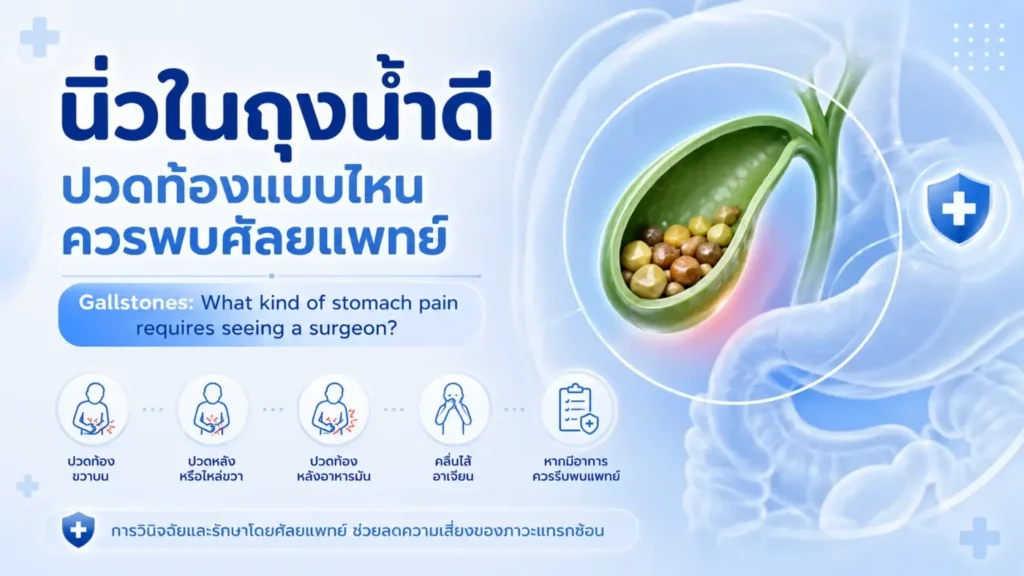
Gallstones: What Kind of Abdominal Pain Means You Should See a Surgeon?
Abdominal pain after eating is something many people experience. Sometimes it may simply be caused by bloating, indigestion, or acid reflux. However, in some cases, the pain may be a sign of “gallstones.”
Gallstones are more common than many people realize, particularly among women, older adults, people who are overweight, those who lose weight rapidly, people with diabetes, or those with certain lipid disorders. Importantly, some people have gallstones without any symptoms and discover them incidentally during an abdominal ultrasound.
However, when gallstones begin causing abdominal pain—particularly pain in the right upper abdomen or upper central abdomen after fatty meals—the symptoms should not automatically be dismissed as “indigestion.” They may indicate that a gallstone is temporarily obstructing the gallbladder outlet or that a complication is developing.
This article explains what gallstone pain typically feels like, when you should see a surgeon, and why some patients may benefit from treatment before an emergency develops.
What Is the Gallbladder and How Do Gallstones Form?
The gallbladder is a small organ located beneath the liver. It stores bile produced by the liver. Bile helps digest fats, and when we eat—particularly a meal containing fat—the gallbladder contracts and releases bile into the small intestine.
Gallstones form when components of bile, such as cholesterol, bile pigments, or certain salts, crystallize and form stones. Gallstones may be as small as grains of sand or may form a single large stone. Some people have only one stone, while others have several. If the stones remain in the gallbladder without causing obstruction or inflammation, there may be no symptoms. However, if a stone temporarily blocks the gallbladder outlet, the gallbladder contracts against the obstruction and may cause pain known as biliary colic.
What Does Gallstone Pain Feel Like? Gallstone pain often has several characteristic features.
1. Pain in the right upper abdomen or upper central abdomen The most common locations are beneath the right rib cage or in the epigastric area. Some people describe a deep pressure or tightness beneath the right ribs, while others experience upper abdominal discomfort that may be mistaken for gastritis or acid reflux.
2. Pain after eating, particularly after fatty meals Symptoms may occur after meals, particularly fatty or fried foods, coconut milk dishes, fatty meats, or large meals, because eating stimulates gallbladder contraction.
3. Persistent episodes of relatively intense pain Gallstone pain is usually not a brief, sharp pain lasting only a few seconds. It often remains relatively steady during an episode and may last from about 30 minutes to several hours. Some people experience pain severe enough to interrupt normal activities or require medical attention.
4. Pain radiating to the back or right shoulder blade Pain may radiate to the back, right shoulder, or right shoulder blade, sometimes leading people to mistake it for a musculoskeletal problem.
5. Nausea, vomiting, or abdominal bloating Some patients experience nausea, vomiting, abdominal fullness, bloating, or indigestion-like symptoms, particularly after fatty meals.
If these symptoms recur, especially after eating, medical evaluation is recommended to determine whether gallstones may be responsible.
What Kind of Abdominal Pain Means You Should See a Surgeon? Not every gallstone requires immediate surgery. However, when gallstones begin causing symptoms or complications, surgical assessment may be appropriate. Consider seeing a surgeon if you have the following symptoms:
1. Recurrent right upper abdominal or epigastric pain after meals If pain repeatedly occurs after fatty foods or large meals and gallstones have been identified, this may represent symptomatic gallstone disease. A surgical consultation can help determine whether surgery should be considered or whether observation remains appropriate.
2. Pain lasting several hours or becoming increasingly severe If pain lasts unusually long, becomes progressively worse, or significantly interferes with normal activities, prompt medical assessment is recommended because the problem may be more than uncomplicated biliary colic and could indicate acute gallbladder inflammation.
3. Fever or chills with right upper abdominal pain Fever or chills accompanied by right upper abdominal pain may indicate acute cholecystitis or an infection of the bile ducts and should be assessed promptly.
4. Yellow skin or eyes, dark urine, or pale stools These symptoms may indicate that a gallstone has moved into and obstructed the common bile duct, preventing normal bile drainage. Bile duct obstruction or cholangitis can be serious and requires urgent medical evaluation.
5. Severe abdominal pain with significant nausea and vomiting Severe upper abdominal pain, particularly pain radiating to the back and accompanied by repeated vomiting, may indicate gallstone pancreatitis, a potentially serious complication.
6. Diagnosed gallbladder inflammation or bile duct stones If testing confirms acute cholecystitis, stones in the bile duct, or another gallstone-related complication, evaluation by a surgeon or appropriate specialist is recommended to determine the most suitable treatment.
Are Gallstones Dangerous?
Gallstones that cause no symptoms may not require immediate treatment, and observation may be appropriate for many patients. Once gallstones become symptomatic, however, symptoms may recur and complications can sometimes develop.
Possible complications include:
- Acute cholecystitis — This can occur when a gallstone persistently blocks the gallbladder outlet, leading to inflammation and sometimes infection. Symptoms commonly include persistent right upper abdominal pain, fever, nausea, vomiting, and localized tenderness.
- Common bile duct stones — A stone may move into and obstruct the bile duct, causing jaundice, dark urine, pale stools, and abnormal liver tests. If infection develops, cholangitis may occur and can become a medical emergency.
- Gallstone pancreatitis — A stone passing through the bile duct may obstruct the area near the pancreatic duct and trigger pancreatitis. Symptoms may include severe epigastric pain radiating to the back, nausea, and significant vomiting.
- Gallbladder perforation or pericholecystic abscess — These complications are less common but can be serious, particularly in older adults, people with diabetes, or patients who present late for treatment.
How Is Gallstone Pain Different from Gastritis or Acid Reflux?
Gallstones, gastritis, and gastroesophageal reflux disease (GERD) can all cause upper abdominal discomfort, so symptoms may overlap. Acid reflux more commonly causes heartburn, acid regurgitation, or a sour or bitter taste and may worsen when lying down or after certain foods. Gastritis or peptic ulcer disease may cause burning or aching pain in the upper abdomen that can relate to meals or an empty stomach and may be accompanied by nausea. Gallstones more typically cause right upper abdominal or epigastric pain, often after fatty or large meals, which may radiate to the back or right shoulder blade and may be accompanied by nausea or vomiting. Because symptoms can overlap, physical examination and appropriate investigations such as abdominal ultrasound are more reliable than symptoms alone.
Who Is at Risk of Developing Gallstones? Risk factors include:
- Female sex
- Increasing age, particularly after middle age
- Overweight or obesity
- Rapid weight loss
- Pregnancy or multiple previous pregnancies
- Use of certain hormonal medications
- Diabetes
- Certain lipid abnormalities
- Family history of gallstones
- Certain liver or blood disorders
- A diet high in calories and certain fats and low in fiber
However, gallstones can also develop in people without obvious risk factors.
How Are Gallstones Diagnosed?
Diagnosis begins with a detailed medical history, including the location and duration of pain, its relationship with meals, whether the pain radiates to the back, and whether fever, jaundice, dark urine, or vomiting is present. The doctor will then perform a physical examination, particularly checking for tenderness in the right upper abdomen and signs of gallbladder inflammation or other complications.
Common investigations include:
- Abdominal ultrasound — This is usually the first-line imaging test for suspected gallstones. It does not use ionizing radiation and can assess gallstones, the gallbladder wall, signs of inflammation, and portions of the bile ducts.
- Blood tests — These may include white blood cell count, inflammatory markers, liver function tests, bilirubin, and pancreatic enzymes to assess for inflammation, infection, bile duct obstruction, or pancreatitis.
- CT scan or MRI/MRCP — These may be considered when symptoms are complex, ultrasound findings are inconclusive, or complications such as bile duct stones, pancreatitis, or another abdominal condition are suspected.
- ERCP — ERCP is not a routine diagnostic test for everyone with gallstones. It is primarily used in selected patients with suspected or confirmed common bile duct stones and can also be therapeutic, for example by removing stones from the bile duct.
Does Everyone with Gallstones Need Gallbladder Surgery?
No. If gallstones are found incidentally and cause no symptoms, many patients do not require immediate surgery. They should, however, understand the warning symptoms that require medical attention and follow their doctor’s recommendations. When gallstones repeatedly cause typical symptoms or lead to complications, cholecystectomy—most commonly laparoscopic cholecystectomy in suitable patients—may be recommended.
The decision to undergo surgery depends on several factors, including:
- How frequently symptoms occur
- Severity of pain
- Whether cholecystitis is present
- Whether stones are present in the bile duct
- Whether gallstone pancreatitis has occurred
- Age and underlying medical conditions
- Anesthesia and surgical risks
- The patient’s overall condition, preferences, and the surgeon’s clinical assessment
What Is Laparoscopic Gallbladder Surgery?
Laparoscopic cholecystectomy is the standard surgical approach used for many patients requiring gallbladder removal. The surgeon operates through several small abdominal incisions using a camera and specialized instruments to remove the gallbladder.
Potential advantages compared with open surgery generally include:
- Smaller incisions
- Less postoperative wound pain in many patients
- Faster recovery in many cases
- Shorter hospital stay in suitable patients
- Earlier return to normal daily activities
- Prevention of recurrent symptoms arising from stones remaining in the gallbladder
However, all surgery carries risks, including bleeding, infection, bile duct injury, complications related to anesthesia, and, in some cases, the need to convert from laparoscopic to open surgery, particularly when severe inflammation or extensive adhesions are present.
Seeing a surgeon is therefore important not simply to decide whether surgery is needed, but also to assess individual risks, determine appropriate timing, and select the most suitable treatment approach.
Can You Live Normally After Gallbladder Removal?
Most people can live normally after gallbladder removal because the liver continues to produce bile. The difference is that bile flows directly into the intestine instead of being stored in the gallbladder.
During the early recovery period, some people may experience bloating, loose stools, or difficulty tolerating very fatty foods. These symptoms often improve over time. Patients may be advised to begin with easily digestible foods and limit very fatty meals temporarily before gradually returning to their usual diet according to medical advice.
If persistent diarrhea, recurrent abdominal pain, fever, jaundice, or other unusual symptoms develop after surgery, medical review is recommended.
How Should You Take Care of Yourself If You Have Gallstones?
If gallstones have been detected but you have no symptoms, or while waiting for medical evaluation, appropriate lifestyle measures may help reduce symptom triggers, including:
- Limit very fatty and fried foods, coconut milk dishes, and very large meals
- Eat regular, balanced meals
- Maintain an appropriate body weight
- Avoid overly rapid weight loss
- Exercise regularly as appropriate for your health
- Manage diabetes and abnormal blood lipids appropriately
- Observe whether symptoms are associated with particular meals
- Do not self-medicate with antibiotics or gallstone-dissolving medications without medical advice
Lifestyle changes may help reduce symptom triggers, but they do not reliably eliminate existing gallstones. Symptomatic gallstones should be evaluated by a doctor.
Frequently Asked Questions
1. Do asymptomatic gallstones require surgery?
Usually not immediately. If gallstones cause no symptoms and there are no specific indications for treatment, observation may be appropriate. If typical pain or complications develop, medical or surgical assessment is recommended.
2. Where is gallstone pain usually felt?
It is commonly felt beneath the right rib cage or in the upper central abdomen. Pain may radiate to the back, right shoulder, or right shoulder blade and may be associated with nausea or vomiting.
3. Can gallstones be treated with medication?
Certain medications may be considered in carefully selected patients with particular types of cholesterol stones, but treatment can take a long time, stones may recur, and medication is not appropriate for every patient. Surgery is generally the main definitive treatment for recurrent symptomatic gallstones or gallstone-related complications.
4. If the pain goes away on its own, should I still see a doctor?
Yes, particularly if the pain recurs. An episode that resolves spontaneously may represent biliary colic. Medical evaluation can help confirm the diagnosis and assess the risk of recurrence or complications.
5. Is abdominal pain with yellow skin or eyes dangerous?
It can be serious and requires prompt medical evaluation because it may indicate bile duct obstruction or cholangitis, which can become a severe infection.
6. Will I be unable to digest food after gallbladder removal?
Most people continue to digest food and live normally. The liver still produces bile even without the gallbladder. Some people experience temporary bloating or loose stools, particularly early after surgery.
7. When should I see a surgeon?
Consider surgical evaluation when gallstones are associated with recurrent right upper abdominal or epigastric pain, particularly after meals, or when complications are suspected. Severe or prolonged pain, fever, chills, jaundice, repeated vomiting, or severe epigastric pain radiating to the back requires prompt medical assessment.
Gallstones may remain silent and cause no symptoms. However, once recurrent right upper abdominal or epigastric pain develops—especially with nausea, vomiting, or pain radiating to the back or right shoulder blade—medical evaluation is recommended.
Symptoms requiring urgent medical attention include severe or prolonged abdominal pain, fever, chills, jaundice, dark urine, repeated vomiting, or severe epigastric pain radiating to the back. These symptoms may indicate acute cholecystitis, bile duct obstruction or infection, or gallstone pancreatitis.
Seeing a surgeon does not automatically mean that surgery will be performed. The purpose of the consultation is to assess the stage and severity of the condition, determine the risk of complications, and identify the most appropriate treatment. Timely diagnosis and appropriate treatment can help manage symptomatic gallstone disease and reduce the risk of recurrent gallstone-related problems.
For Information and Appointments
Sapiens Hospital Move Better : Live Better
Tel. 02-111-3703
References
1. European Association for the Study of the Liver. EASL Clinical Practice Guidelines on the prevention, diagnosis and treatment of gallstones. Journal of Hepatology. 2016;65(1):146–181.
2. Overby DW, Apelgren KN, Richardson W, Fanelli R. SAGES guidelines for the clinical application of laparoscopic biliary tract surgery. Surgical Endoscopy. 2010;24(10):2368–2386.
3. National Institute for Health and Care Excellence. Gallstone disease: diagnosis and management. NICE Clinical Guideline CG188. 2014.
4. Pisano M, Allievi N, Gurusamy K, et al. 2020 World Society of Emergency Surgery updated guidelines for the diagnosis and treatment of acute calculus cholecystitis. World Journal of Emergency Surgery. 2020;15:61.
5. Gutt C, Schläfer S, Lammert F. The Treatment of Gallstone Disease. Deutsches Ärzteblatt International. 2020;117:148–158.
6. Fujita N, et al. Evidence-based clinical practice guidelines for cholelithiasis 2023. Journal of Gastroenterology. 2023.