

Cervical Cancer Screening: What Is the Difference Between a Pap Smear and an HPV Test?
Why is cervical cancer screening important?
Cervical cancer is a serious concern for many women. At the same time, it is one of the cancers for which precancerous changes can often be detected and treated before cancer develops when appropriate screening is performed.
Cervical cancer generally does not develop suddenly. In most cases, it begins with persistent infection with “high-risk HPV”, which can gradually cause abnormal changes in cervical cells. If these abnormalities are not detected, monitored, and treated when necessary, they may eventually progress to cervical cancer.
Screening is therefore not intended only to “find cancer”. It also helps detect precancerous abnormalities so they can be managed at an early stage, when progression to cancer may be prevented.
The World Health Organization emphasizes HPV DNA testing in cervical cancer screening because HPV is the major cause of cervical cancer, and detecting high-risk HPV can identify people at increased risk before significant cellular abnormalities develop. ([World Health Organization][2])
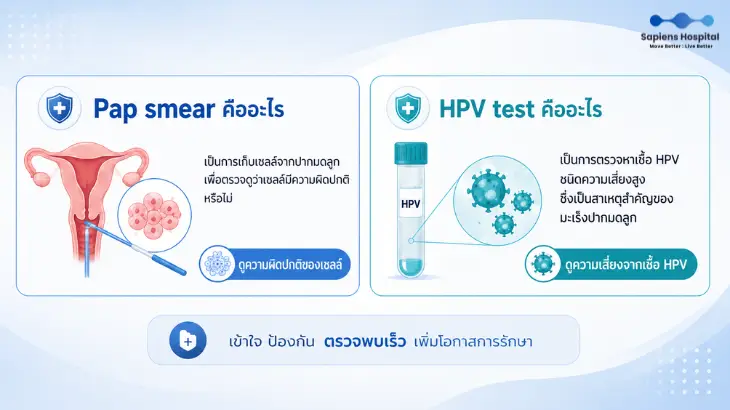
What is a Pap smear?
A “Pap smear”, also known as a “Pap test”, examines cells collected from the cervix. A doctor or healthcare professional collects a sample of cervical cells and sends it to a laboratory to determine whether abnormal cellular changes are present.
Simply put, a Pap smear looks at the “appearance of cervical cells” to determine whether they have begun to change abnormally or show features associated with precancerous lesions.
One advantage of the Pap smear is that it has been used for many years and has played an important role in reducing cervical cancer incidence and mortality in many countries. It remains an important screening option, particularly in age groups and healthcare systems where cervical cytology or Pap testing is recommended.
Screening recommendations vary among organizations and may be updated over time. The appropriate screening method and interval should therefore be selected according to age, individual risk, previous test results, and current national or professional guidelines.
What is an HPV test?
An “HPV test” detects high-risk types of Human Papillomavirus, the virus responsible for most cases of cervical cancer.
The important difference is that an HPV test does not directly look for abnormal cervical cells. Instead, it determines whether “high-risk HPV is present”. Persistent infection with these HPV types can cause cervical cells to change over time.
A positive high-risk HPV result does not mean that a person has cervical cancer, nor does it mean that cancer will definitely develop. Many HPV infections clear naturally through the immune system, particularly in younger people. However, persistent high-risk HPV infection, especially when accompanied by abnormal cervical cells, may require closer follow-up or additional testing.
Current cervical cancer screening recommendations increasingly emphasize HPV-based screening for appropriate age groups. The exact age to begin screening, the preferred test, and the screening interval may differ among professional organizations and countries.
What is the difference between a Pap smear and an HPV test?
An easy way to understand the difference is that a Pap smear asks, “Have the cervical cells already started to change?” An HPV test asks, “Is a high-risk virus that could cause these cells to change present?”
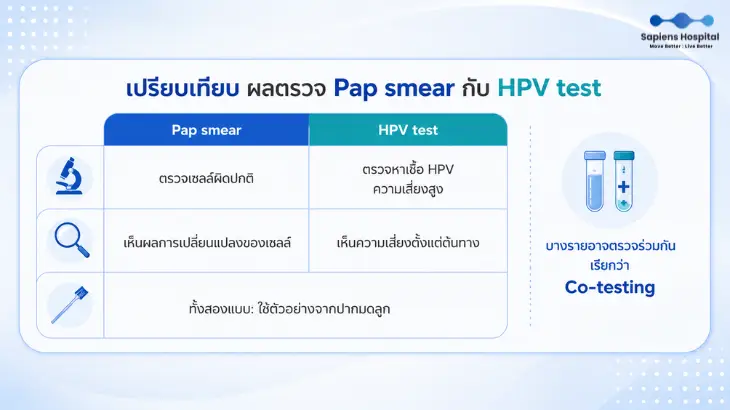
A Pap smear therefore examines cellular changes that have already occurred, while an HPV test detects an important underlying risk factor for those changes.
Depending on age and individual circumstances, a doctor may recommend a Pap smear alone, an HPV test alone, or both tests together. Performing both tests at the same time is known as “co-testing.” The choice depends on age, previous screening results, individual risk factors, national guidelines, and the healthcare system.
Both Pap testing and HPV testing generally use samples collected from the cervix, but they look for different things: one evaluates cellular abnormalities, while the other detects high-risk HPV infection.
What is co-testing?
“Co-testing” means performing a “Pap smear together with an HPV test” during the same screening visit. Cervical samples are evaluated for both abnormal cells and high-risk HPV.
One advantage of co-testing is that it provides information about both cervical cell changes and HPV status. When both results are negative in an appropriately screened person, the short-term risk of significant cervical precancer is generally low, allowing screening intervals to follow the applicable guideline.
However, more testing does not necessarily mean better screening. Screening more frequently than recommended can lead to positive results that do not represent serious disease, unnecessary additional procedures, anxiety, and potential overtreatment. The screening method and interval should therefore follow appropriate guidelines and medical advice.
Screening options and intervals vary according to age, the test used, individual risk factors, and the guideline being followed. Your doctor can recommend an appropriate screening schedule for your situation.
When should cervical cancer screening begin?
Recommendations for when to begin cervical cancer screening differ somewhat among professional organizations and countries. A common principle is to avoid unnecessary screening at ages when transient HPV infections are very common while ensuring regular screening during the age range in which screening provides clear benefit.
Because screening recommendations continue to evolve, patients should follow current guidance applicable in their country and healthcare system, together with recommendations from their healthcare professional.
For patient education, an important message is that people who are within the recommended screening age range should not postpone screening for long periods, particularly if they have never been screened, have been screened irregularly, or have had abnormal results in the past.
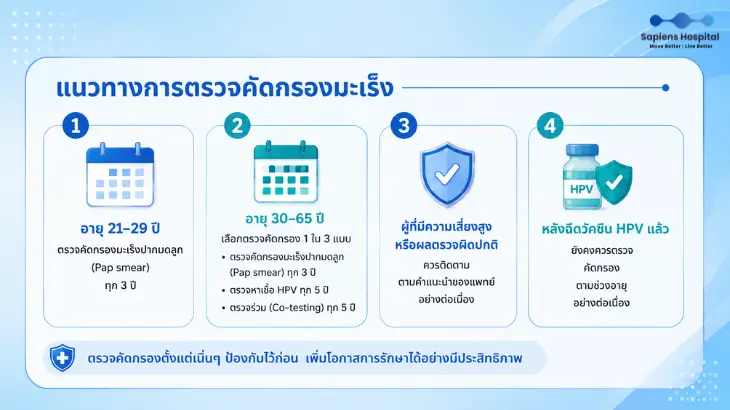
How often should you be screened?
The appropriate interval depends on age, the screening method, previous results, and individual risk.
Pap testing alone is performed at defined intervals in eligible age groups, while HPV-based screening may allow longer intervals after a negative result. Co-testing also has its own recommended interval. The exact schedule should follow the current guideline applicable to the patient.
However, people with previous abnormal screening results, a history of treatment for cervical precancer, weakened immunity, HIV infection, immunosuppressive treatment, or certain medical conditions may require more frequent screening and individualized follow-up.
Does an HPV-positive result mean cancer?
The answer is no. An HPV-positive result means that high-risk HPV has been detected. It does not mean that cervical cancer is already present, nor does it mean that every person with high-risk HPV will eventually develop cancer.
The next step depends on factors such as the HPV type detected, the Pap smear result, age, previous abnormal results, and other risk factors. Some people may simply need repeat testing, while others may need additional evaluation such as colposcopy.
The key concept is that an HPV test helps assess risk; it is not a diagnosis of cancer. Detecting high-risk HPV gives healthcare professionals an opportunity to monitor and manage risk before serious disease develops.
What happens if a Pap smear is abnormal?
An abnormal Pap smear does not automatically mean cancer. Cervical cell abnormalities range from minor changes that may resolve spontaneously to precancerous lesions that require additional evaluation or treatment. The doctor will consider the degree of abnormality, HPV results, age, and previous history.
Some people may be advised to repeat testing after a specified interval, while others may need HPV testing or colposcopy to examine the cervix more closely and, if necessary, obtain a biopsy from a suspicious area. The important thing is not to miss follow-up appointments, because many precancerous cervical abnormalities can be monitored or treated effectively when managed appropriately.
Are Pap smears and HPV tests painful?
The procedure usually takes only a short time. A doctor inserts a speculum into the vagina to visualize the cervix and then collects cervical cells or a sample for HPV testing.
You may feel pressure, tightness, or mild discomfort, but the procedure generally should not cause severe pain. If you experience significant pain, have had a difficult previous examination, are anxious about pelvic examinations, or have vaginismus, tell your doctor beforehand so the healthcare team can adjust communication, positioning, equipment, and the pace of the examination.
In some healthcare systems, “self-collected HPV samples” are available for appropriately selected patients. The availability and recommended use of self-collection depend on the screening program, approved testing methods, quality-control systems, and follow-up arrangements.
How should you prepare before screening?
When possible, schedule routine cervical screening for a time when you are not experiencing heavy menstrual bleeding, as blood may affect sample quality. However, if you have abnormal vaginal bleeding, inform your doctor because the bleeding itself may require evaluation rather than simply waiting for a routine screening appointment.
Before testing, avoid vaginal douching and unnecessary use of vaginal medications or products. Tell your doctor if you are pregnant or may be pregnant, have previously had abnormal screening results or cervical treatment, or have symptoms such as bleeding after sex, abnormal or foul-smelling vaginal discharge, or lower abdominal pain.
A routine pelvic examination alone does not replace cervical cancer screening. Pap smears and HPV tests involve specific laboratory analysis of collected samples and cannot be replaced simply by visual or manual examination.
Who particularly needs regular screening?
People who have never been screened, have been screened irregularly, or have previously had abnormal results should prioritize returning to an appropriate screening program. Many cervical cancers are diagnosed in people who have never been screened or have not received regular follow-up.
People with weakened immune systems, including those living with HIV, receiving immunosuppressive medications, or who have undergone organ transplantation, may require a different screening schedule. Those previously treated for cervical precancer also require follow-up according to their doctor’s plan rather than automatically returning to the routine screening schedule.
General cervical cancer screening recommendations usually apply to people at average risk. Those at higher risk require individualized assessment and follow-up.
If you have received the HPV vaccine, do you still need cervical cancer screening?
- Yes. You should still undergo screening according to the recommended age and guideline. HPV vaccination substantially reduces the risk of infection with important HPV types and lowers the risk of cervical precancer. However, vaccines do not eliminate the risk from every cancer-associated HPV type, and some people may have been exposed to HPV before vaccination. Therefore, vaccinated individuals should still follow recommended cervical cancer screening schedules.
- What symptoms should not wait until your next screening appointment? Pap smears and HPV tests are primarily screening tests for people without symptoms. If you develop abnormal symptoms, you should not wait until your next routine screening appointment.
Symptoms that should be evaluated include bleeding after sex, bleeding between periods, bleeding after menopause, foul-smelling or unusual vaginal discharge, persistent lower abdominal or pelvic pain, pain during sex, or a visible lesion, mass, or abnormality involving the cervix or vagina.
These symptoms do not necessarily mean cancer. They can also be caused by cervicitis, polyps, infection, cervical abnormalities, or other conditions that require medical evaluation.
Should you choose a Pap smear or an HPV test?
There is no single answer that is right for everyone. The appropriate screening test depends on age, previous screening results, individual risk factors, current guidelines, and the availability of validated tests within the healthcare system.
For most patients, the most important thing is not to delay screening because of uncertainty about which test to choose. A doctor can assess your age, medical history, previous results, and risk factors and recommend an appropriate screening plan. The best screening strategy is not necessarily the most expensive or the one involving the most tests; it is the strategy that uses the right test at the right time, interprets the result correctly, and ensures appropriate follow-up when an abnormality is detected.
Frequently Asked Questions
- What is the difference between a Pap smear and an HPV test? A Pap smear checks whether cervical cells are abnormal, while an HPV test detects high-risk HPV types associated with cervical cancer. Both may use samples collected from the cervix, but they answer different clinical questions.
- Does HPV positive mean cancer? No.
An HPV-positive result means that high-risk HPV has been detected. It does not mean that cancer is already present. Your doctor will consider your age, HPV type, Pap smear result, and previous history to determine whether follow-up or additional testing is needed. - Does an abnormal Pap smear mean cancer?
Not necessarily. Pap abnormalities occur at different levels. Some may resolve spontaneously, some require follow-up, and others require colposcopy or biopsy for further evaluation. - Do I need cervical cancer screening every year?
Most people with normal screening results do not need annual cervical cancer screening. The interval depends on age, the type of test used, previous results, and individual risk. People with abnormal results or higher risk may need more frequent follow-up. - If I have had a pelvic examination, do I still need a Pap smear or HPV test?
Yes, when cervical cancer screening is indicated. A pelvic examination is a physical examination, while Pap smears and HPV tests involve laboratory testing of collected samples. A pelvic examination alone does not replace cervical cancer screening. - If I have received the HPV vaccine, do I still need screening?
Yes. HPV vaccination substantially reduces risk but does not replace recommended cervical cancer screening. - If I bleed after sex, should I wait until my next Pap smear?
No. You should see a doctor to determine the cause. Bleeding after sex can be caused by cervicitis, polyps, infection, cervical abnormalities, or other conditions that require direct evaluation.
Pap smears and HPV tests are important cervical cancer screening tools, but they answer different questions. A Pap smear detects abnormal cervical cells, while an HPV test detects high-risk HPV associated with the development of cervical cancer.
Depending on age and individual circumstances, cervical cancer screening may involve a Pap smear, HPV testing, or co-testing. The appropriate method should be selected according to age, previous screening results, individual risk factors, and current medical guidance.
Most importantly, screening should be performed at appropriate intervals and abnormal results should receive proper follow-up. Precancerous cervical lesions can often be managed effectively when detected early. Appropriate cervical cancer screening is therefore an important part of preventive healthcare.
For information and appointments
Sapiens Hospital Move Better : Live Better
Tel. 02-111-3703
Scientific References
1. U.S. Preventive Services Task Force. Cervical Cancer: Screening.2018 Recommendation Statement.
2. American Cancer Society. Cervical Cancer Screening Guidelines. Updated guidance.
3. American College of Obstetricians and Gynecologists. Cervical Cancer Screening. Patient FAQ.
4. American College of Obstetricians and Gynecologists. Human Papillomavirus HPV: Infection and Vaccination. Patient FAQ.
5. World Health Organization. New recommendations for screening and treatment to prevent cervical cancer. 2021.
6. American College of Obstetricians and Gynecologists. Updated Cervical Cancer Screening Guidance. 2026.