

Dangerous Abdominal Pain: Causes, Symptoms, and When to See a Doctor
Abdominal pain is a symptom that almost everyone experiences at some point. Sometimes, it is caused by indigestion, bloating, or something you have eaten and may improve on its own within a short period.
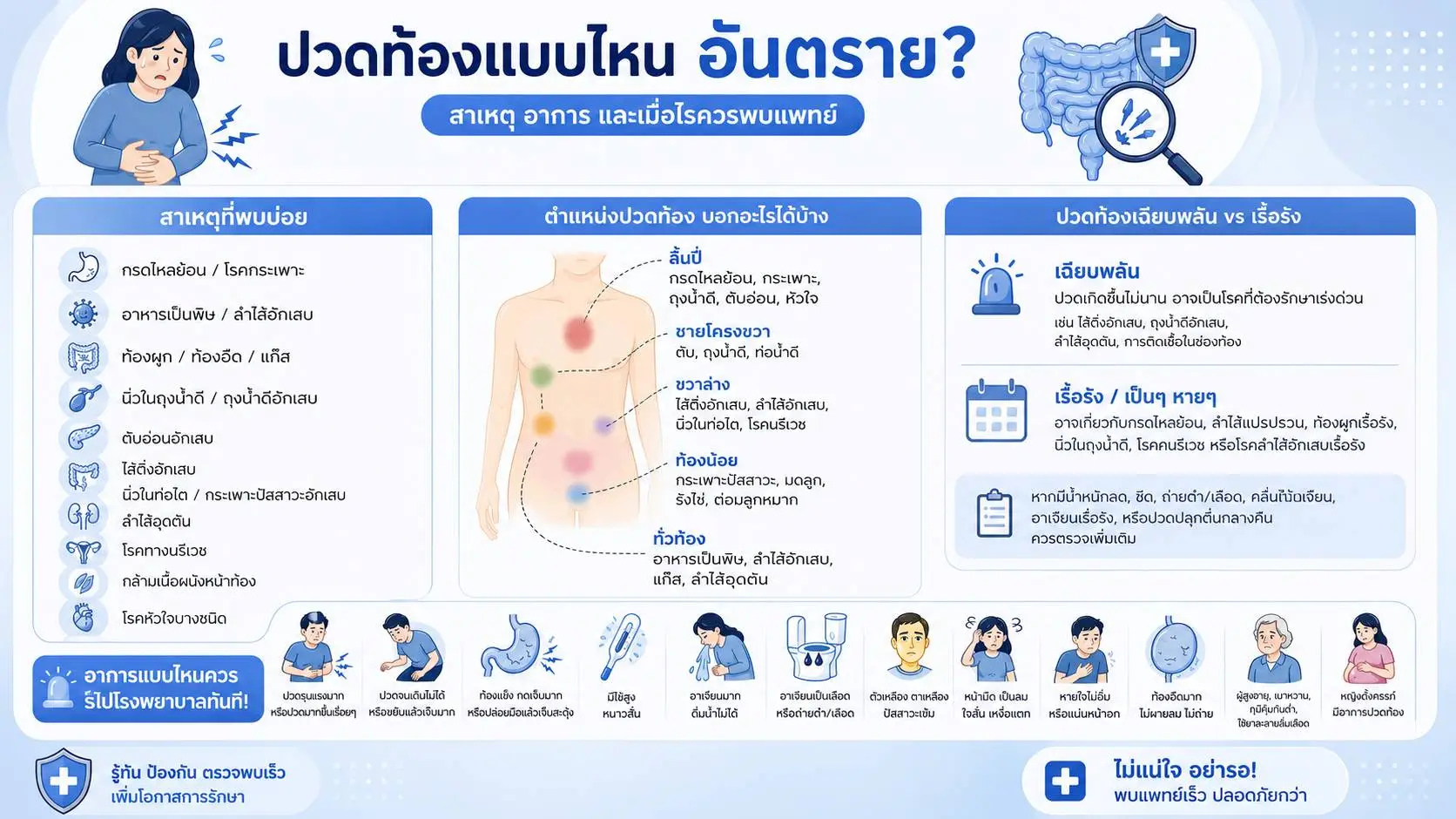
However, abdominal pain can sometimes be a sign of a condition that requires prompt medical evaluation and treatment, such as appendicitis, cholecystitis, pancreatitis, intestinal obstruction, ureteral stones, intra-abdominal infection, or certain gynecological conditions in women.
What makes abdominal pain complex is that “pain in the same location” can result from many different conditions, while “the same disease” can cause pain in different areas. Some people may have upper abdominal pain from acid reflux, while others may experience similar pain from gallbladder disease, pancreatic disease, or even heart disease. Right lower abdominal pain may result from intestinal inflammation, appendicitis, or, in women, conditions involving the ovaries or fallopian tubes.
Therefore, proper management of abdominal pain should not involve simply assuming that it is “probably gastritis” and repeatedly buying medication to treat it yourself. It is important to observe the location and nature of the pain, associated symptoms, severity, and duration. Some types of abdominal pain can be monitored, while others should not be ignored.
What Can Cause Abdominal Pain?
Abdominal pain can originate from many different organ systems and is not limited to the stomach or intestines. In clinical practice, doctors evaluate the gastrointestinal and urinary systems, liver, gallbladder, pancreas, reproductive organs, abdominal wall muscles, and even certain conditions outside the abdomen. American Family Physician notes that acute abdominal pain in adults has a wide range of causes. Common causes include gastroenteritis, nonspecific abdominal pain, gallstones, urinary stones, diverticulitis, and appendicitis.
Common causes include:
- Acid reflux, gastritis, or peptic ulcer disease
- Food poisoning or gastroenteritis
- Constipation, bloating, or intestinal gas
- Gallstones or cholecystitis
- Pancreatitis
- Appendicitis
- Ureteral stones or bladder infection
- Intestinal obstruction
- Inflammatory bowel disease
- Gynecological conditions such as a ruptured ovarian cyst, ovarian torsion, pelvic inflammatory disease, or ectopic pregnancy
- Pain originating from the abdominal wall muscles
- Certain heart conditions that may present as upper abdominal pain or abdominal discomfort
Abdominal pain must therefore always be evaluated in context rather than based on the location of pain alone.
What Can the Location of Abdominal Pain Tell You?
The location of pain can help doctors narrow down possible causes, but it does not provide a definitive diagnosis.
1. Upper Central Abdominal Pain (Epigastric Pain)
Epigastric pain may be caused by acid reflux, gastritis, peptic ulcers, gallstones, pancreatitis, or, in some cases, heart disease. This is particularly important when the pain is accompanied by chest pressure, sweating, shortness of breath, or pain radiating to the arm, neck, jaw, or back. If epigastric pain occurs after eating fatty foods and is accompanied by nausea or pain radiating to the back or right shoulder blade, gallbladder disease may need to be considered. Severe epigastric pain radiating to the back with significant vomiting may suggest pancreatitis. A burning sensation behind the breastbone, acid regurgitation, and symptoms that worsen when lying down may be consistent with acid reflux.
2. Right Upper Abdominal Pain
Right upper abdominal pain may involve the liver, gallbladder, bile ducts, or muscles around the rib cage. If it is accompanied by fever, nausea, yellowing of the skin or eyes, or dark urine, seek medical attention promptly because bile duct obstruction or an infection of the biliary system may be present.
3. Right Lower Abdominal Pain
This location often raises concern about appendicitis, which is an important condition that must be ruled out. It is particularly concerning when pain begins around the navel and later moves to the right lower abdomen, or when there is fever, loss of appetite, nausea, or worsening pain with walking, coughing, or movement. However, right lower abdominal pain can also result from intestinal inflammation, ureteral stones, right-sided diverticulitis, or gynecological conditions in women. The ACR notes that important causes of right lower quadrant pain in adults, in addition to appendicitis, include right-sided diverticulitis, ureteral stones, and infectious enterocolitis.
4. Left Lower Abdominal Pain
Possible causes include constipation, intestinal inflammation, diverticulitis, urinary tract conditions, or gynecological disorders in women. If there is fever, a change in bowel habits, progressively worsening pain, or blood in the stool, medical evaluation is recommended.
5. Lower Abdominal or Pelvic Pain
Lower abdominal pain may involve the intestines, bladder, uterus, ovaries, prostate, or pelvic floor muscles. In women, lower abdominal pain accompanied by a missed period, abnormal vaginal bleeding, abnormal vaginal discharge, or severe one-sided pain should be appropriately evaluated for gynecological causes.
6. Generalized Abdominal Pain
Generalized abdominal pain may result from food poisoning, gastroenteritis, intestinal gas, or constipation. However, if the pain is severe and accompanied by a rigid abdomen, fever, repeated vomiting, or faintness, seek hospital care promptly because a serious intra-abdominal condition may be present.
What Is the Difference Between Acute and Chronic Abdominal Pain?
“Acute abdominal pain” usually refers to new-onset pain occurring over a relatively short period. It may result from conditions requiring urgent treatment, such as appendicitis, cholecystitis, intestinal obstruction, or intra-abdominal infection. The Merck Manual notes that acute and severe abdominal pain often reflects an intra-abdominal disorder and can sometimes be the only sign of a condition requiring surgery.
“Chronic or recurrent abdominal pain” may be associated with acid reflux, gastritis, irritable bowel syndrome, chronic constipation, gallstones, gynecological disorders, or inflammatory bowel disease. Evaluation considers the pattern of symptoms, including whether the pain is related to meals, bowel movements, menstruation, stress, weight loss, or abnormal bleeding. Chronic abdominal pain is not necessarily harmless. Additional evaluation may be needed if it is accompanied by weight loss, anemia, black or bloody stools, difficulty swallowing, persistent vomiting, or pain that wakes you from sleep.
When Should Abdominal Pain Be Evaluated Urgently?
Go to the hospital immediately if you have any of the following symptoms:
- Very severe abdominal pain or pain that is progressively worsening
- Pain severe enough to make walking difficult, cause you to bend over, or become much worse with movement
- A rigid abdomen, severe tenderness, or rebound tenderness
- High fever or chills
- Repeated vomiting or inability to keep fluids down
- Vomiting blood, black stools, or passing a large amount of blood in the stool
- Yellow skin or eyes or dark urine
- Dizziness, fainting, palpitations, or excessive sweating
- Shortness of breath or chest tightness
- Severe abdominal distension with inability to pass gas or stool
- Abdominal pain following an accident or injury
- New or concerning abdominal pain in older adults, people with diabetes, people with weakened immune systems, or those taking anticoagulant medication
- Lower abdominal pain in a woman of reproductive age accompanied by a missed period or abnormal bleeding
NICE identifies red flags in patients with acute abdominal pain, including recent trauma or surgery, an incarcerated hernia, signs of peritonitis, or features suggesting severe illness, all of which warrant urgent assessment. Do not rely on self-medication in a way that delays medical evaluation.
Many people initially respond to abdominal pain by taking painkillers, antacids, antibiotics, or antidiarrheal medication themselves. However, using medication without knowing the underlying cause can lead to adverse effects or delay appropriate diagnosis and treatment. For example:
- Certain painkillers can irritate the stomach or increase the risk of gastrointestinal bleeding
- Antidiarrheal medication may be inappropriate in some cases involving severe infection, high fever, or bloody diarrhea
- Self-prescribed antibiotics may not target the actual cause, can contribute to antimicrobial resistance, and may delay appropriate treatment
- Laxatives may be inappropriate or potentially harmful if intestinal obstruction or another acute abdominal condition is suspected
- Very hot compresses should be avoided, particularly when the cause of severe abdominal pain is unclear
If the pain is mild, there are no warning signs, and symptoms appear related to food or bloating, short-term supportive care may be reasonable.
However, if symptoms do not improve, become worse, or warning signs develop, seek medical attention.
What Tests Might a Doctor Perform for Abdominal Pain?
The tests required depend on the symptoms and individual risk factors. Not everyone needs the same investigations.
1. Detailed Medical History
The doctor will ask when the pain began, where it is located, whether it feels cramping, burning, pressure-like, or dull, whether it radiates elsewhere, and whether it is associated with eating, bowel movements, urination, or menstruation. The doctor may also ask about fever, nausea, vomiting, diarrhea, constipation, or abnormal bleeding.
2. Physical Examination
An abdominal examination helps assess tenderness, abdominal rigidity, signs of peritoneal irritation, abdominal masses, hernias, and other findings. The Merck Manual notes that evaluation should include vital signs such as fever and heart rate, as well as examination for jaundice, rash, swelling, and abdominal findings such as tenderness, guarding, rigidity, or rebound tenderness.
3. Blood Tests
Depending on the symptoms, tests may include a complete blood count, inflammatory markers, liver and kidney function, electrolytes, blood glucose, pancreatic enzymes, or tests for infection.
4. Urine Tests
Urinalysis can help evaluate urinary tract infections, ureteral stones, or blood in the urine. Women of reproductive age may also require a pregnancy test.
5. Abdominal Ultrasound
Ultrasound is useful for evaluating the gallbladder, liver, bile ducts, kidneys, urinary tract, and certain gynecological organs. It does not use ionizing radiation and is commonly used in pregnancy and in selected patient groups.
6. Abdominal CT Scan
CT has an important role in acute abdominal pain when the diagnosis is unclear or when appendicitis, diverticulitis, intestinal obstruction, intra-abdominal complications, or conditions requiring detailed visualization of multiple organs are suspected. The ACR notes that medical imaging plays an important role in adults with nonlocalized abdominal pain because causes can arise from many organ systems and may not be apparent from the location of pain alone.
7. Other Specialized Tests
Some patients may require upper gastrointestinal endoscopy, colonoscopy, pelvic examination, cardiac evaluation, or referral to an appropriate specialist depending on the suspected cause.
Abdominal Pain in Women: Gynecological Causes Must Also Be Considered
In women, lower abdominal or one-sided abdominal pain does not always originate from the stomach or intestines. It may involve the uterus, ovaries, fallopian tubes, or pregnancy-related conditions. Important causes include:
- Ruptured ovarian cyst
- Ovarian torsion
- Pelvic inflammatory disease
- Endometriosis
- Abnormally severe menstrual pain
- Certain uterine fibroids or other uterine masses
- Ectopic pregnancy
If lower abdominal pain occurs with a missed period, abnormal bleeding, dizziness or faintness, severe one-sided pain, or possible pregnancy, seek medical attention promptly.
Abdominal Pain in Older Adults Requires Extra Caution
Some older adults may have less obvious symptoms, such as little or no fever, relatively mild pain, or pain that does not correspond clearly to the affected organ. Nevertheless, serious conditions such as intestinal obstruction, intestinal ischemia, diverticulitis, cholecystitis, or abnormalities of the major abdominal blood vessels may still be present.
Therefore, new abdominal pain in an older adult should not be observed for too long, particularly when accompanied by reduced alertness, loss of appetite, vomiting, abdominal distension, fever, dizziness, or low blood pressure.
What Types of Abdominal Pain Can Be Managed Initially at Home?
If the pain is mild, there is no fever, repeated vomiting, black or bloody stool, severe localized tenderness, and the person can still eat and drink, short-term supportive care may include:
- Eat soft, easily digestible foods
- Drink adequate fluids
- Avoid fatty or spicy foods, alcohol, coffee, or foods that trigger symptoms
- Rest
- Monitor the location and severity of the pain
- If diarrhea is present, sip an appropriate oral rehydration solution
- If symptoms do not improve within 24–48 hours, or warning signs develop, see a doctor
However, if the pain progressively becomes more severe or any red flags develop, go to the hospital promptly rather than waiting for the pain to become severe.
Frequently Asked Questions
1. What Types of Abdominal Pain Are Dangerous?
Potentially dangerous abdominal pain is often accompanied by warning signs such as progressively severe pain, a rigid abdomen, high fever, repeated vomiting, black or bloody stools, jaundice, dizziness, fainting, shortness of breath, or pain following an injury. If these symptoms occur, seek hospital care promptly.
2. Does Right Lower Abdominal Pain Always Mean Appendicitis?
No. However, appendicitis is an important condition that needs to be ruled out, particularly when the pain is worsening or accompanied by fever, loss of appetite, nausea, or pain with walking, coughing, or movement. Blood tests, ultrasound, or CT may be considered depending on the doctor’s assessment.
3. Is Epigastric Pain Always Gastritis?
No. Epigastric pain may be caused by acid reflux, peptic ulcers, gallstones, pancreatitis, or certain heart conditions. If it is accompanied by chest pressure, sweating, shortness of breath, or pain radiating to the arm, neck, jaw, or back, seek medical attention promptly.
4. Should I Take Antidiarrheal Medication When Abdominal Pain Is Accompanied by Diarrhea?
Antidiarrheal medication should not automatically be taken in every case, particularly when there is high fever, bloody diarrhea, severe abdominal pain, or suspected severe infection. Initial care should focus on appropriate oral rehydration and preventing dehydration, with medical evaluation when warning signs are present.
5. Does Chronic Abdominal Pain Always Require Endoscopy?
No. The doctor will consider factors such as age, symptoms, location of pain, weight loss, anemia, black or bloody stools, persistent vomiting, and family history. If warning signs are present, endoscopy or additional investigations may be required.
6. Does Everyone with Abdominal Pain Need a CT Scan?
No. The choice of investigation depends on the symptoms and suspected condition. For some patients, blood tests and ultrasound may be sufficient. Others may require a CT scan when symptoms are unclear or when a condition requiring more detailed abdominal imaging is suspected.
7. Can I Buy Medication and Treat Abdominal Pain Myself?
If symptoms are mild and there are no warning signs, short-term supportive care may be reasonable. However, you should not self-medicate with antibiotics, laxatives, antidiarrheal medication, or strong painkillers without knowing the cause. If symptoms do not improve or become worse, seek medical attention.
Abdominal pain is common, but it should not always be dismissed as something minor. Causes range from relatively mild conditions such as bloating, indigestion, or acid reflux to emergencies requiring prompt treatment, including appendicitis, cholecystitis, pancreatitis, intestinal obstruction, and certain gynecological conditions.
Paying attention to the location and nature of the pain, associated symptoms, and duration can help assess risk, but these observations should not replace medical evaluation. This is particularly important when abdominal pain is accompanied by fever, repeated vomiting, a rigid abdomen, black or bloody stools, jaundice, dizziness, or progressively worsening pain. Some abdominal pain may resolve on its own, while other abdominal pain is the body’s warning that prompt evaluation is needed. Seeking medical care at the appropriate time can support earlier diagnosis and treatment and reduce the risk of complications.
For Information and Appointments
Sapiens Hospital Move Better : Live Better
Tel. 02-111-3703
References
1. Yew KS, George MK, Allred HB. Acute Abdominal Pain in Adults: Evaluation and Diagnosis. American Family Physician. 2023;107(6):585–596.
2. National Institute for Health and Care Excellence. Abdominal pain – acute: Red flags. NICE Clinical Knowledge Summary.
3. Scheirey CD, Fowler KJ, Therrien JA, et al. ACR Appropriateness Criteria® Acute Nonlocalized Abdominal Pain. Journal of the American College of Radiology. 2018.
4. Kambadakone AR, et al. ACR Appropriateness Criteria® Right Lower Quadrant Pain. Journal of the American College of Radiology. 2022.
5. Merck Manual Professional Edition. Acute Abdominal Pain.
6. Merck Manual Professional Edition. Chronic Abdominal Pain and Recurrent Abdominal Pain.