
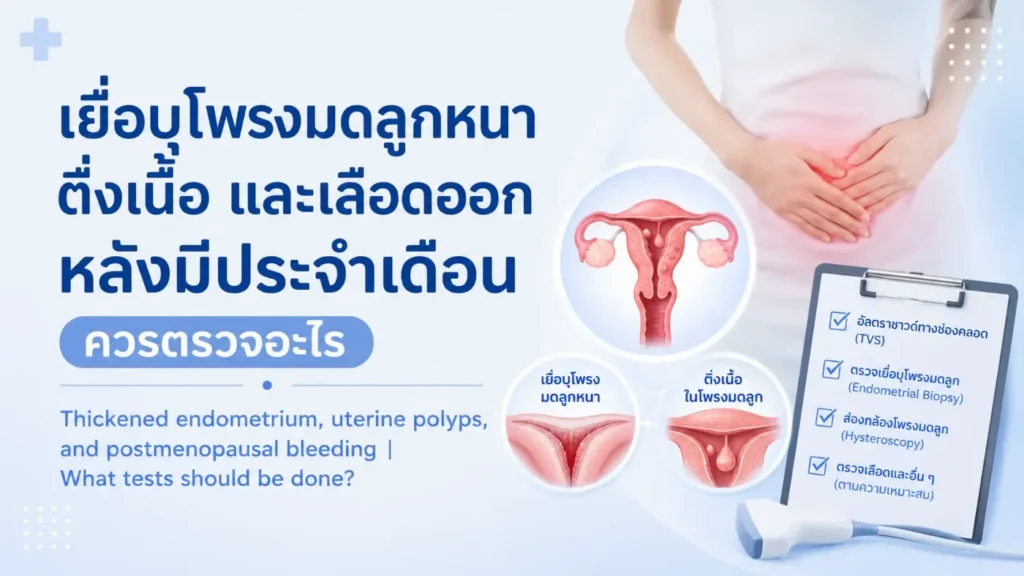
Thickened Endometrium, Endometrial Polyps, and Bleeding After Menstruation | What Tests Should You Have?
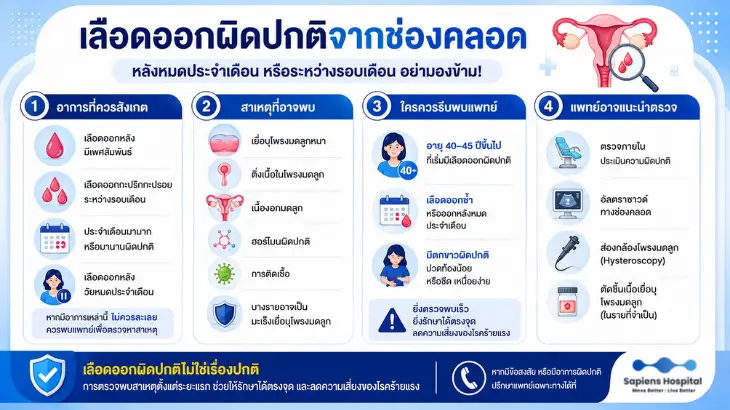
- Vaginal bleeding a few days after your menstrual period has ended
- Spotting or bleeding between periods
- Menstrual periods lasting longer than usual
- Bleeding after sexual intercourse
- Or bleeding again after menopause
These symptoms are experienced by many women. Sometimes they may result from temporary hormonal fluctuations, but in other cases they can be signs of abnormalities inside the uterus, such as “thickened endometrium”, “endometrial polyps”, “fibroids protruding into the uterine cavity”, infection, or endometrial abnormalities that require further evaluation.
In medicine, abnormal bleeding from the uterus, known as “abnormal uterine bleeding”, should not automatically be attributed to “hormonal imbalance”, especially when bleeding recurs, lasts longer, becomes heavier, occurs at age 40 or older, or develops after menopause. The FIGO PALM-COEIN system systematically classifies the causes of abnormal uterine bleeding. PALM refers to structural causes, including polyp, adenomyosis, leiomyoma, and malignancy/hyperplasia, while COEIN refers to non-structural causes such as coagulation disorders, ovulatory dysfunction, endometrial disorders, medication-related causes, and other conditions.
This article explains what a thickened endometrium is, what endometrial polyps are, which patterns of bleeding should prompt medical attention, and what tests doctors commonly use to determine the cause.
What is the endometrium?
The “endometrium” is the inner lining of the uterus that changes in response to hormones throughout each menstrual cycle. During the early part of the cycle, the endometrium gradually thickens in preparation for implantation of an embryo. If pregnancy does not occur, this lining sheds during menstruation. The body then develops a new endometrial lining during the next menstrual cycle.
Therefore, in women who are still menstruating, “endometrial thickness” varies according to the phase of the menstrual cycle. Whether the endometrium is considered thick must therefore be interpreted together with age, the timing within the menstrual cycle, bleeding symptoms, and individual risk factors. In postmenopausal women, however, the endometrium generally becomes thinner as estrogen levels decline. If bleeding occurs after menopause or the endometrium appears abnormally thickened, further evaluation may be needed to rule out endometrial hyperplasia or endometrial cancer.
What is a thickened endometrium?
“Thickened endometrium” refers to an endometrial lining that is thicker than expected when considered in relation to the patient’s age, menstrual-cycle phase, and menopausal status.
Possible causes include:
- Excessive stimulation of the endometrium by estrogen
- Irregular ovulation resulting in insufficient progesterone to regulate the endometrium
- Polycystic ovary syndrome (PCOS)
- Being overweight or having abdominal obesity
- Diabetes
- Use of certain hormonal medications
- Endometrial polyps
- Endometrial hyperplasia
- Endometrial cancer in some patients
ACOG defines abnormal uterine bleeding as bleeding from the uterus that differs from a normal menstrual pattern in duration, regularity, frequency, or amount. Evaluation should take into account the patient’s age, symptoms, and individual risk factors.
What is an endometrial polyp?
An “endometrial polyp” is a small growth arising from the lining of the uterus. It may be very small and cause no symptoms, or it may become large enough to cause abnormal bleeding.
Possible symptoms of endometrial polyps include:
- Spotting or bleeding between menstrual periods
- Heavy or prolonged menstrual bleeding
- Bleeding after sexual intercourse
- Bleeding after menopause
- Infertility in some patients
- An incidental finding on ultrasound without symptoms
AAGL guidelines on endometrial polyps identify them as a recognized cause of abnormal bleeding. Evaluation should take into account the patient’s age, symptoms, risk of malignancy, and fertility goals.
Most endometrial polyps are benign, but they should not automatically be assumed to be harmless, particularly in postmenopausal women, patients with recurrent abnormal bleeding, or those with risk factors for endometrial abnormalities.
What can cause bleeding after a menstrual period?
The term “bleeding after a period” can describe several situations, such as spotting after menstruation appears to have ended, bleeding between periods, or bleeding that occurs months or years after menopause. Each situation has a different medical significance.
Possible causes include:
- Hormonal fluctuations may occur in adolescents, women approaching menopause, people experiencing significant stress, rapid weight changes, intensive exercise, or irregular ovulation.
- Endometrial polyps commonly cause spotting between periods, bleeding after menstruation, or bleeding after sexual intercourse.
- Thickened endometrium may cause irregular, heavy, prolonged, or intermittent bleeding, particularly in people with risk factors such as obesity, diabetes, PCOS, or age 45 years or older.
- Fibroids protruding into the uterine cavity — certain fibroids, particularly submucosal myomas, can cause heavy menstruation or abnormal bleeding.
- Cervicitis, infection, or sexually transmitted infections may cause bleeding after sexual intercourse, abnormal vaginal discharge, lower abdominal pain, irritation, or itching.
- Pregnancy or pregnancy-related complications — in women of reproductive age with abnormal bleeding, pregnancy testing is often considered because early pregnancy, miscarriage, or ectopic pregnancy may cause bleeding.
- Endometrial cancer or cervical cancer is less common than many other causes but must be excluded, particularly when bleeding occurs after menopause or repeatedly without a clear cause.
Why is bleeding after menopause important?
If a woman has had no menstrual periods for 12 months or longer and then develops bleeding again, regardless of the amount, she should seek medical evaluation. “Postmenopausal bleeding” is an important symptom that requires evaluation of the endometrium.
ACOG guidance from 2018 stated that transvaginal ultrasound could be used for initial evaluation of postmenopausal bleeding. An endometrial thickness of 4 mm or less had a high negative predictive value for endometrial cancer. However, recurrent bleeding or the presence of significant risk factors requires further evaluation.
However, ACOG published updated guidance in 2026 stating that for most patients with postmenopausal bleeding, both transvaginal ultrasound and endometrial tissue sampling should be considered as part of the initial evaluation to reduce the risk of missing endometrial abnormalities. Ultrasound alone may still be appropriate in carefully selected patients.
NICE also recommends referral through a suspected cancer pathway for women aged 55 years or older with unexplained postmenopausal bleeding to help ensure timely evaluation for possible endometrial cancer.
Who is at increased risk of abnormal endometrial thickening?
Factors that expose the endometrium to increased estrogen or insufficient progesterone regulation may increase the risk of abnormal endometrial thickening, including:
- Age 45 years or older with abnormal bleeding
- Being overweight or having abdominal obesity
- Diabetes
- High blood pressure
- PCOS or prolonged irregular or absent menstrual periods
- Never having been pregnant
- Using estrogen without progesterone
- Using tamoxifen
- A family history or certain hereditary conditions, such as Lynch syndrome
- Recurrent abnormal bleeding or bleeding that does not improve after initial treatment
These risk factors do not mean that a patient has cancer, but they help doctors determine whether evaluation of the endometrium is appropriate. You should see a gynecologist if you experience any of the following symptoms:
- Bleeding several days after your menstrual period has ended
- Spotting or bleeding between periods
- Bleeding after sexual intercourse
- Menstrual bleeding that is heavier or lasts longer than usual
- Passing large or frequent blood clots
- Chronic lower abdominal or pelvic pain
- Abnormal or foul-smelling vaginal discharge or fever
- Any bleeding after menopause
- Being older than 40–45 years and developing a new abnormal bleeding pattern
- Symptoms of anemia such as fatigue, dizziness, or palpitations
- Risk factors such as diabetes, obesity, PCOS, or use of certain hormones
If bleeding is so heavy that you need to change a sanitary pad every hour, or you experience severe dizziness, fainting, palpitations, significant pallor, or possible pregnancy accompanied by abdominal pain, seek hospital care immediately.
What tests might your doctor perform?
The appropriate tests depend on age, symptoms, menopausal status, risk factors, and physical examination findings.
1. Menstrual and bleeding history
Your doctor will ask when the bleeding occurs, how heavy it is, how many days it lasts, whether there are blood clots, whether it is related to your menstrual cycle or sexual intercourse, and whether you have pain, abnormal discharge, or symptoms of anemia.
2. Pelvic examination
This helps identify whether bleeding originates from the vagina, cervix, or uterus and can help detect masses, tenderness, infection, or other pelvic abnormalities.
3. Pregnancy test
Women of reproductive age with abnormal bleeding may need a pregnancy test because early pregnancy, miscarriage, and ectopic pregnancy can cause symptoms similar to abnormal uterine bleeding.
4. Blood tests
A CBC may be performed to evaluate for anemia. Iron levels may be assessed in some patients, along with other tests depending on the suspected cause, such as thyroid function or blood-clotting tests.
5. Transvaginal ultrasound
This is a commonly used imaging test for evaluating the uterus, ovaries, endometrial thickness, endometrial polyps, uterine fibroids, and other pelvic masses.
6. Saline infusion sonography
Saline is introduced into the uterine cavity during ultrasound to provide a clearer view of the cavity. It may be useful when an endometrial polyp or a mass protruding into the uterine cavity is suspected.
7. Hysteroscopy
Hysteroscopy allows the doctor to directly examine the inside of the uterine cavity. In some cases, a polyp can be removed or a tissue sample can be obtained during the same procedure.
8. Endometrial biopsy
This procedure obtains a sample of the endometrial lining for pathological examination to determine whether the tissue is normal, shows hyperplasia, or contains abnormal cells.
In reproductive-aged women with abnormal uterine bleeding, endometrial biopsy is often considered for patients aged 45 years or older, or for younger patients who have risk factors such as obesity, PCOS, diabetes, persistent bleeding, or failure to improve with initial treatment. Evaluation of AUB should therefore be based on individual risk rather than a single criterion for every patient.
How is a thickened endometrium treated?
Treatment depends on the underlying cause, biopsy results, age, symptoms, and fertility goals.
- If hormonal fluctuations are the cause
Your doctor may consider hormonal treatment, such as progesterone or other methods to regulate the menstrual cycle when indicated, with follow-up of symptoms and the endometrium. - If endometrial hyperplasia is present
Treatment depends on whether atypia is present. The risk and management differ between hyperplasia with and without atypia. Some patients may be treated with progesterone and repeat endometrial sampling, while those with atypia or higher-risk findings may require more definitive treatment. - If endometrial cancer is suspected
Referral to a gynecologic specialist or gynecologic oncology team is appropriate for further evaluation and treatment planning. - If an endometrial polyp is small and causes no symptoms with a low-risk clinical profile, observation may be considered in selected patients. However, if abnormal bleeding is present, the patient is postmenopausal, fertility is affected, or risk factors for endometrial abnormalities are present, removal of the polyp and pathological examination are often considered.
A commonly used procedure is “hysteroscopic polypectomy”, in which a hysteroscope is used to visualize and remove the polyp. This allows precise identification of the lesion and enables the removed tissue to be sent for pathological examination.
Is dilation and curettage necessary?
In the past, dilation and curettage, or D&C, was commonly used to evaluate abnormal bleeding. Today, endometrial evaluation can be performed using several approaches, including endometrial biopsy, hysteroscopy-directed biopsy, or D&C in selected situations.
The important consideration is obtaining “an adequate tissue sample from the area of concern”. When an endometrial polyp or another focal lesion is suspected, hysteroscopy may provide more useful information than blind tissue sampling in selected patients.
Frequently Asked Questions
1. Is a thickened endometrium dangerous?
Not necessarily. In menstruating women, the endometrium normally becomes thicker during certain phases of the menstrual cycle. However, if it is unusually thick for the phase of the cycle, occurs with abnormal bleeding, or is found after menopause, further evaluation may be needed.
2. Are endometrial polyps cancerous?
Most are benign. However, polyps can cause abnormal bleeding, and in certain groups, such as postmenopausal women or patients with risk factors, removal and pathological examination may be recommended.
3. Is bleeding one week after my period has ended abnormal?
It may result from hormonal fluctuations, but if it recurs, becomes heavy, is accompanied by lower abdominal pain, abnormal odor or discharge, or occurs after age 40, you should consult a doctor.
4. Does bleeding after menopause need to be investigated?
Yes. Postmenopausal bleeding should always be evaluated because endometrial disorders, particularly endometrial cancer, need to be excluded. ACOG’s 2026 guidance recommends that most patients with postmenopausal bleeding undergo initial evaluation that includes ultrasound together with endometrial tissue sampling.
5. If ultrasound shows a thickened endometrium, does everyone need a biopsy?
No. The decision depends on age, menopausal status, bleeding symptoms, endometrial thickness and appearance, and individual risk factors. If abnormal bleeding is present or the patient is at increased risk, a doctor may recommend an endometrial biopsy.
6. Is hysteroscopy painful?
Hysteroscopy can be performed in several settings, ranging from an outpatient procedure to a procedure performed in an operating room. The approach depends on the equipment, extent of the procedure, and individual patient factors. If a polyp needs to be removed or a more extensive procedure is required, local anesthesia, sedation, or another appropriate form of anesthesia may be used.
7. Can the condition recur after treatment?
Some endometrial polyps and forms of endometrial thickening can recur, particularly when contributing factors such as hormonal imbalance, excess weight, PCOS, or certain medications remain. Follow-up according to your doctor’s recommendations is therefore important.
Thickened endometrium, endometrial polyps, and abnormal bleeding after menstruation should not be ignored, particularly when bleeding recurs, spotting occurs between periods, menstrual bleeding becomes heavy or prolonged, bleeding occurs after sexual intercourse, or any bleeding occurs after menopause.
Many causes are treatable, including hormonal abnormalities, endometrial polyps, and endometrial hyperplasia. However, identifying the cause is important because certain patterns of abnormal bleeding can be the first sign of a more significant underlying condition.
Common investigations include pelvic examination, pregnancy testing, blood tests, transvaginal ultrasound, hysteroscopy, and endometrial biopsy when indicated. If you experience bleeding after your period, spotting between periods, or bleeding after menopause, do not wait for the problem to recur for several months before seeking evaluation. Early identification of the cause can help guide more appropriate and safer treatment.
For Information and Appointments
Sapiens Hospital Move Better : Live Better
Tel. 02-111-3703
Academic References
1. American College of Obstetricians and Gynecologists. Updated Guidance Regarding the Role of Transvaginal Ultrasonography in Evaluating the Endometrium of Individuals With Postmenopausal Bleeding.Obstetrics & Gynecology. 2026.
2. American College of Obstetricians and Gynecologists. ACOG Publishes Updated Guidanceon Evaluation of Postmenopausal Bleeding. 2026.
3. American College of Obstetricians and Gynecologists. The Role of Transvaginal Ultrasonography in Evaluating the Endometrium of Women With Postmenopausal Bleeding. Committee Opinion No. 734. 2018.
4. American College of Obstetricians and Gynecologists. Management of Acute AbnormalUterine Bleeding in Nonpregnant Reproductive-Aged Women.** Committee Opinion No. 557. 2013.
5. American Association of Gynecologic Laparoscopists. AAGL Practice Report: Practice Guidelines for the Diagnosis and Management of Endometrial Polyps. Journal of Minimally Invasive Gynecology. 2012;19(1):3–10.
6. National Institute for Health and Care Excellence. Gynaecological cancers: recognition and referral / Suspected cancer pathway for post-menopausal bleeding.
7. Merck Manual Professional Edition. Abnormal Uterine Bleeding.
8. FIGO Menstrual Disorders Committee. PALM-COEIN classification system for abnormal uterine bleeding.