
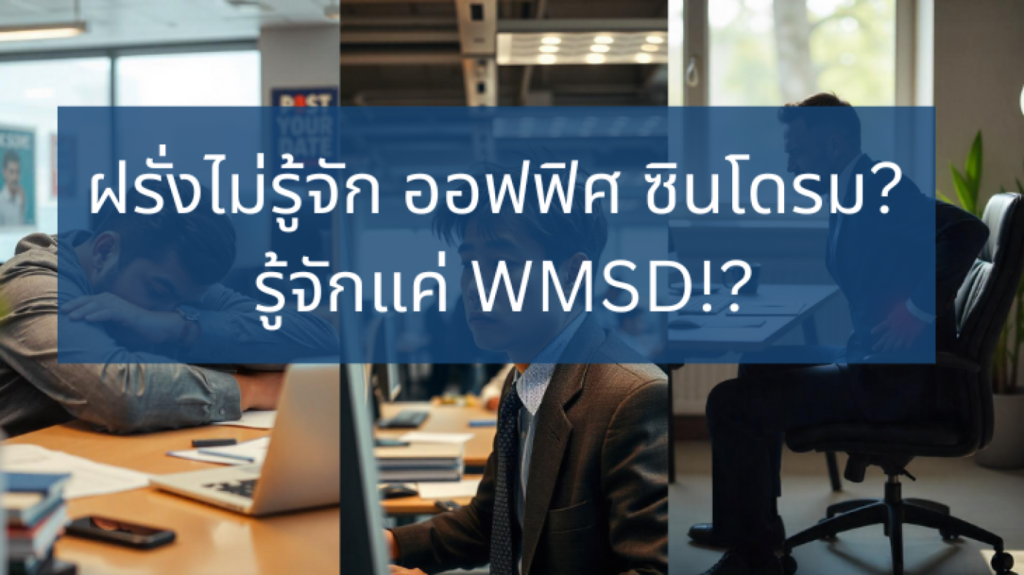
Most people in Thailand are probably already familiar with Office Syndrome. There is certainly no shortage of products marketed to help deal with it—from desks, office chairs, lumbar cushions, seat cushions, posture-support belts, elbow and wrist pads, ergonomic mice, all the way to antacids, pain relievers, eye drops, neck massagers, physical therapy programs, and fitness courses. The list goes on.
But what does it mean medically? Office Syndrome is commonly used to describe a group of musculoskeletal symptoms, often involving muscles and myofascial tissues, that may be associated with prolonged repetitive muscle use, extended sitting, or poor working posture. These factors can contribute to muscle fatigue and discomfort involving muscles, soft tissues, and joints. Reduced muscle strength, previous injuries, and age-related changes may also influence the severity and development of symptoms.
However, if you use the term Office Syndrome in countries such as the United States or in Europe, people may not be as familiar with it. Why? In international occupational and medical contexts, a more widely recognized term is Work-Related Musculoskeletal Disorders, or WMSDs.

1. “Office Syndrome” Is More Familiar in Thailand and Parts of Asia Than WMSDs
One reason may simply be that “Office Syndrome” is easier to say and remember. “Work-Related Musculoskeletal Disorders” is quite a mouthful, and even the abbreviation WMSDs may sound less familiar to the general public.
In Thailand, the term has also become widely used in the media and everyday conversation. As a result, people sometimes use Office Syndrome broadly to describe various problems associated with office life or prolonged sitting—from neck and back pain to digestive discomfort and other symptoms. Medically, however, these symptoms may have different causes and should not all automatically be classified as Office Syndrome or WMSDs.
2. Why Are WMSDs More Commonly Used in Europe and the United States?
- People in these countries may simply be less familiar with the term Office Syndrome.
- In occupational health and medical contexts, WMSDs are more widely recognized. The term describes musculoskeletal disorders that are caused or aggravated by work and may affect muscles, tendons, joints, nerves, and other parts of the musculoskeletal system.
- More specific terms may also be used depending on the symptoms or condition, such as back pain, neck pain, or Repetitive Strain Injury (RSI).
- Other problems associated with prolonged work that are not themselves WMSDs may be described separately—for example, fatigue, eye strain, stress, or insomnia. Using more specific terminology can help patients communicate their symptoms more clearly and seek care from an appropriate healthcare professional.
- You may also be familiar with the term workaholic, which refers to a person with an excessive or compulsive tendency to work. Work-related behaviors of this kind may be associated with stress, difficulties maintaining work-life balance, and problems affecting personal relationships. However, being a “workaholic” is not the same as having a WMSD.

So, how can knowing the term WMSDs be useful?
If you work with international colleagues or healthcare professionals, knowing the term can help you communicate more accurately. It is also useful when searching for international medical and occupational health information. Searching for terms such as Work-Related Musculoskeletal Disorders or WMSDs can lead to a broader range of research papers, clinical information, workplace ergonomics guidance, and prevention resources. By comparison, searching for Office Syndrome tends to return more content from Thailand and other parts of Asia.
How to Help Prevent Office Syndrome and WMSDs
You have probably heard the basic advice many times: avoid sitting for too long, take regular movement and stretching breaks, exercise regularly, and stay adequately hydrated.
In everyday life, however, following all of this advice consistently can be difficult. Deadlines, urgent work, long commutes, family responsibilities, and many other demands can easily get in the way.
At Sapiens Hospital, we will continue sharing practical health guides for both office workers and older adults. When pain has already developed—whether due to age, work, lifestyle, injury, or other factors—the next step is to identify its underlying cause and consider appropriate treatment options. Not every pain condition requires surgery. Depending on the diagnosis and individual condition, non-surgical or minimally invasive pain management techniques may be considered. The goal is to help patients reduce pain, improve function, return to a more active life, and continue with an appropriate exercise and rehabilitation plan.
References
https://pmc.ncbi.nlm.nih.gov/articles/PMC9408776/
https://www.physio-pedia.com/Work-Related_Musculoskeletal_Injuries_and_Prevention