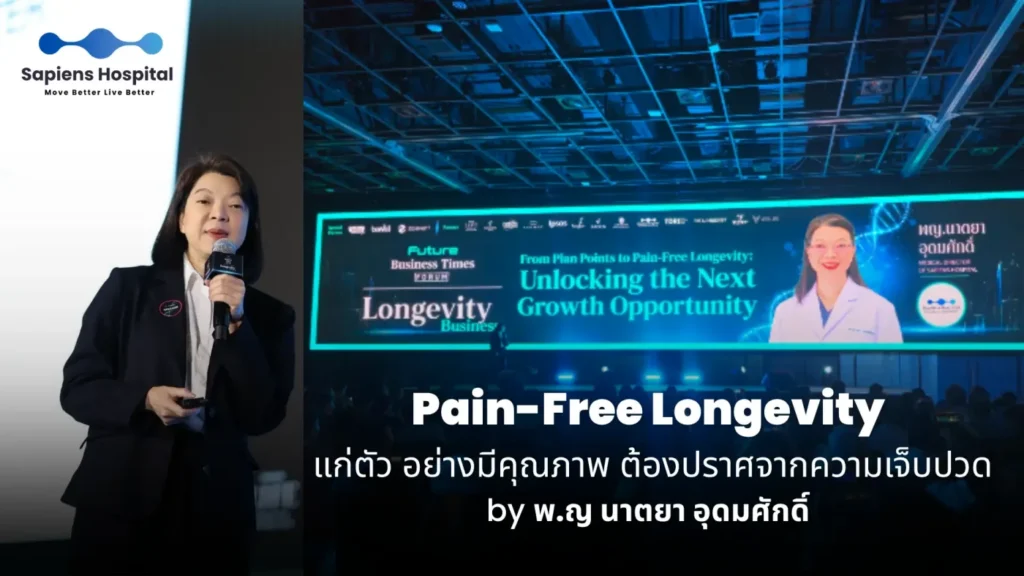
Pain-Free Longevity: Aging Well Means Living Without Pain
“We are living longer… but the question is, are we actually living better?”
Many people focus on maintaining their health through nutrition, stem cells, supplements, or exercise, yet overlook “chronic pain,” one of the major barriers to living a long life with a good quality of life.
The Missing 11 Years: Living Longer, but Living Longer with Illness (Disease Span)
Today, average life expectancy is approximately 77 years, while the period of life spent in good health is only around 66 years. This represents a gap of approximately 11 years (Disease Span) during which people may live with illness, health limitations, and discomfort.
“This cycle of decline often begins with something small.”
- Chronic Pain Begins: Pain may gradually develop in the joints or other parts of the body until it becomes part of everyday life.
- Joint & Spine Degeneration: Cartilage begins to wear down and inflammation may develop in the body.
- Mobility Declines: The body becomes stiffer and weaker, making movement increasingly difficult.
- Function Declines: Everyday activities become more difficult, and independence in taking care of oneself may gradually decline.
- Frailty Develops: Muscle mass decreases, fatigue becomes more common, and the body becomes more vulnerable.
- Dependency Increases: The ability to live independently may decrease, significantly affecting quality of life.
“Pain is not just a symptom of illness… it can take away our independence and the time we could otherwise spend enjoying life.“
Pain Is Not Just a “Symptom” — It Can Be an “Accelerator of Aging” (Pain as a Biomarker of Aging)
Traditionally, we may assume that aches and pains are simply a normal part of getting older. From the perspective of Longevity Medicine, however, chronic pain may contribute to processes associated with biological aging through several mechanisms.
- Chronic Stress: Persistent pain can activate stress responses, including cortisol-related pathways and heightened nervous system activity, potentially affecting the body’s ability to recover.
- Chronic Inflammation: Chronic pain may be associated with inflammatory processes involving markers such as IL-6, TNF-α, and CRP, which are also discussed in relation to inflammaging.
- Physical Decline: Pain can discourage movement and physical activity, contributing to loss of muscle mass (Sarcopenia), impaired balance, and an increased risk of falls.
Survey findings indicate that many adults aged 65 and older experience at least one painful musculoskeletal or related health condition, which may also affect mental wellbeing, sleep, and social participation.
“The Missing Middle” — An Option Between Physiotherapy and Surgery
When chronic pain occurs, some people assume that if physiotherapy does not provide sufficient relief, major surgery must be the next step. At Sapiens Hospital, Targeted Pain Intervention provides another option for appropriately selected patients. These minimally invasive, evidence-based approaches target specific sources of pain and may help improve function, manage symptoms, and in some cases delay or avoid major surgery.
- Knee Osteoarthritis: Genicular Nerve Radiofrequency Ablation (RFA) may be considered for selected patients to reduce knee pain and potentially improve walking ability and daily function.
- Lumbar Spinal Stenosis / Radiculopathy: Epidural Steroid Injection may be considered in selected cases to reduce inflammation and radiating leg pain and help improve mobility and daily activities.
- Chronic Facet Joint Pain: Medial Branch Radiofrequency Ablation may provide longer-lasting pain relief for appropriately selected patients, potentially reducing reliance on pain medication and supporting improved mobility.
The Future Trend: Thailand Is Moving Toward a “Super-Aged Society”
By 2040, it is projected that approximately 1 in 3 people in Thailand will be over the age of 60, compared with around 20% in 2025.
The challenge is therefore not simply how to help people live longer (Lifespan), but how to help them maintain mobility, care for themselves, and live independently with less pain throughout those additional years (Healthspan).
Bringing Joy Back to Every Movement at Sapiens Hospital
Our mission is to “Compress Disease Span and Expand Healthspan,” supporting older adults and people of every generation in maintaining mobility, independence, and a better quality of life as they age.
Adding Life to Years, not Just Years to Life. Adding vitality and quality to every stage of life, not simply adding more years.
By: “Dr. Nattaya Udomsakdi, Sapiens Hospital”
Speaker at FBT Longevity Business 2026
June 24, 2026 | 10:55–11:15 a.m.
True Digital Park