Early-Stage Diabetes: Are There Symptoms? What Blood Sugar Level Means Diabetes, and Why Can Diabetes Lead to Kidney Failure?
Diabetes is a common chronic disease, and many people may not realize they have it because early-stage diabetes often causes no obvious symptoms. Some people are diagnosed incidentally during a routine health check, while others are diagnosed only after complications begin to appear, such as numbness or tingling in the hands and feet, blurred vision, slow-healing wounds, kidney disease, or cardiovascular disease.
The concern with diabetes is not only high blood glucose itself, but also its long-term effects on blood vessels, nerves, kidneys, heart, brain, and eyes. Early detection and appropriate management can help improve glucose control and reduce the risk of long-term complications.
What Is Diabetes?
Diabetes is a condition in which blood glucose levels are higher than normal because of problems involving insulin, a hormone that helps glucose move from the bloodstream into cells to be used for energy.
This can occur for several reasons, including:
- The body produces too little insulin.
- Insulin does not work effectively, known as “insulin resistance.”
- Both reduced insulin production and insulin resistance occur together.
When blood glucose remains elevated over time, it can damage both small and large blood vessels and affect several important organs, particularly the kidneys, eyes, nerves, heart, and brain.
Does Early-Stage Diabetes Cause Symptoms? The Answer Is: “Often, It Does Not.”
This is one reason why diabetes may remain undetected. Some people can have elevated blood glucose for a considerable period without feeling unwell and discover it only through a blood test or after complications have begun to develop.
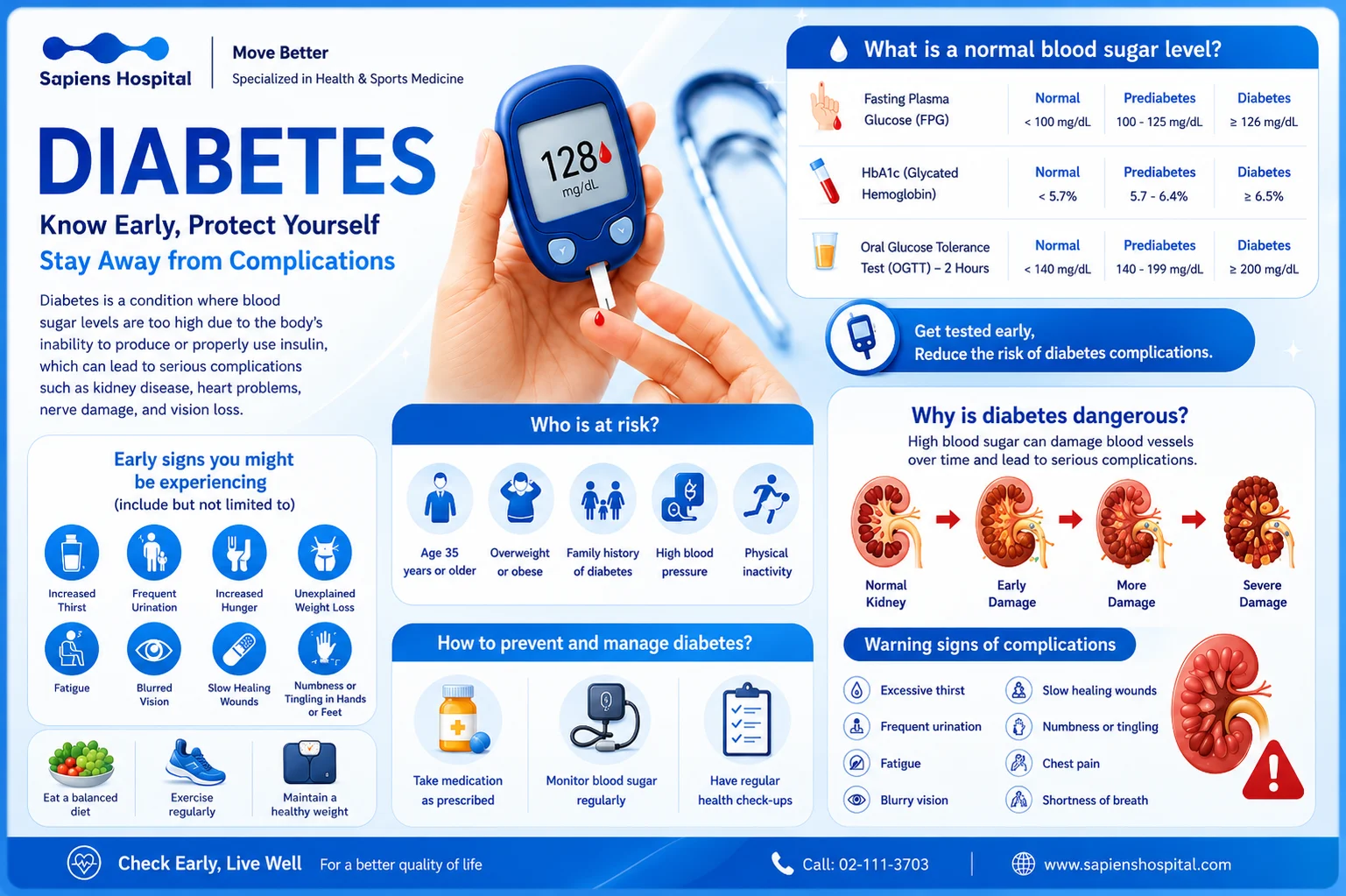
However, some people may experience warning signs such as:
- Frequent thirst
- Frequent urination, particularly at night
- Increased hunger
- Unexplained weight loss
- Fatigue
- Blurred vision
- Slow-healing wounds
- Recurrent skin or fungal infections
- Numbness, tingling, or pins-and-needles sensations in the hands or feet
It is important to understand that having no symptoms does not mean a person does not have diabetes. Type 2 diabetes, in particular, can develop silently during its early stages.
Who Should Be Screened for Diabetes? People who should consider diabetes screening include:
- Adults aged 35 years or older
- People who are overweight or have abdominal obesity
- People with a family history of diabetes
- Women with a history of gestational diabetes
- People with high blood pressure
- People with abnormal blood lipid levels
- People with fatty liver disease
- People who are physically inactive
- People with cardiovascular disease
- People with unexplained numbness or tingling in the hands or feet
- People with slow-healing wounds or recurrent infections
People at increased risk should undergo appropriate blood testing even when they have no symptoms. What Blood Sugar Level Is Considered Diabetes? Diabetes is diagnosed using laboratory testing rather than symptoms alone. One commonly used test is Fasting Plasma Glucose (FPG), measured after at least 8 hours without caloric intake.
- Normal: less than 100 mg/dL
- Prediabetes: 100–125 mg/dL
- Diabetes range: 126 mg/dL or higher
In the absence of unequivocal hyperglycemia, an abnormal result generally requires confirmation with a repeat or another diagnostic test.
HbA1c reflects average blood glucose exposure over approximately the previous 2–3 months.
- Normal: less than 5.7%
- Prediabetes: 5.7–6.4%
- Diabetes range: 6.5% or higher
HbA1c does not usually require fasting, although certain medical conditions can make the result less reliable. Another diagnostic test is the Oral Glucose Tolerance Test (OGTT), in which plasma glucose is measured 2 hours after a standard 75-g glucose load.
- Normal: less than 140 mg/dL
- Prediabetes / impaired glucose tolerance: 140–199 mg/dL
- Diabetes range: 200 mg/dL or higher
This test may be used in selected situations when other results are inconclusive. Different protocols are used for the diagnosis of gestational diabetes.
Random Plasma Glucose
A random plasma glucose level of 200 mg/dL or higher together with classic symptoms of hyperglycemia, such as frequent urination, excessive thirst, or unexplained weight loss, can meet the diagnostic criteria for diabetes.
What Is Prediabetes?
Prediabetes means that blood glucose levels are higher than normal but have not yet reached the diagnostic range for diabetes.
This stage is important because lifestyle changes such as appropriate weight management, regular physical activity, improving diet quality, and adequate sleep can reduce the likelihood of progression to type 2 diabetes in many people. Prediabetes should therefore be regarded as an opportunity to address health risks early rather than simply as “not yet diabetes.”
Can Diabetes Go Away?
The answer depends on the type of diabetes, the stage of the disease, and what is meant by “go away.”
- Type 1 diabetes: People generally require ongoing insulin therapy because the pancreas produces little or no endogenous insulin.
- Type 2 diabetes: Some people can achieve “diabetes remission,” meaning that glucose levels fall below the diagnostic threshold for diabetes for a sustained period without glucose-lowering medication. Remission does not mean that the disease can never return.
Factors that may improve the likelihood of type 2 diabetes remission include:
- Early diagnosis and intervention
- Appropriate and sustained weight loss when indicated
- Reduction in excess abdominal fat
- Regular physical activity
- Long-term healthy dietary changes
- Adequate sleep
- Reducing sugar-sweetened beverages and highly processed foods
- Continued monitoring of blood glucose and overall health
Even when glucose levels improve sufficiently to meet remission criteria, continued follow-up remains important because diabetes can recur with weight regain, changes in lifestyle, illness, or progressive decline in pancreatic beta-cell function.
Therefore, a more accurate description is that some people with type 2 diabetes may achieve remission, rather than assuming that the disease has been permanently “cured.”
Why Can Diabetes Lead to Kidney Failure?
The kidneys filter waste products and excess fluid from the blood. Their filtering units contain networks of tiny blood vessels called glomeruli. Persistently elevated glucose can lead to metabolic and hemodynamic changes that gradually damage these filtering structures.
Early diabetic kidney disease often causes no symptoms. Some people develop increased urinary albumin, which can be detected using a urine test. However, diabetic kidney disease can also occur without marked albuminuria, which is why both urine albumin and kidney filtration should be assessed.
As chronic kidney disease progresses, kidney filtration may decline. Some patients may eventually develop high blood pressure, swelling, fatigue, anemia, nausea, reduced appetite, or other symptoms. In advanced kidney failure, kidney replacement therapy such as dialysis or transplantation may become necessary.
How Does Diabetes Damage the Kidneys? Several mechanisms are involved:
- Damage to the kidney’s filtering units Chronic hyperglycemia and abnormal pressure within the glomeruli can gradually alter the filtration barrier and contribute to progressive kidney damage.
- Albumin in the urine In many patients, kidney damage causes albumin to leak into the urine. Increased urinary albumin is an important marker of kidney and cardiovascular risk, although not every patient with diabetic kidney disease develops albuminuria.
- High blood pressure Hypertension commonly accompanies diabetes and can accelerate kidney damage if it is not adequately controlled.
- Inflammation and vascular injury Diabetes can promote oxidative stress, inflammation, and vascular changes that contribute to progressive loss of kidney function.
What Are the Symptoms of Diabetic Kidney Disease?
Early disease often causes no symptoms, which is why regular kidney assessment is important. Symptoms that may occur as kidney disease becomes more advanced include:
- Swelling of the feet or legs
- Foamy urine
- Changes in urination, including increased nighttime urination
- Higher blood pressure
- Shortness of breath or reduced exercise tolerance in some patients
- Fatigue
- Loss of appetite
- Nausea
- Itching in advanced kidney disease
- Anemia
- Weight gain from fluid retention
Waiting until symptoms become obvious can mean that kidney disease is already advanced. Kidney monitoring in people with diabetes should not rely on serum creatinine alone because creatinine can appear relatively normal during earlier stages of kidney disease.
Important Tests include:
- eGFR and Urine Albumin-to-Creatinine Ratio (UACR): eGFR estimates how well the kidneys are filtering blood, while UACR detects abnormal albumin leakage in the urine. These tests provide complementary information and are both important for assessing diabetic kidney disease.
- Blood pressure: Blood pressure strongly influences the progression of kidney disease and should be monitored regularly.
- Blood lipids: Abnormal cholesterol and triglyceride levels increase cardiovascular risk and should be managed as part of comprehensive diabetes care.
How Can Kidney Failure from Diabetes Be Prevented or Delayed?
Kidney protection should begin before symptoms occur and involves management of several risk factors together. Important measures include:
- Keep blood glucose within an individualized target range
- Control blood pressure
- Check urine albumin as recommended
- Monitor eGFR
- Reduce excessive added sugar, sugar-sweetened beverages, and highly processed foods
- Limit excessive sodium intake
- Exercise regularly as medically appropriate
- Maintain an appropriate body weight
- Do not smoke
- Avoid prolonged or unnecessary use of NSAID pain medicines, particularly when kidney disease is present or suspected, unless advised by a healthcare professional
- Take prescribed medication consistently and discuss any side effects or concerns with the treating clinician
Several modern medications can reduce cardiovascular and kidney risk in appropriately selected people with diabetes and chronic kidney disease, in addition to lowering blood glucose. Treatment should be individualized according to kidney function, cardiovascular risk, other medical conditions, and current medications. When Should You See a Doctor?
Medical assessment should be considered if any of the following apply:
- You are aged 35 years or older and have never been screened for diabetes
- You have a family history of diabetes
- You are overweight or have abdominal obesity
- You experience frequent urination, excessive thirst, or unexplained fatigue
- You have unexplained weight loss
- You have slow-healing wounds
- You experience numbness or tingling in the hands or feet
- You have blurred vision
- You have previously been told that your blood glucose is elevated
- You already have diabetes but have not had your kidney function and urine albumin assessed as recommended
- You develop leg swelling, persistent foamy urine, or high blood pressure
Early detection allows health problems to be addressed sooner and can reduce the risk of long-term complications.
Diabetes often causes few or no symptoms in its early stages, yet it can gradually affect important organs, particularly the kidneys, heart, eyes, and nerves. Knowing your blood glucose level, undergoing appropriate screening when at risk, and maintaining regular follow-up are important steps in preventing or delaying complications. Diabetes should not be a disease that people wait to investigate only after symptoms become obvious, because complications may already have developed by that time.
Sapiens Hospital provides assessment, screening, diagnosis, and individualized care planning according to each patient’s health condition and clinical needs.